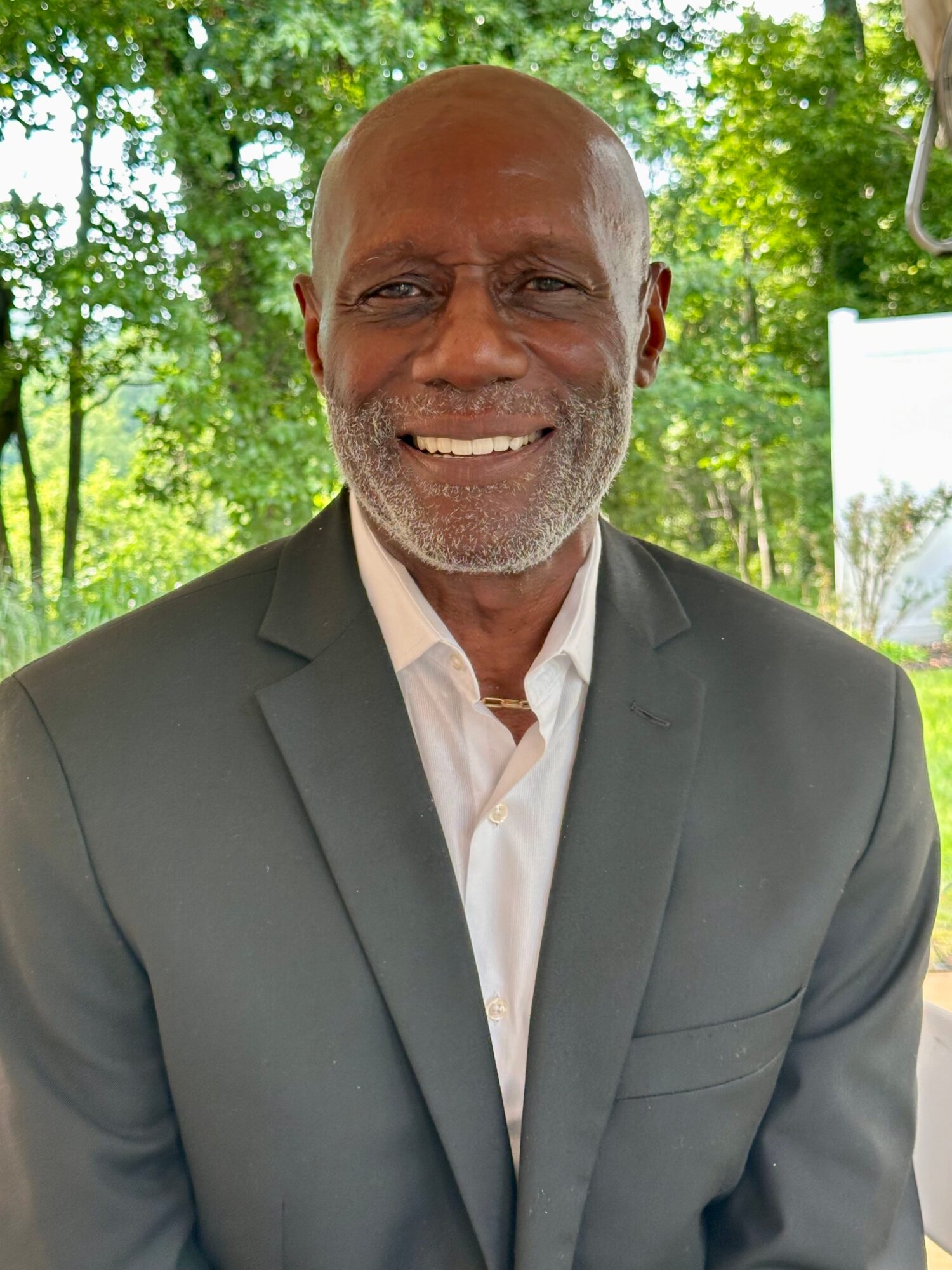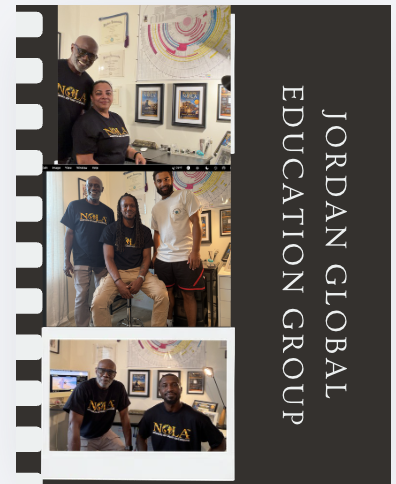




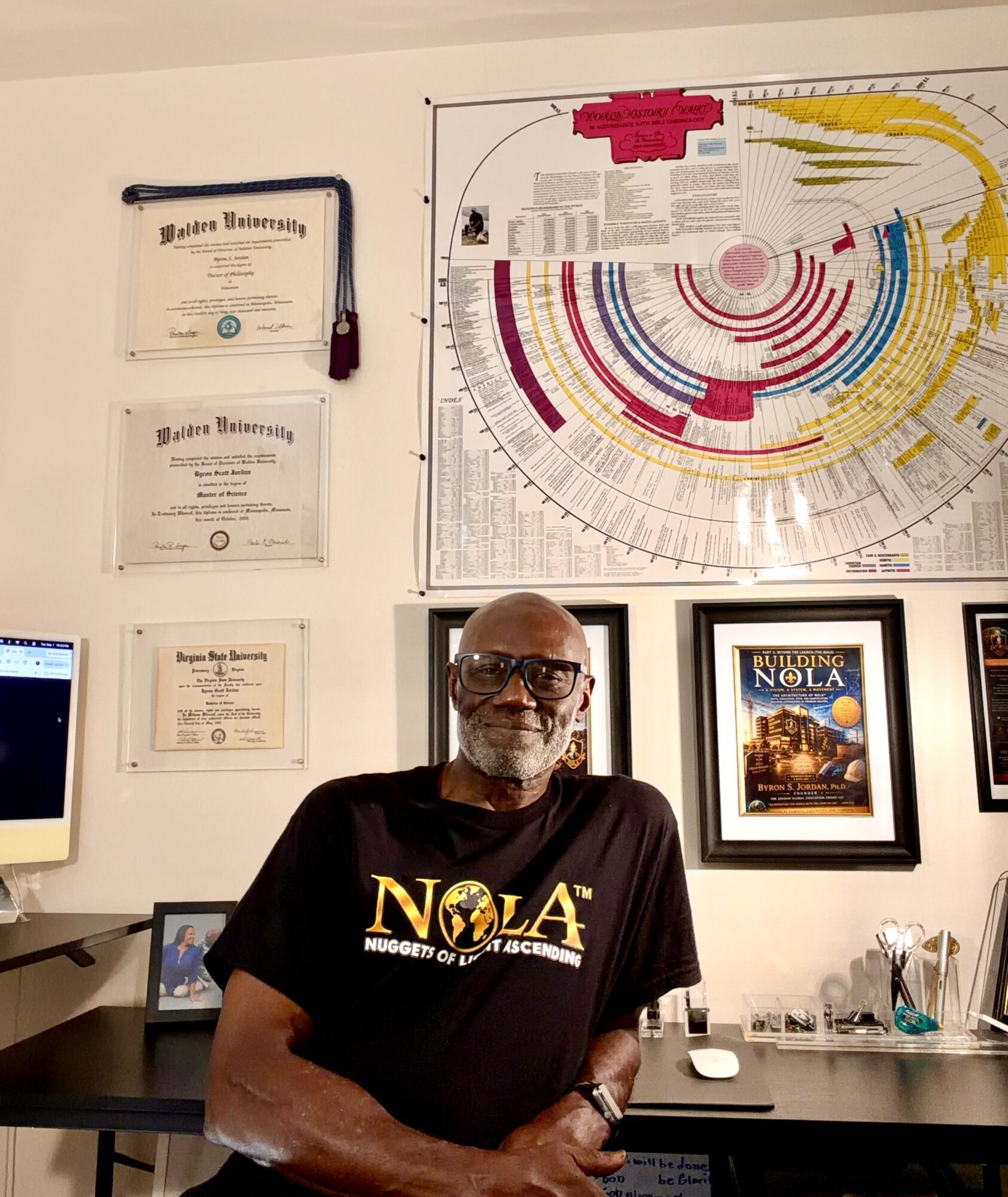
Today we’d like to introduce you to Byron Jordan.
Alright, so thank you so much for sharing your story and insight with our readers. To kick things off, can you tell us a bit about how you got started?
I have spent more than 20 years in education, and much of what I am building today grew from lessons learned in classrooms long before there was a platform, a dashboard, or even a name for some of these ideas.
My journey has included teaching and educational leadership in the United States as well as experiences abroad, including Egypt and the Mediterranean region. Those experiences expanded my understanding of education beyond geography. I saw that students may live in very different communities and cultures, but many of their needs are remarkably similar: they want to be seen, challenged, encouraged, and given meaningful opportunities to succeed.
Faith has also been an important part of my journey. It has shaped my understanding of purpose, service, stewardship, and the responsibility that comes with educating young people. I don’t believe education is simply about transferring information. At its best, it helps young people recognize their abilities, develop character, solve problems, and understand that what they learn can be used in service to others.
Over time, those experiences led me to establish The Jordan Global Education Group, LLC and to develop NOLA—Nuggets of Light Ascending. What began as a collection of educational ideas has gradually become a more structured learning ecosystem built around tutoring, academic support, game-based learning, gamification, mission-based experiences, reflection, student recognition, and family engagement.
One of the most important parts of this process has been listening. During our pilot work, we have listened to students, parents, educators, partners, and colleagues, including perspectives from our global relationships. Their feedback has helped us challenge assumptions and refine what we are building. I have learned that innovation is not simply adding technology to education. Sometimes innovation means listening closely enough to recognize what students and families actually need and then having the willingness to redesign around them.
That philosophy is reflected in the work we are doing with students now. We want students to attempt something difficult, learn from it, reflect on the lesson, improve, solve meaningful problems, contribute, and ultimately be able to point to evidence of their growth. Reflection on the learned lesson is included for every student because the process matters alongside the result.
The same thinking is shaping our approach to community investment. Through tutoring scholarship awards, families can see a tangible educational investment being made in a young person. But we also want the student to have something that belongs to them—an earned credential connected to actual effort, growth, problem-solving, and accomplishment. I often describe the distinction this way: “The scholarship is awarded. The credential is earned.”
Today, I find myself at an interesting point in the journey. Many ideas that once existed only in notebooks, conversations, sketches, and imagination are becoming concrete—student experiences, learning systems, credentials, partnerships, and a growing body of work that connects education, technology, community, and purpose.
I still consider the work unfinished, and I think that is important. We are continuing to listen, test, learn, and build. My goal has never been simply to create another educational product. It is to build something useful enough to make a difference in the lives of students and families, while remaining grounded in the values and sense of purpose that started the journey in the first place.
Would you say it’s been a smooth road, and if not what are some of the biggest challenges you’ve faced along the way?
No, it has not been a smooth road—and I think some of the most valuable parts of the journey came from the places where it was not smooth.
One of the greatest challenges has been translating educational ideas that made sense conceptually into something that actually works for students, parents, and educators. An idea can look excellent on paper. A feature can work perfectly on a computer. A lesson can meet every academic standard. But none of that automatically means a student will connect with it or that a parent or teacher will find it useful.
That realization changed the way I build.
With more than 20 years of classroom experience, I came into this work with strong educational convictions. But experience can become a weakness if it convinces you that you already have every answer. The pilot process has reminded me to remain a learner. We have been listening—to students, families, educators, partners, and our global relationships—and we will continue listening.
Technology has presented its own challenges. Building an integrated tutoring and learning environment requires many pieces to work together: student information, instructional planning, scheduling, communication, learning activities, reflection, progress monitoring, recognition, and the safeguards necessary when working with young people. Sometimes progress has come one line of code, one test, and one correction at a time.
There have been moments when something worked beautifully on one device and behaved differently on another. There have been features that needed to be reconsidered after seeing how a real person interacted with them. And there have been times when the right decision was not to add something new, but to simplify what was already there.
That process has taught me an important distinction: building more is not necessarily the same as building better.
Another challenge has been maintaining the balance between innovation and purpose. Game-based learning, gamification, mission-based experiences, digital tools, credentials, and emerging technologies can create tremendous opportunities, but they should never become the reason the student is there. The technology has to remain in service of learning.
The same is true of faith. My faith provides a foundation for how I understand service, stewardship, purpose, and responsibility, but our educational work must also meet students and families with professionalism, respect, academic rigor, and sensitivity to the communities we serve. Learning how to preserve that foundation without allowing it to overshadow the educational mission has been an important part of the journey.
There is also the practical reality of building while serving. We are not developing ideas in isolation and waiting for some distant launch date to find out whether they work. Tutoring continues. Families have needs now. Students have assignments, assessments, goals, and challenges now. That means there are times when an existing tool or process remains the responsible choice while a better system is being built and tested.
I have become comfortable saying, “This part is working. This part is still being tested. This part is coming.” I believe that kind of transparency builds more trust than pretending everything is finished.
Perhaps the biggest lesson from the obstacles has been that a setback does not automatically mean the vision was wrong. Sometimes it means the implementation needs to change. Sometimes you need better information. Sometimes you need to listen longer. And sometimes you simply have to keep working through the problem.
My faith has helped me tremendously in those moments. It reminds me that purpose does not eliminate difficulty. It gives difficulty context.
So, no, the road has not been smooth. But I would not remove the difficult parts from the story. They have made the work more disciplined, the vision more concrete, and me more attentive to the people the work is supposed to serve.
We’ve been impressed with The Jordan Global Education Group, LLC (TJGEG), but for folks who might not be as familiar, what can you share with them about what you do and what sets you apart from others?
The Jordan Global Education Group, LLC (TJGEG) is an education organization built around a simple belief: learning should be rigorous, engaging, reflective, and connected to purpose. Our work brings together more than two decades of classroom experience with tutoring, curriculum development, game-based learning, educational technology, and community investment.
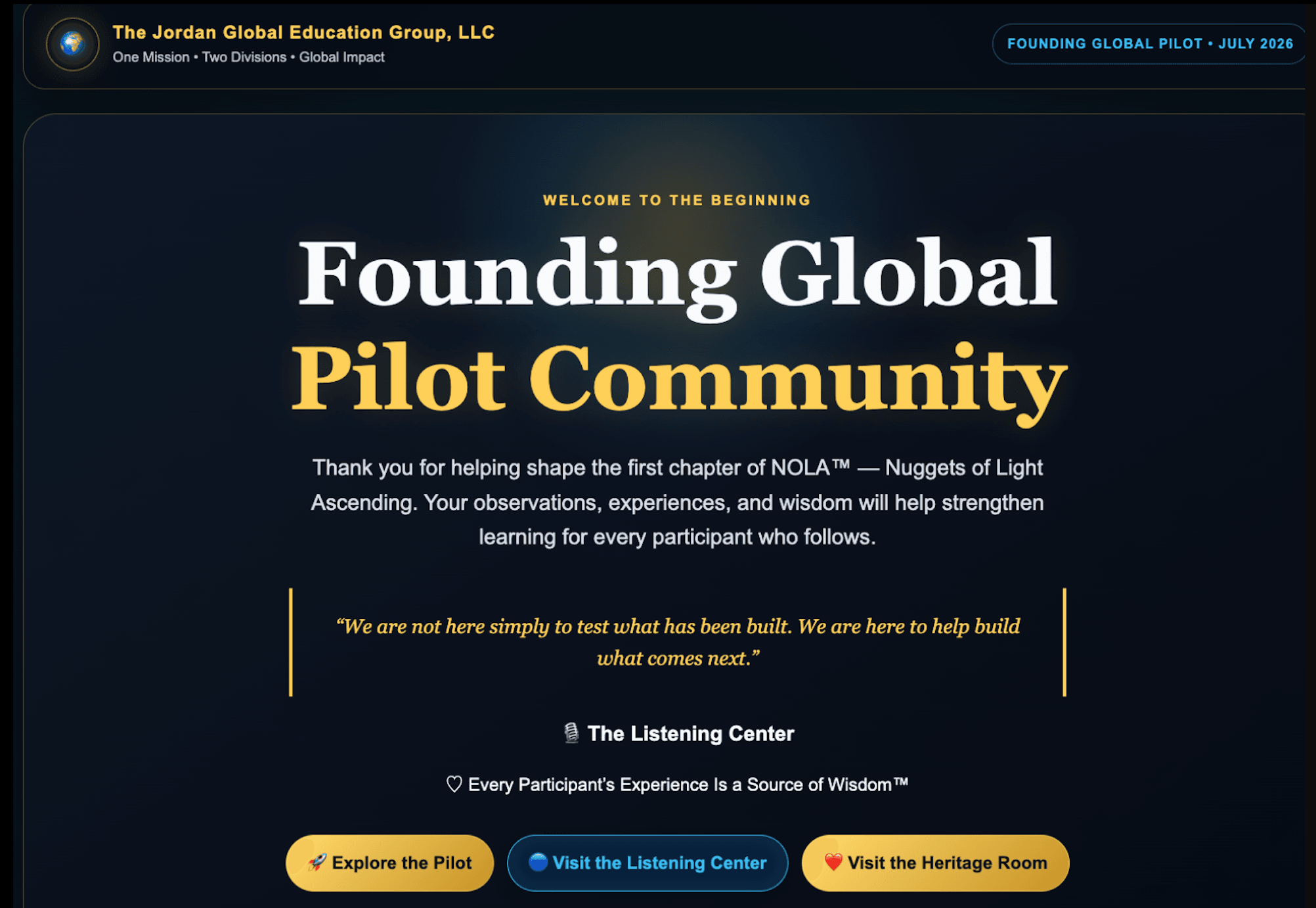
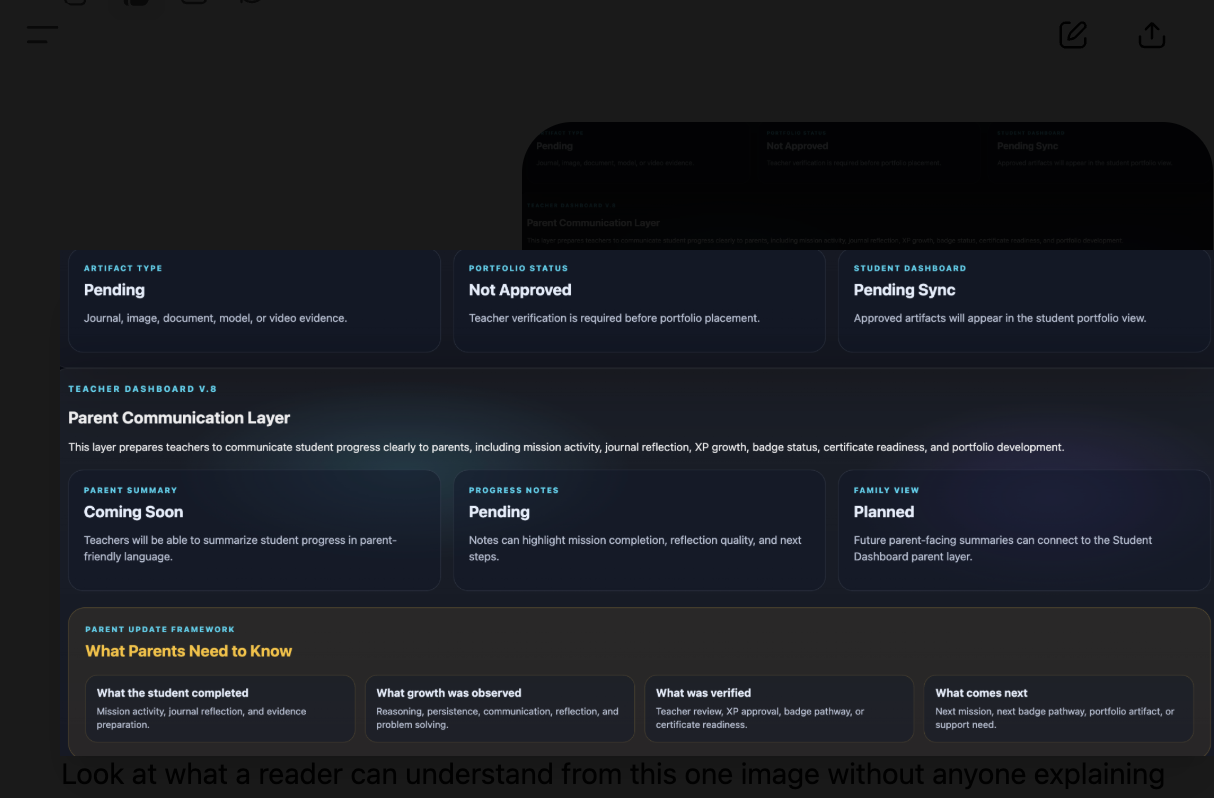
One of the initiatives growing from that work is NOLA — Nuggets of Light Ascending. NOLA is being developed as an integrated learning ecosystem rather than simply another educational platform. It connects academic instruction with game-based and mission-based learning, student reflection, progress monitoring, educator support and professional learning, and meaningful recognition of student growth.
What sets our work apart is that we have been willing to build while listening. Our pilot has not been treated as a demonstration of a finished idea. It has been a genuine learning process. Feedback from students, families, educators, and our global partners continues to influence how the work develops. That includes thinking carefully about accessibility and future language expansion while making sure that growth does not move faster than our ability to deliver it responsibly.
Reflection is also important to our model. Students are not only asked whether they completed an activity or arrived at the correct answer. Reflection on lessons learned is incorporated for all students because we want them to recognize how they approached a problem, what changed in their thinking, and what they can carry forward.
I am particularly proud of the connection between educational opportunity and earned achievement. Through our scholarship tutoring work, we can make an investment in a student’s education, while the student’s own work can lead to credentials and recognition representing growth, persistence, problem-solving, and accomplishment. I describe that distinction very simply: “The scholarship is awarded. The credential is earned.”
That philosophy reflects the larger TJGEG mission. We are interested not merely in giving students access to educational experiences, but in helping them develop something they can point to with confidence and say, I did this. I learned this. I earned this.
Our perspective has also been shaped beyond the United States. Experiences abroad, including Egypt and the Mediterranean region, along with continuing conversations with global partners, have reinforced for me that educational communities may differ culturally and geographically while sharing many of the same hopes for their children: preparation, confidence, opportunity, character, and a future they can believe in.
Ultimately, I want readers to understand that TJGEG is not trying to use technology to replace the human relationships at the center of education. We are building tools, experiences, and opportunities that strengthen those relationships. Behind the dashboards, lessons, missions, credentials, and technology are students—and the question guiding us remains very human: What can we build today that better prepares them for tomorrow?
None of this work has been built alone. I remain deeply grateful to the family members, educators, colleagues, partners, students, and friends who have shared their time, wisdom, encouragement, and belief along the way. Every contribution has mattered, and I consider their fingerprints part of what we are building.
Before we finish, I would also like to express my sincere appreciation to the individual who thought enough of our work to recommend The Jordan Global Education Group for this honor. Someone had to observe what we were doing, consider its value, and then take the additional step of putting our name forward. I don’t take that thoughtfulness lightly. Recognition is meaningful, certainly, but knowing that someone saw enough purpose in the work to advocate for it is especially humbling.
So, to that individual: thank you for your confidence, your thoughtfulness, and your generosity in recommending us. We receive that confidence with gratitude—and with the responsibility to keep doing work worthy of it.
We’d love to hear about any fond memories you have from when you were growing up?
One of my favorite childhood memories is what I think of as the after-school rule. Every evening, while my mother prepared dinner, I sat at the kitchen table practicing math problems and completing my homework before I could go outside to play. At the time, it was simply the rule. Looking back, I realize that kitchen table helped establish the discipline that would eventually make me a lifelong learner.
I am still a little old school in that regard. I enjoy technology and appreciate what it makes possible in education, but I also value the human connection that comes from sitting with a student, working through a problem, talking, listening, and learning together. That is one reason I especially enjoy our hybrid tutoring model. In some ways, every time I sit down with a student, it feels like a visit back to that kitchen table—only now, I am sitting on the other side.
Pricing:
- Individual Tutoring — Starting at $60/hour
- Hybrid Tutoring — Starting at $60/hour
- STEM / Specialized Academic Support — Rates vary by student need
- Small-Group / Program Services — Custom pricing
- NOLA Scholarship Tutoring Awards — Available to qualifying students
Contact Info:
- Website: https://jordanglobaleg.com/