


Today we’d like to introduce you to Beth Stinson.
Hi Beth, can you start by introducing yourself? We’d love to learn more about how you got to where you are today?
I started “making things,” my mom called it, as a child – elaborate Valentine’s Day cards, embroidered felt, and collages. When I was a teenager, I traded babysitting services for art lessons with local artists, learning how to draw and watercolor.
I earned Bachelor and Master of Arts degrees in printmaking and photography from the State University of New York at Albany. For more than a decade, I ran darkrooms and audio-visual services for seven colleges and universities, where I discovered a knack for teaching. As an adjunct professor, I taught the History of Photography, Darkroom Techniques for Black and White Photography, and Hand Coloring Photographs. Through the 1980s my prints were accepted into juried art shows in New York, Connecticut, California, and New Mexico. In 1990, I had a one-person show featuring my hand-colored photographs at the Craft Center Gallery, University of California Davis.
Then the Internet happened.
Excited by the opportunity for innovation and reinvention, I fully embraced the digital world. I combined my graphic arts sensibilities with my teaching experience to build a decades long career as an instructional designer. Working across multiple industries, I designed curricula, websites, presentations, and online courses on a myriad of subjects, including accessibility, user experience, public speaking, technical writing, cyber security, and construction safety.
Participating in a meditative drawing class six years ago reawakened my love of “making things.” I began drawing again. When covid hit, I took solace with long hikes in the woods with my husband and camera, returning home to draw and print the plants I photographed. A Howard County art gallery was impressed with my work and asked me to join. I began selling my work commercially.
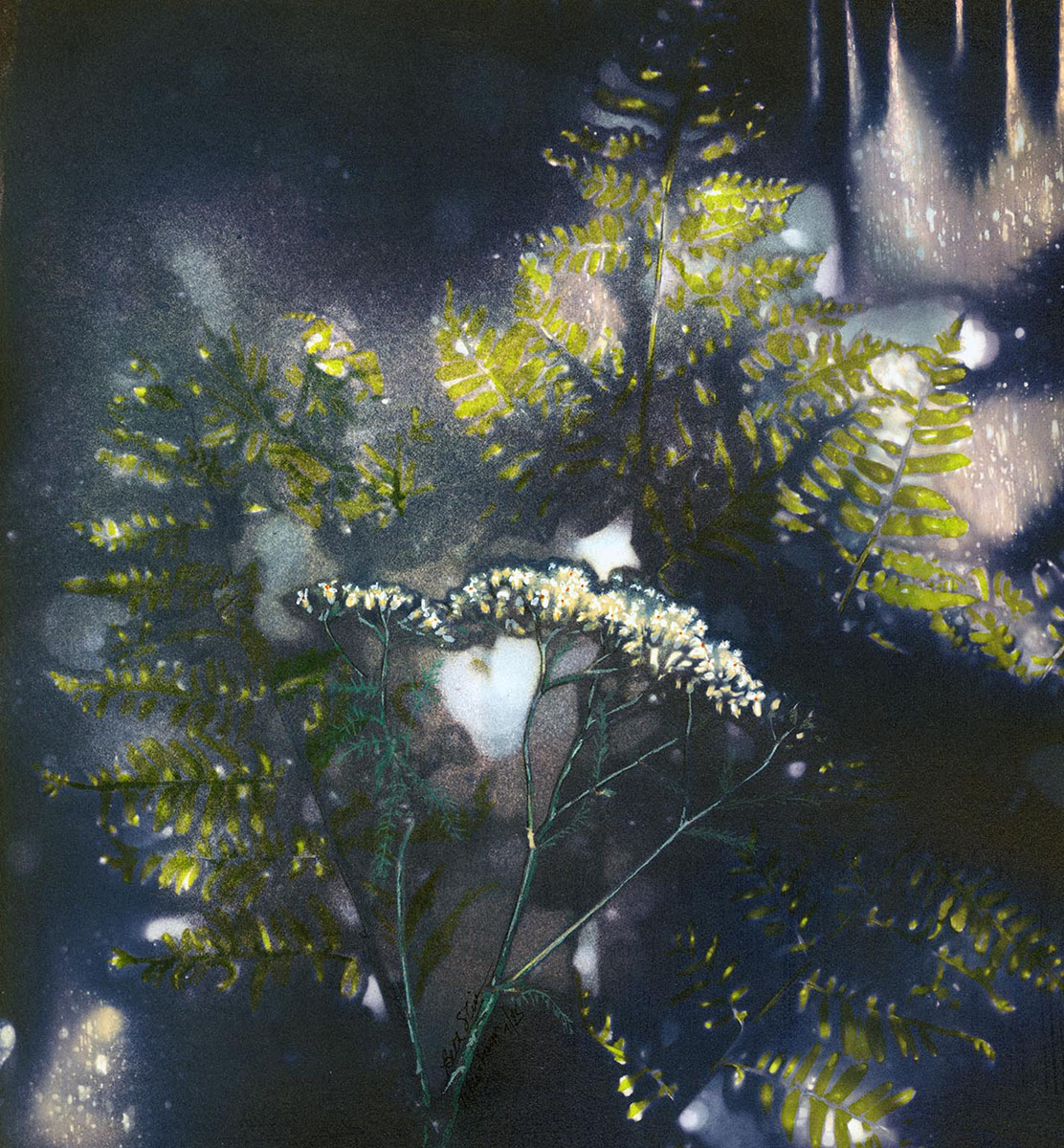
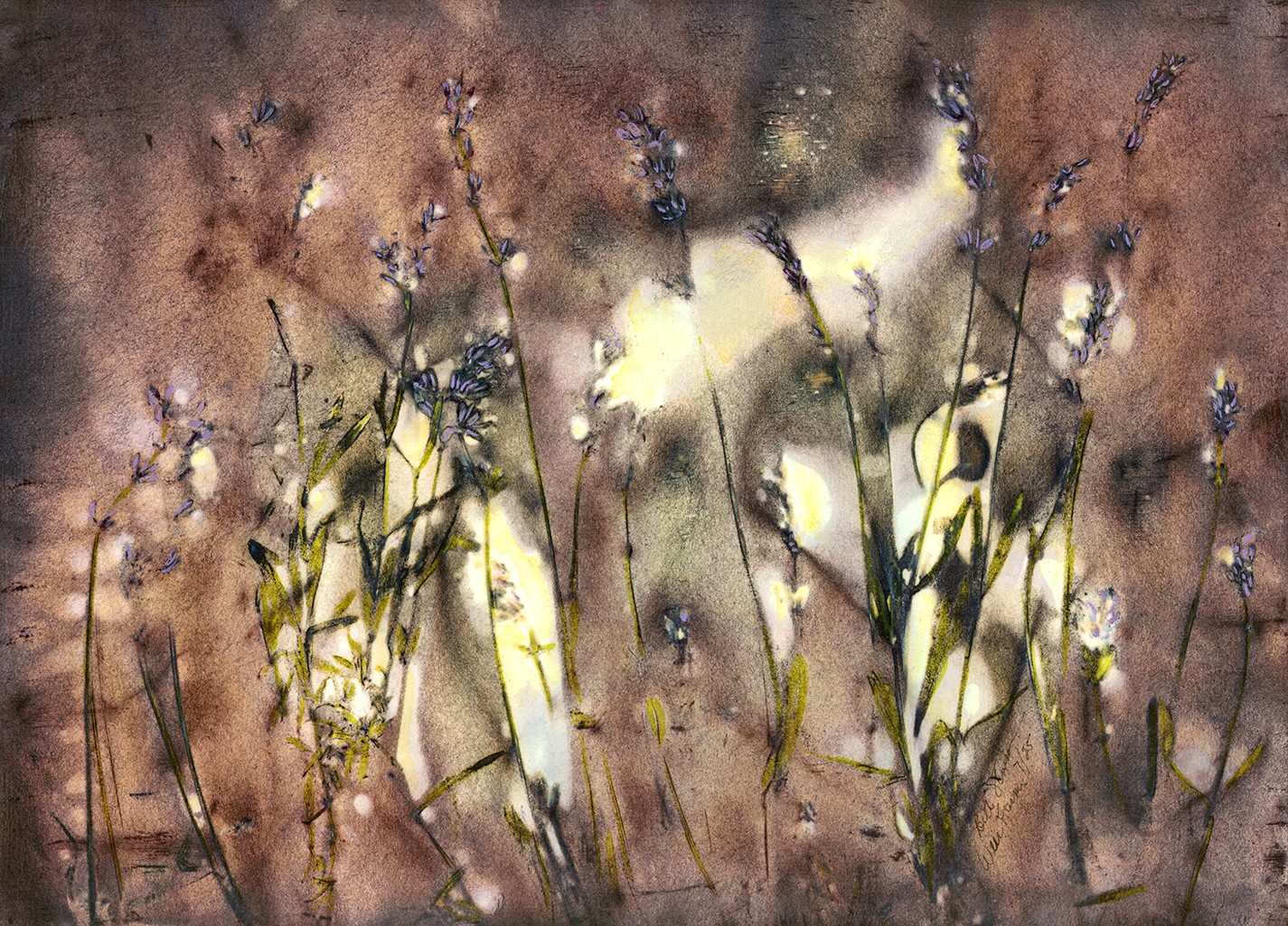
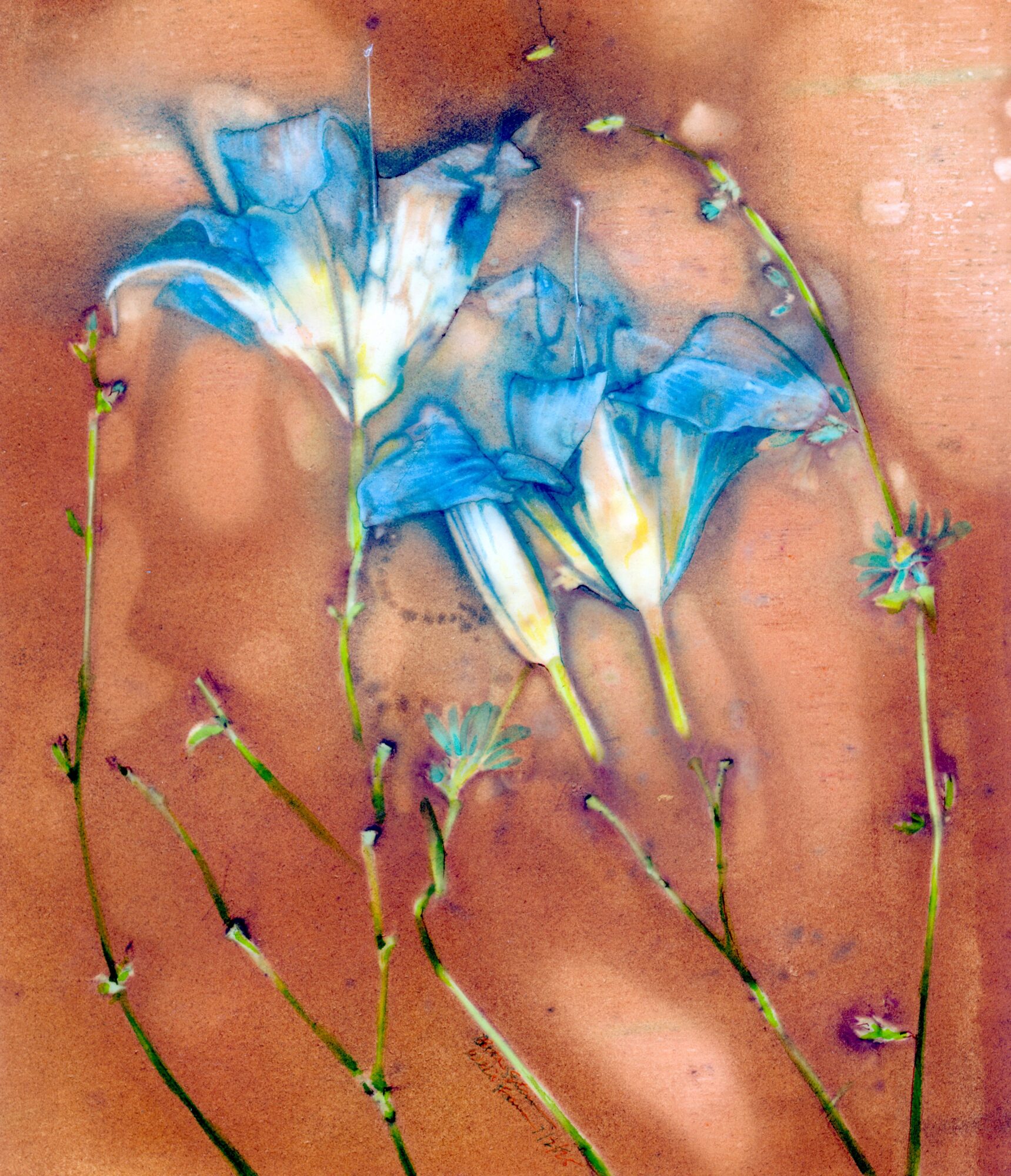
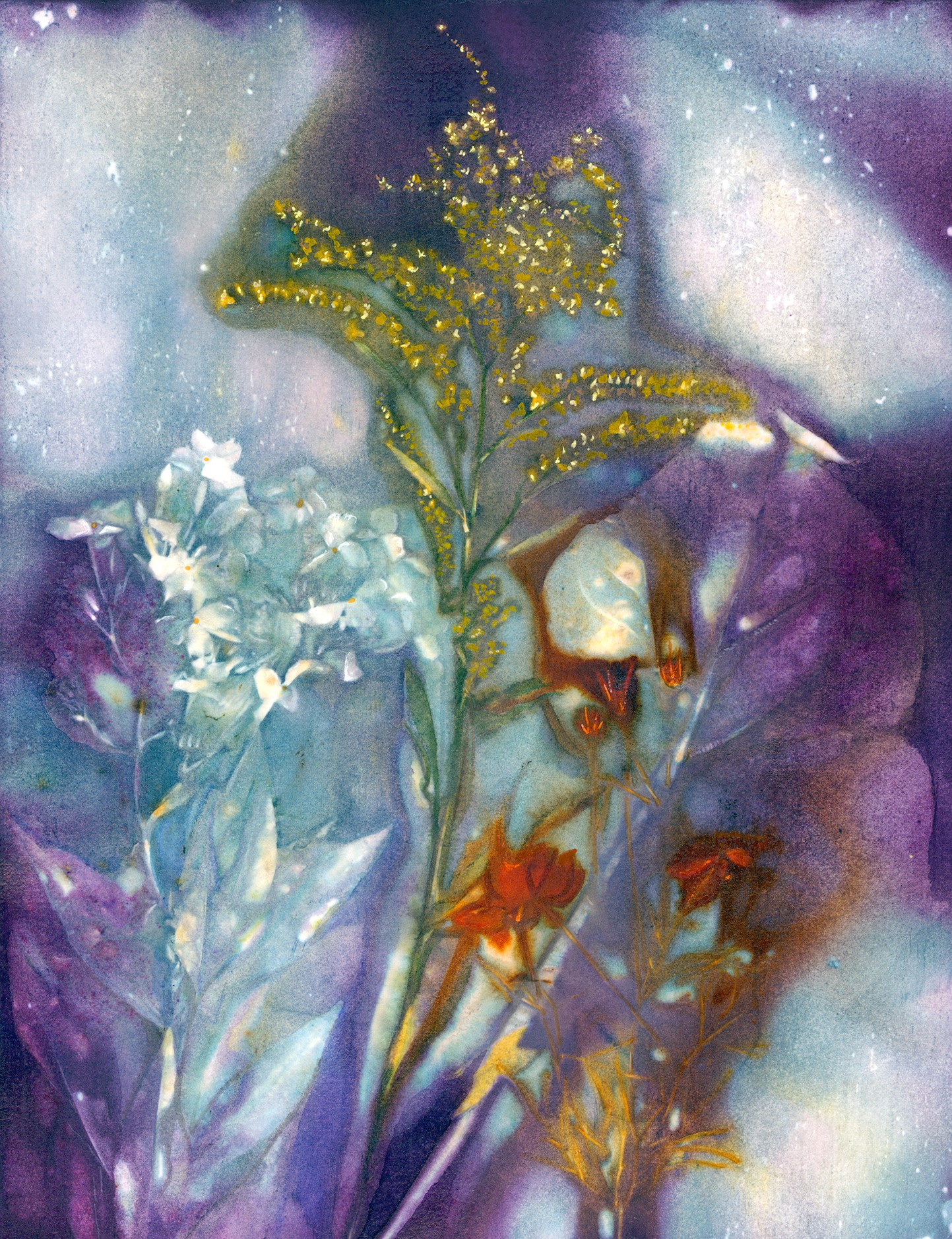
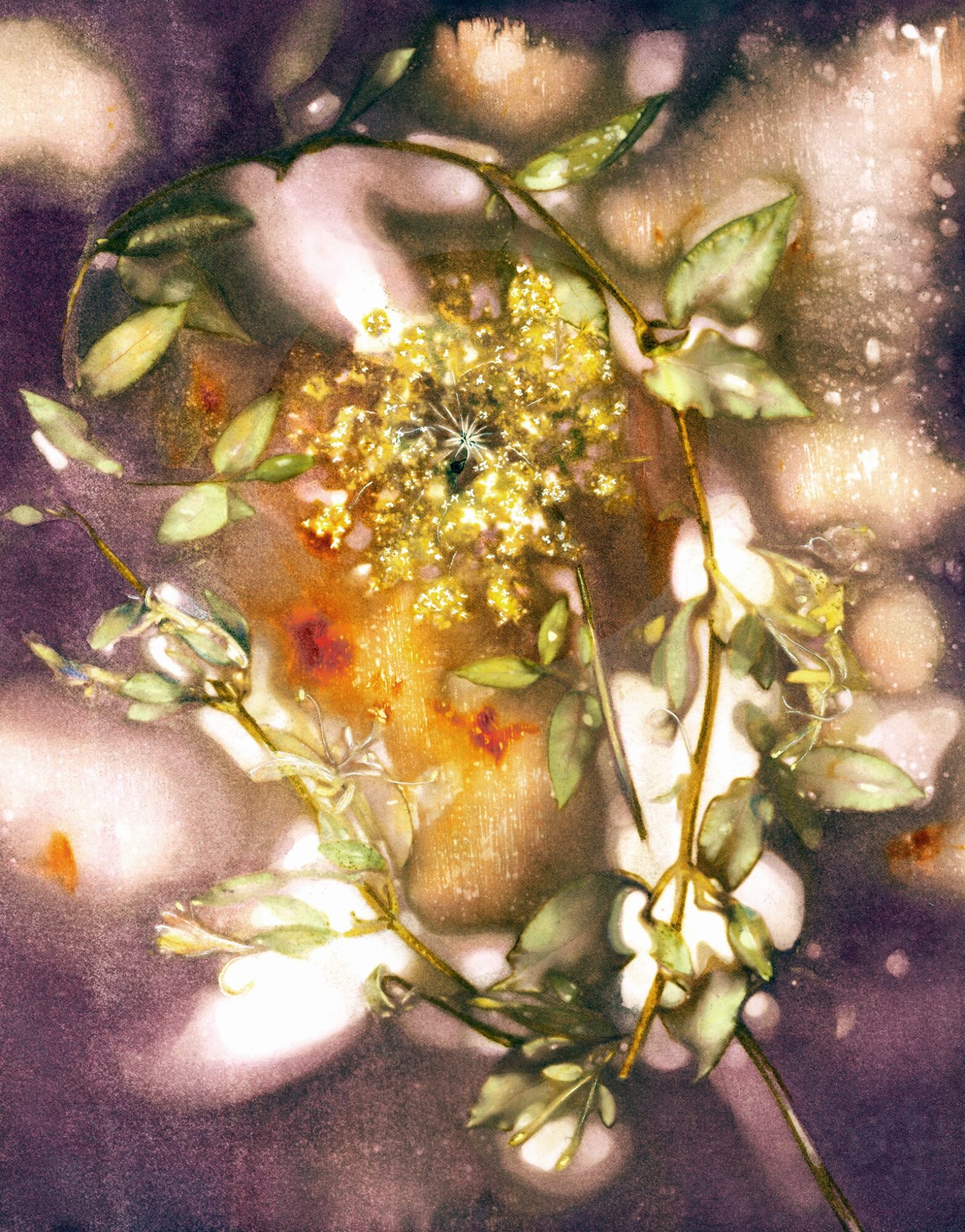
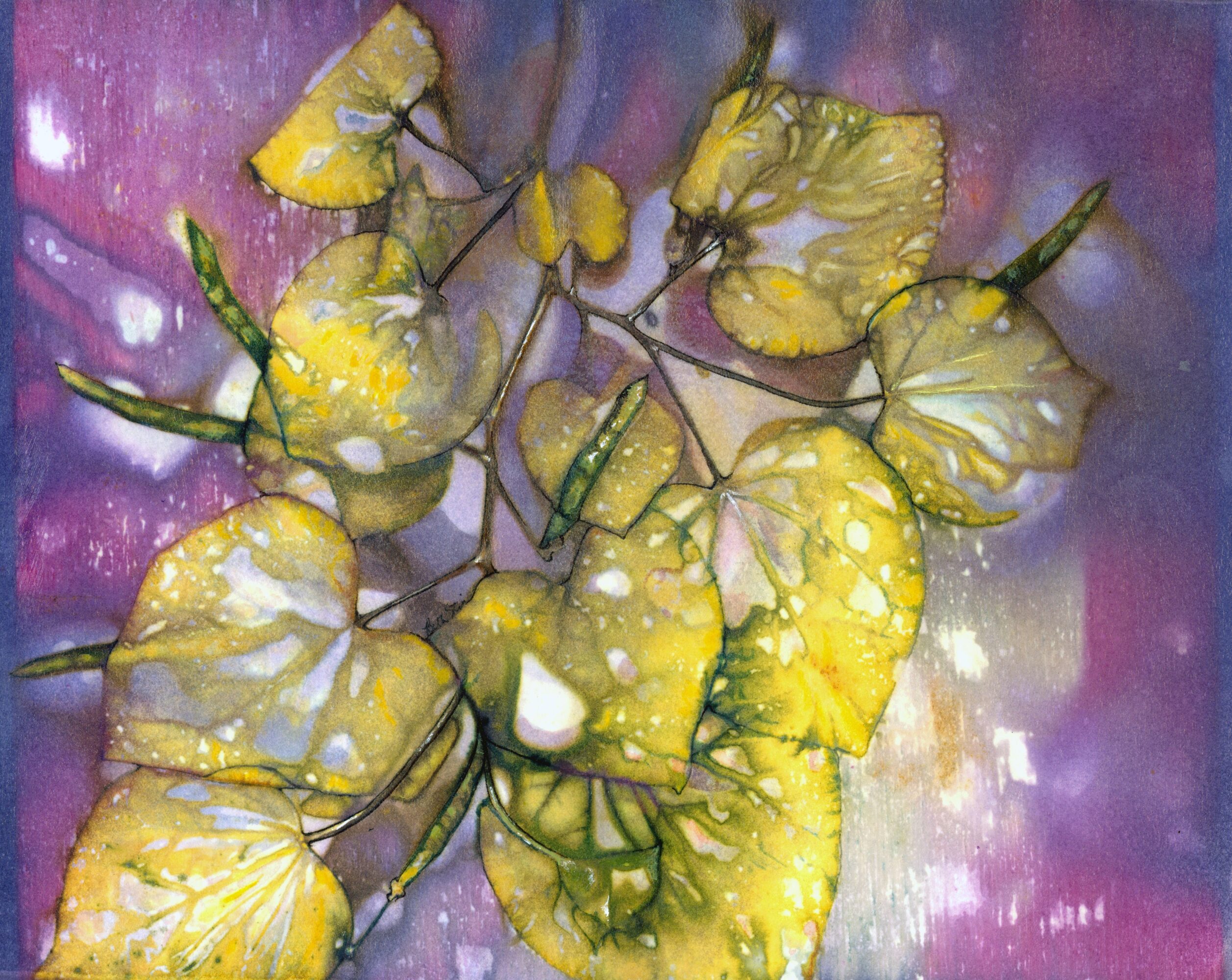
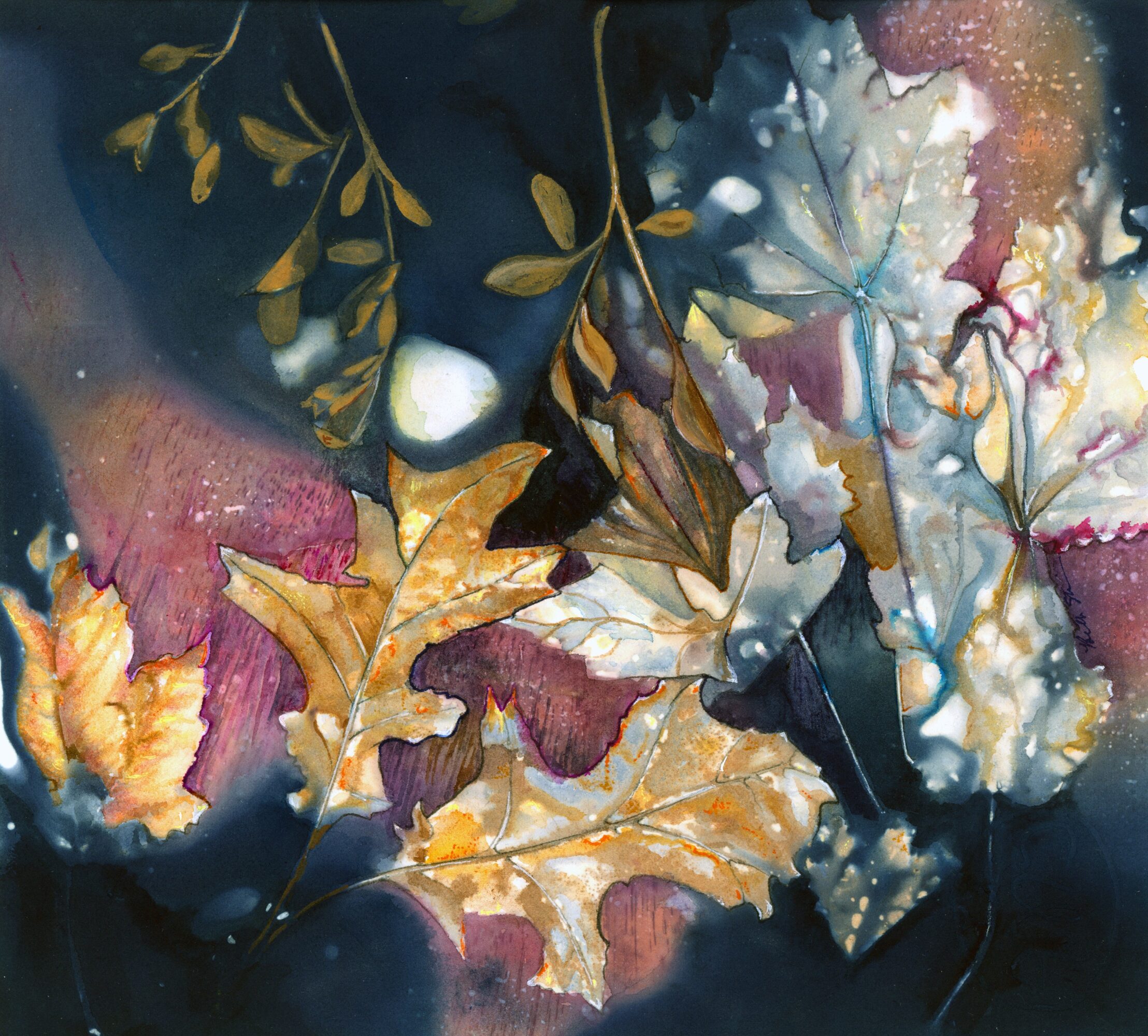
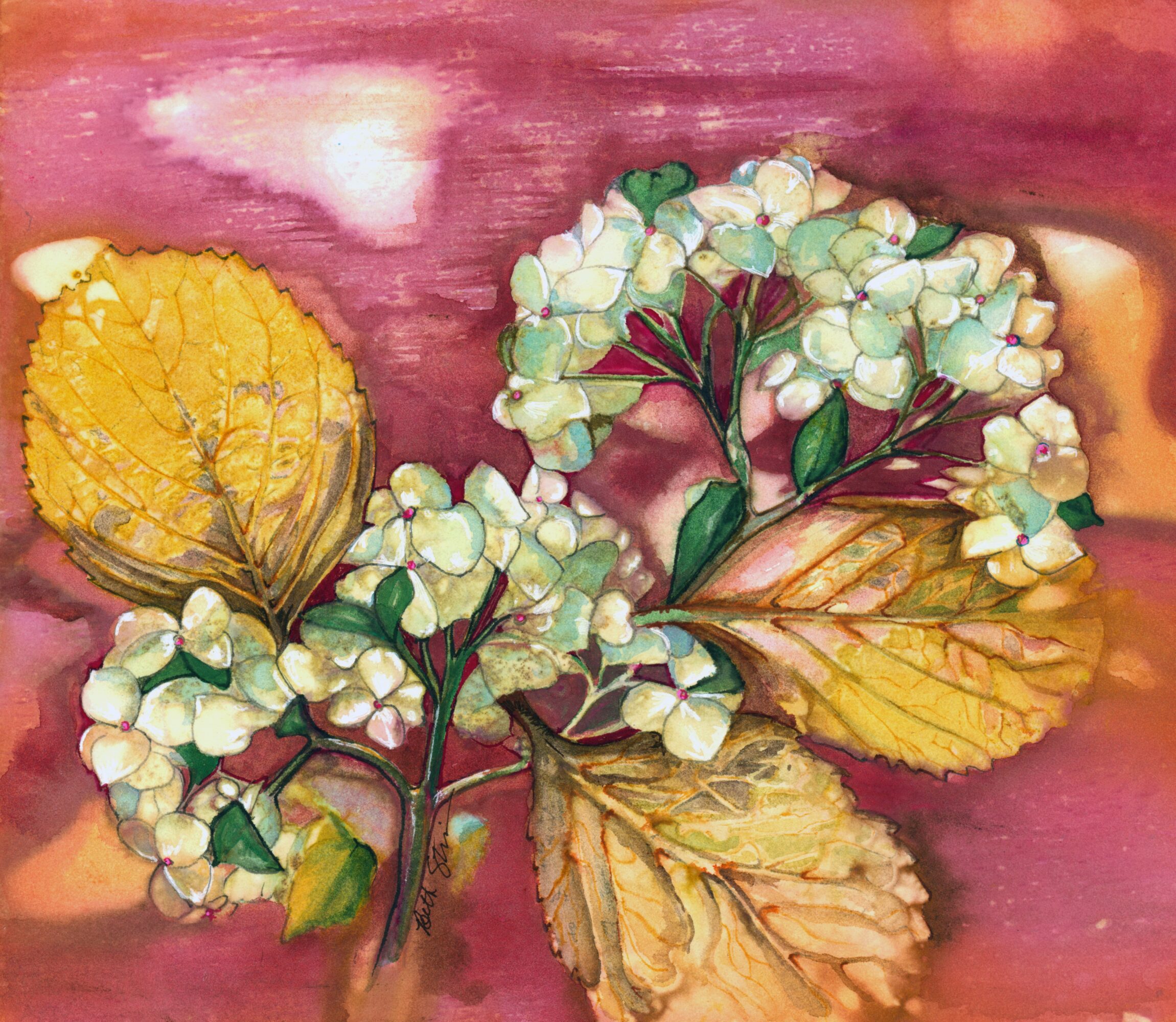
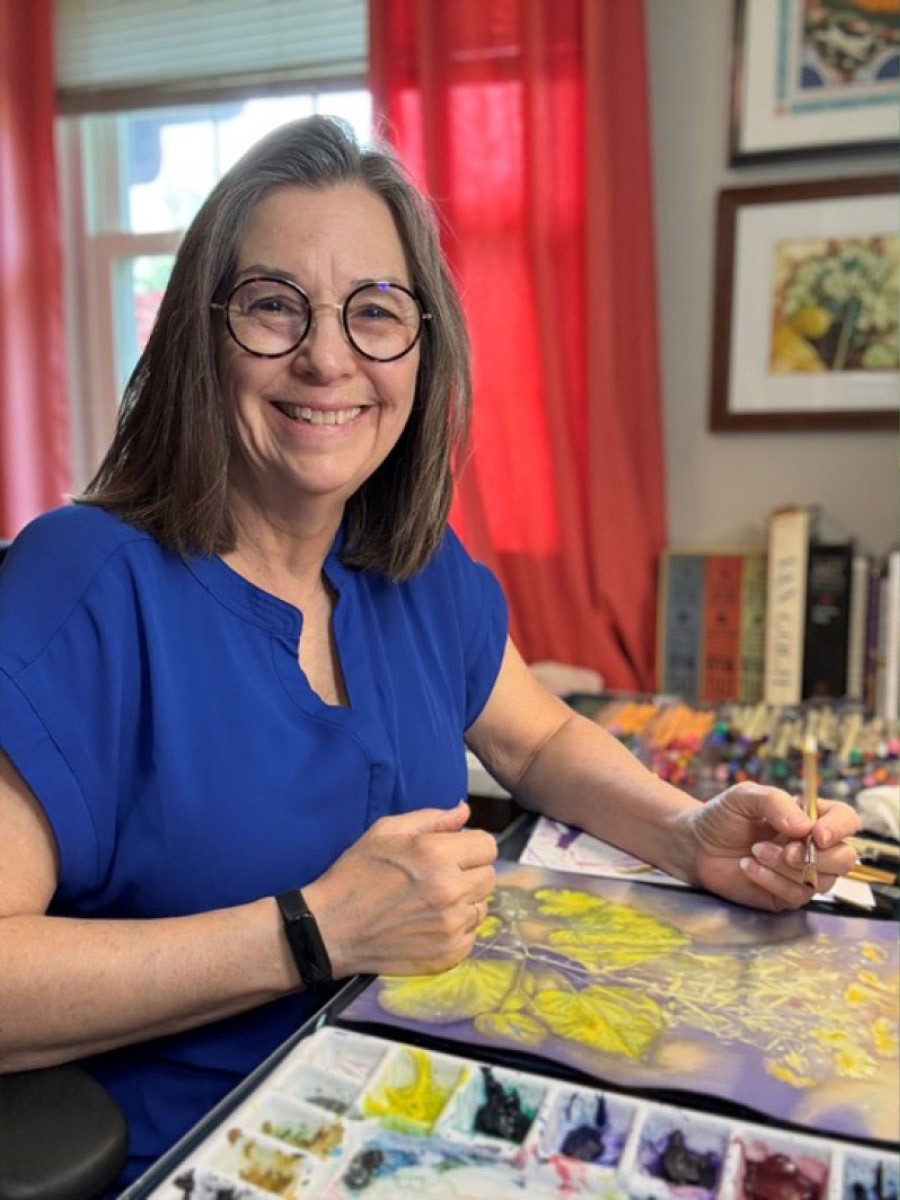
Always experimenting, I stumbled upon some YouTube videos on eco-printing and began looking for innovative ways to make that technique my own. I developed a process I call “echo printing,” a chemical printing process using plants, printing-making paper, and dye to transfer an “echo” of the plant material to the paper. I then use watercolors and ink to create unique colorful and impressionistic botanical monotypes.
I show my work in galleries throughout Maryland. This past summer I was the artist-in- residence for the month of July at Weir Farm National Historical Park in Ridgefield, Connecticut. This prestigious appointment is granted to six artists a year after a rigorous application process. I made 156 echo prints during my stay, exploring the unique ecosystem of the park. The experience of Weir Farm led me to retire early. I’m now pursuing a life as a full-time artist, looking for more opportunities to create work in different places and sell my work through galleries and online.
Can you talk to us a bit about the challenges and lessons you’ve learned along the way. Looking back would you say it’s been easy or smooth in retrospect?
Being an artist is never a smooth road. You create work that comes from your heart and then have to muster the courage to show it to the world and take whatever feedback and criticism that comes your way. You enter shows, approach galleries, and submit applications for programs and grants, understanding that most of the time you will be rejected.
Selling art is another struggle that takes bravery and perseverance. You want people to love your work and value it enough to pay for it. You don’t want to give it away or undervalue it, yet you want people to be able to afford to purchase your work so putting a price tag on it is difficult.
In today’s world you need a brand and an online presence. The time it takes to create a website, a storefront, a social media identity, and a blog or newsletter takes away from your time to experiment and create. Finding a balance among all these competing things is what I struggle with.
Thanks – so what else should our readers know about your work and what you’re currently focused on?
I work as an experimental mixed media artist using a process that I developed called “echo printing.” Using plants, printing-making paper treated with a mordant, and dye, I transfer an “echo” of the plant material to the paper. Every transfer is an experiment based on the type of plants, paper, mordant, and dye. The results are unique and unpredictable. I then use watercolors and ink to create unique colorful and impressionistic botanical monotypes.
I have been experimenting with this process for about three years. I will never run out of subject matter or variations on my techniques. I am eager to try echo printing in other locations and in different ecosystems. Once I find plants that work in my process, I try and grow them in my own garden so I have a stable environment to with some predictability of the outcomes.
I am most proud of my artist-in-residence appointment at Weir Farm last July. I was able to collaborate with park rangers, historians, gardeners, and naturalists to produce a striking and unique volume of work. I have sold many pieces I created their and my picture and work was used in the park’s promotional materials for 2026.
Is there a quality that you most attribute to your success?
Curiosity and the willingness to experiment and make mistakes are characteristics that are most important to my success. Without curiosity, I would never have discovered eco-printing, the foundational idea for developing my echo printing process. Without experimentation and making lots of mistakes, I would not be where I am now – selling my work, giving demonstrations, and hopefully qualifying for artist-in-residence or similar programs.
Contact Info:
- Website: https://www.stinsonstudio.net/
- Instagram: https://www.instagram.com/stinsonb_75/
- Facebook: https://www.facebook.com/beth.stinson
- LinkedIn: https://www.linkedin.com/in/bethmacneilstinson/