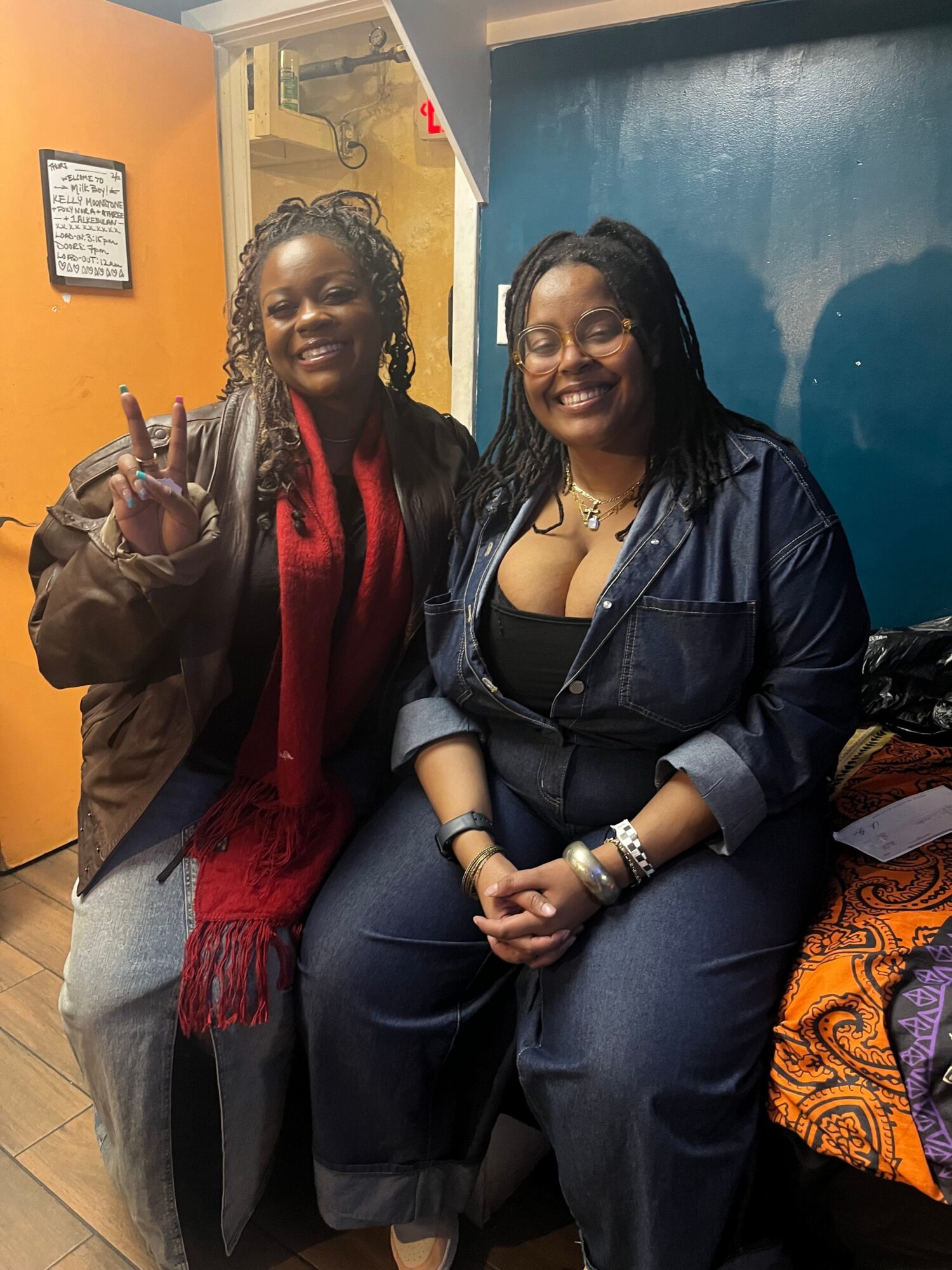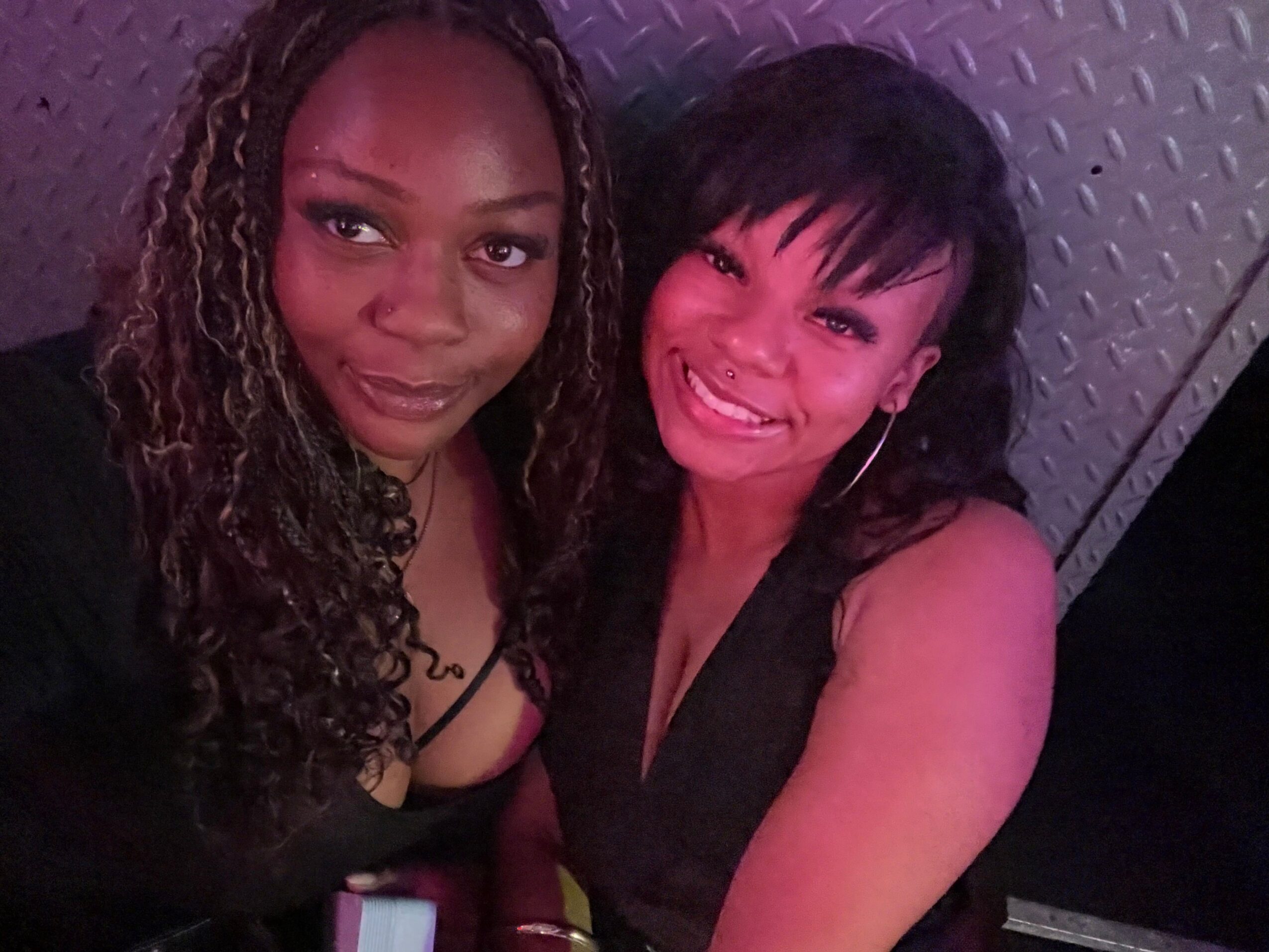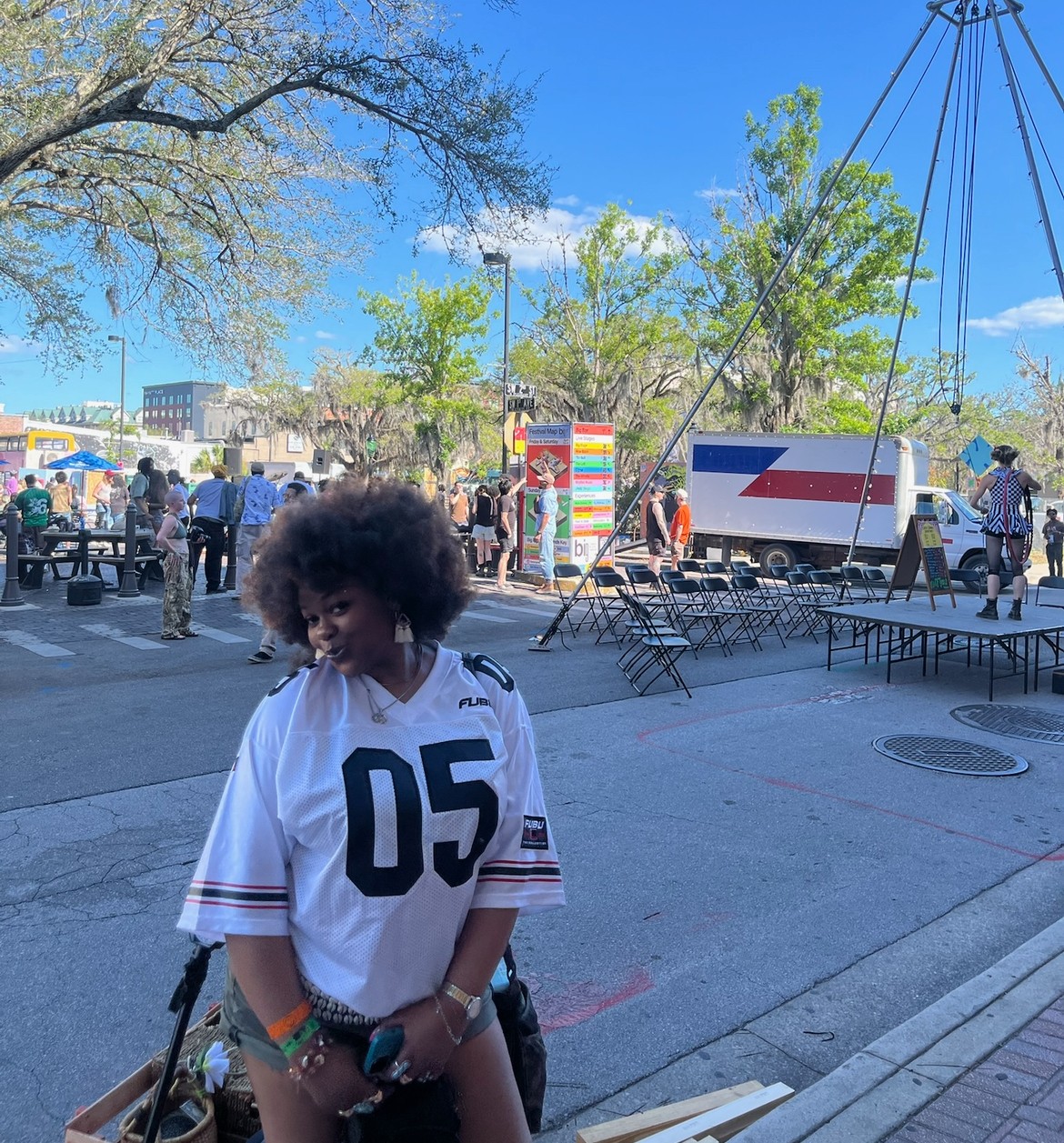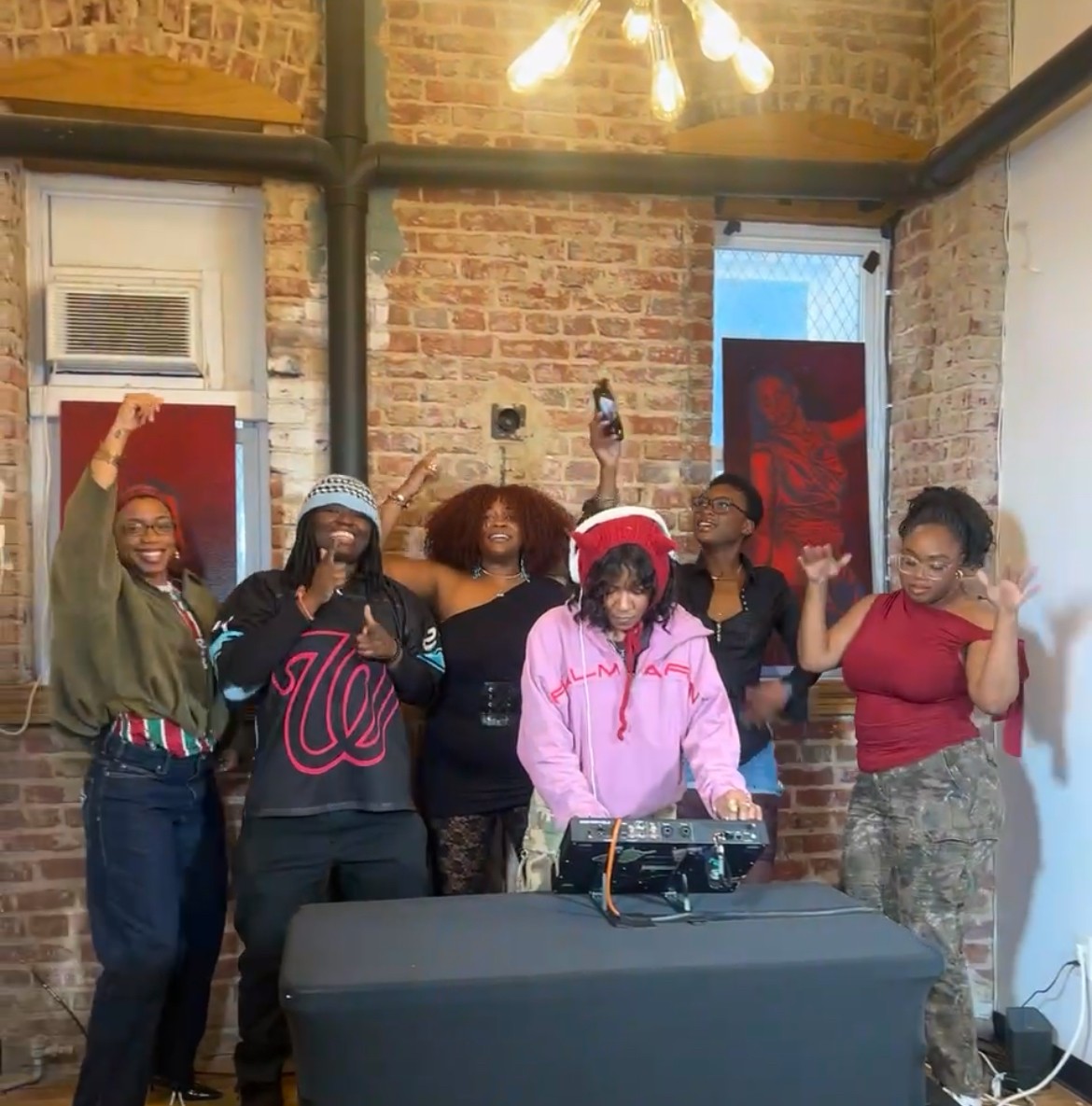




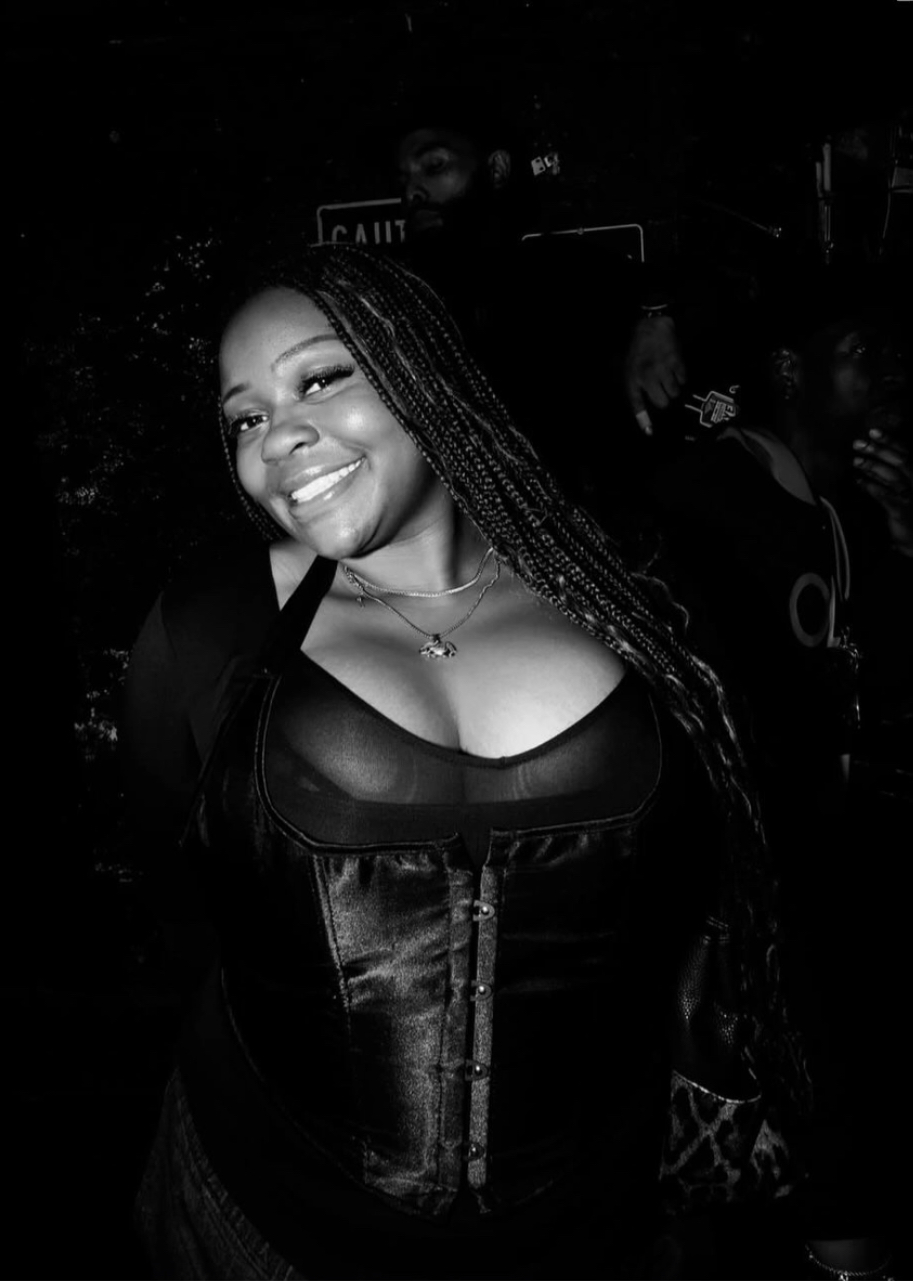
Today we’d like to introduce you to Asata Fatoyinbo.
Hi Asata, we’d love for you to start by introducing yourself.
My journey with music has always been a tug-of-war between a deep-seated calling and a powerful fear of being truly seen. For as long as I can remember, sound has pursued me. In middle school, I picked up the cello, which opened the door to years of orchestra intensives and musical theater. I would compose soundtracks in my dreams and host imaginary talk shows with my favorite artists. But for a long time, I ran from that intensity. I chose to be a rule follower, a palatable firstborn daughter, a girl who simply liked music. Deep down, I knew it was deeper than that, but I didn’t have the hutzpah or the language to plug into myself that way.
The turning point came in November 2023 following the passing of my grandmother, Alexandria. The woman who introduced little old me to the likes of Dionne Warwick, Betty Davis, and Luther Vandross. The woman who never missed a Sunday at Macedonia Baptist Church in Mount Vernon, New York. The woman who introduced me to voices that fundamentally built my worldview and opened my ears up to Black sound from the classics, to the experimental, to the ancestral. In the wake of that loss, I found myself numb—a “hamster on a wheel” at a desk job that suddenly felt suffocating. Grief stripped away the comfort of the mundane and forced me to look at the truths I had been avoiding. I realized that throughout my deepest lows and my highest highs, music was the only consistent through-line. It was the medium for my healing, echoing the intangibles that my “birthday twin” Stevie Wonder sings about: faith, love, truth, and the beyond.
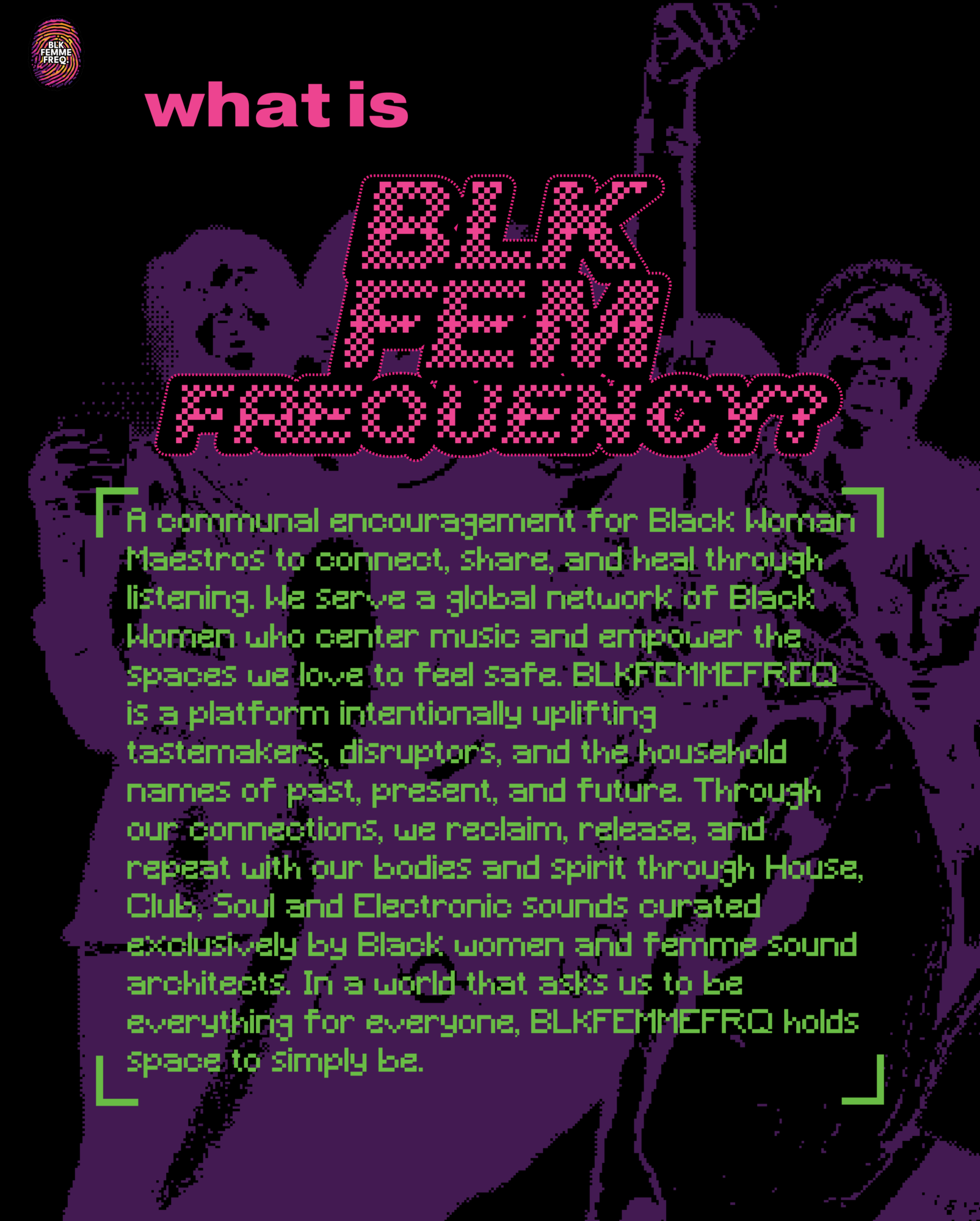
In 2024, I finally stopped running and decided to bet on myself. I birthed BLKFEMMEFREQUENCY, a platform born from the need to document my own healing and provide a spotlight for others. What began as a compilation of playlists and talent promotion for Black women and femmes has rapidly evolved into a vibrant (virtual) hub for “Sound Architects.”
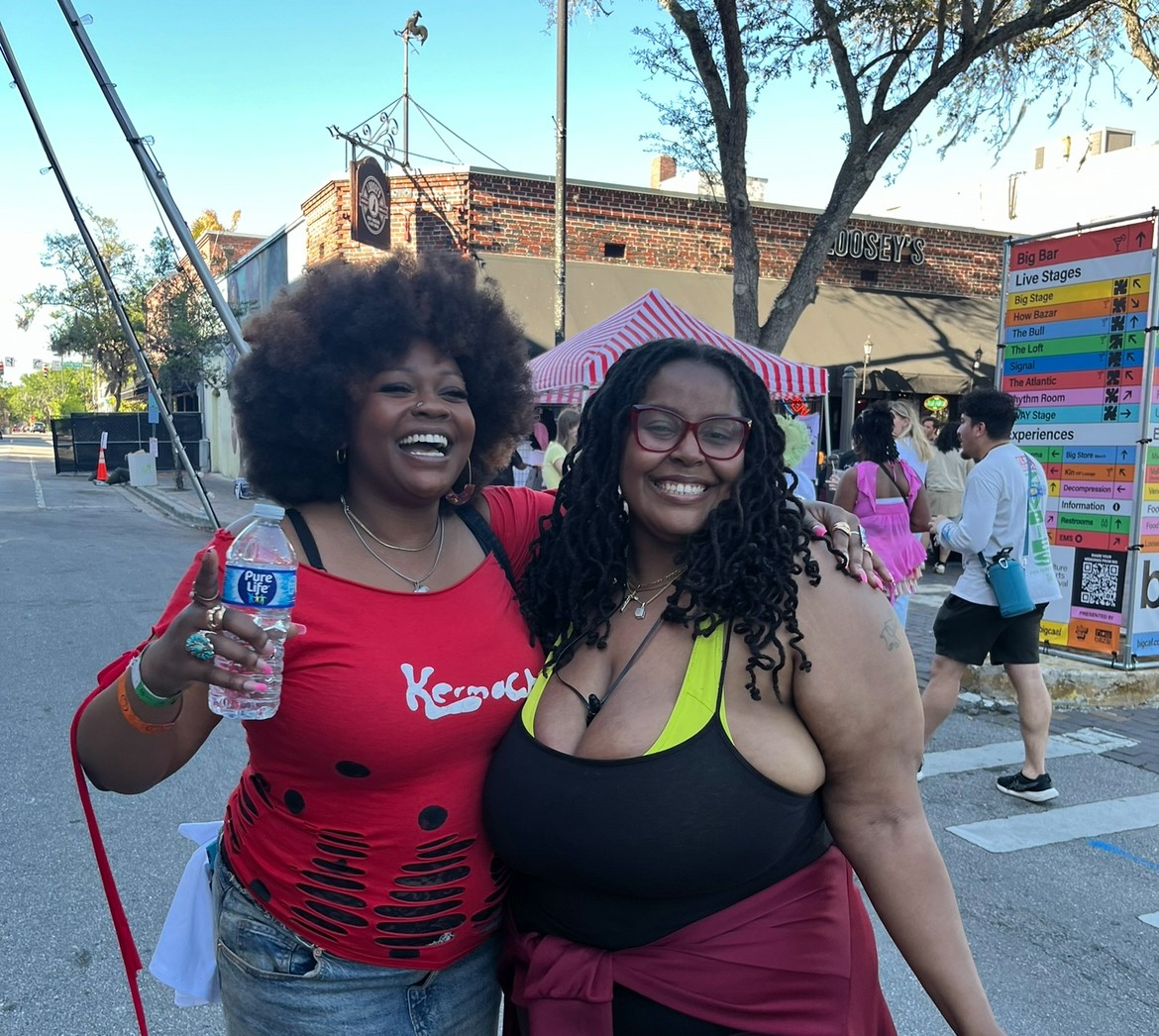
Since answering that call, the momentum has been life-changing. I’ve transitioned from daydreaming at a desk to conducting artist and DJ interviews, managing video production, and providing media coverage for major events like the 2026 BIG Culture & Arts Festival. Today, I am deeply immersed in the local club and house scenes of Baltimore and DC, using BLKFEMMEFREQ to uplift the tastemakers and disruptors who center music as a tool for collective joy.
I got to where I am today by realizing that my fears were small compared to the bounty of following my passion. This platform is my way of paying the craft back for everything it has done for me—creating a space where Black women can reclaim their spirits through sound and, in a world that asks us to be everything, finally have the space to simply be.
I’m sure it wasn’t obstacle-free, but would you say the journey has been fairly smooth so far?
So far, I haven’t encountered any challenges I couldn’t handle, but there have been a few that’ve humbled me. While I am new to the more formal world of bookings, entertainment, partner relations, and platform-building, I am a veteran of connection. I’ve always had the “gift of gab”—that natural pull toward people, the attention I can hold in a great conversation and the curiosity to pick the brains of the architects behind amazing art. Bringing people together and holding space for deep conversation is my second nature. However, the transition from “fan and connector” to “curator and founder” has come with a steep learning curve.
Because BLKFEMMEFREQ is my first passion project, and because I care so deeply about the integrity of the sound, I am incredibly sensitive about my work. When you’re fueled by authenticity, every piece of content feels like a little piece of your soul. My biggest challenges haven’t been the “big” things, but the quiet, gritty and tedious parts of post-production like technical hurdles of navigating the world of editing and video production, to ensure the visual matches the vibe of the sound. Then there’s learning how to form new language to share my vision so that it’s recognizable and resonant with a global audience. And then there’s the universal vulnerability of asking for help; realizing that even a “maestro” needs a team and learning to ask for help without feeling like I’m losing my grip on the vision, but also being open to all the new and refreshing ideas of others that also love what I’m doing and share the same love.
Perhaps the greatest internal struggle has been shaking the fear of being “perceived.” There is a specifically stupid yet intoxicating kind of anxiety that comes with people watching you build something from the ground up. I’ve had to give myself permission to “do it imperfect first”—to embrace the raw, unpolished, and DIY stages of a startup. I’m learning to value the process over the polish, knowing that in the end, the best results come to those who are brave enough to work through their “rough draft” phases. I’m moving through the growing pains because I believe in myself and the medicine of music. I’m not just building a platform; I’m documenting my healing process, and that requires me to be as honest about the struggles as I am about the wins.
Alright, so let’s switch gears a bit and talk business. What should we know about your work?
Aside from the music, I’ve led a somewhat linear trajectory professionally. As a kid, I was around a lot of medical spaces. I found a strange comfort in the beeping of monitors and the hurried pace of life-saving work while supporting my brother, a two-time cancer survivor and Make-A-Wish kid. Between his journey, the loss of my grandparents to cancer, and my father’s miraculous survival after a three-story fall during the pandemic, I became a student of resilience and hospitals very early on.
This upbringing naturally channeled me into service-oriented roles. I started in lifeguarding, then transitioned to phlebotomy, before landing a defining role in operations for a prominent LGBTQ+ non-profit clinic in DC, Whitman Walker Health. While that work taught me the complexities of workplace politics and the sobering realities of the non-profit sector, it also led me to my most rewarding project: Beauty Shop Conversations. Facilitating free workshops on HIV status, pleasure, and personal care for Black women in DC showed me the immense power of meeting people exactly where they are, the power of understanding, and just how much space someone may need to fully open up.
After earning my Bachelor’s degree in Public Health from Towson University, I transitioned into the classroom as a middle school health teacher in Prince George’s County. Teaching has been a revelation—I’ve found that my relatability and proximity in age allow me to challenge my students while keeping the content accessible. There is no feeling quite like watching the “light bulb” go off for a student who finally feels seen and understood.
Everything I have done—from the clinic to the classroom—has been preparatory for the work I’m doing now with BLKFEMMEFREQUENCY. My medical and non-profit background gave me the calm needed for crisis and the bandwidth needed to organize and produce events, while teaching refined my ability to curate information and communicate it authentically.
I am most proud of how I’ve been able to take the “pseudo-health” experiences of my past and inject them with my own flair. My work today is about bridging the gap between clinical wellness and the healing frequency of sound, and community building, ensuring that the spaces we love are not just loud, but restorative.
What does success mean to you?
I think on a surface level, success is often something that is quantifiable. This is through metrics like followers, streams, views, and likes. I personally think success has more to do with impact. I think being able to start a tradition is way better than starting a trend. When practices, sayings, and ways of life can be imprinted into culture or etiquette, I think that speaks way louder than a like or purchase. Success, for me, is when my ideas and values for BLKFEMMEFREQ and for anything else that I love and hold in high regard become part of a cultural fabric and build upon the existing pillars to further support everyone involved. When the way we hold space, the way we listen, and the way we heal become second nature to the community–there is no confusion, there is no greyspace that can be co-opted or gentrified. When a practice becomes a legacy, it speaks much louder than a like or a purchase. My goal isn’t to be seen; it’s to be remembered through the rituals I start and honor and conversations I leave behind.
Contact Info:
- Website: https://substack.com/@asatasonata
- Instagram: https://www.instagram.com/blkfemmefrequency/
- Twitter: https://x.com/blkgirlsa
- Other: https://www.instagram.com/asatasays/