



Today we’d like to introduce you to Letiyo Mawadri.
Hi Letiyo, it’s an honor to have you on the platform. Thanks for taking the time to share your story with us – to start maybe you can share some of your backstory with our readers?
Though I’m Ugandan, I grew up across the African continent and the Middle East before coming to the US by way of South Dakota, on a scholarship to study accounting and finance. I was homeschooled from about age 10 through high school, an unconventional setup that meant a lot of isolation and very controlled exposure to the world outside my immediate family. My upbringing was shaped by strong Catholic, conservative views, and it wasn’t until I got to the US that I started forming an independent worldview.
It began with deconstructing race. I’d grown up in a region of the world that’s almost entirely Black phenotypically, so landing in a red state like South Dakota in 2018 during Trump’s first term meant I had to learn what being Black meant, and how to “be” Black. That process of “learning” blackness made clear just how much of a construct race is, and once that clicked, I started questioning everything else: religion, then gender, then sexuality, and on from there.
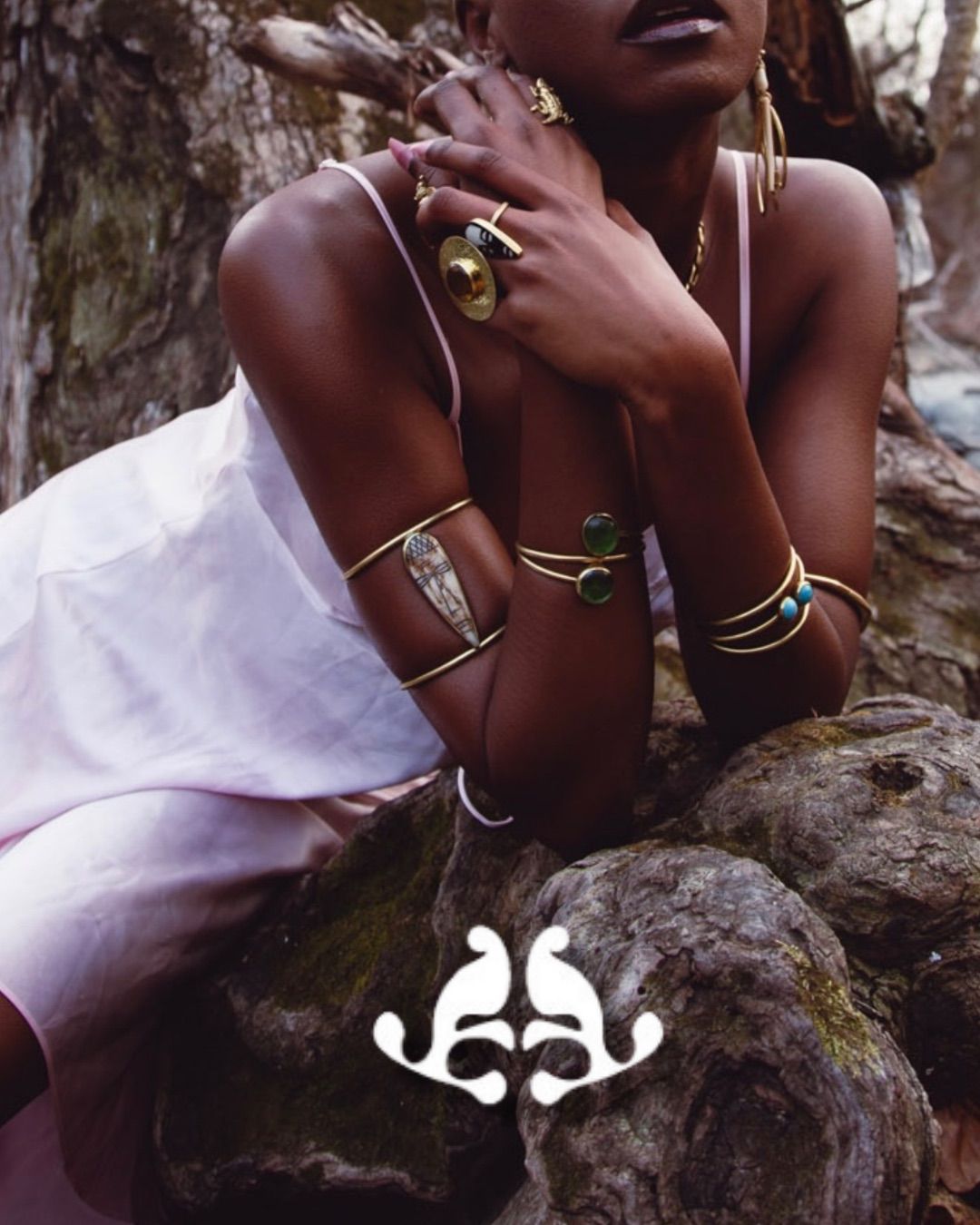
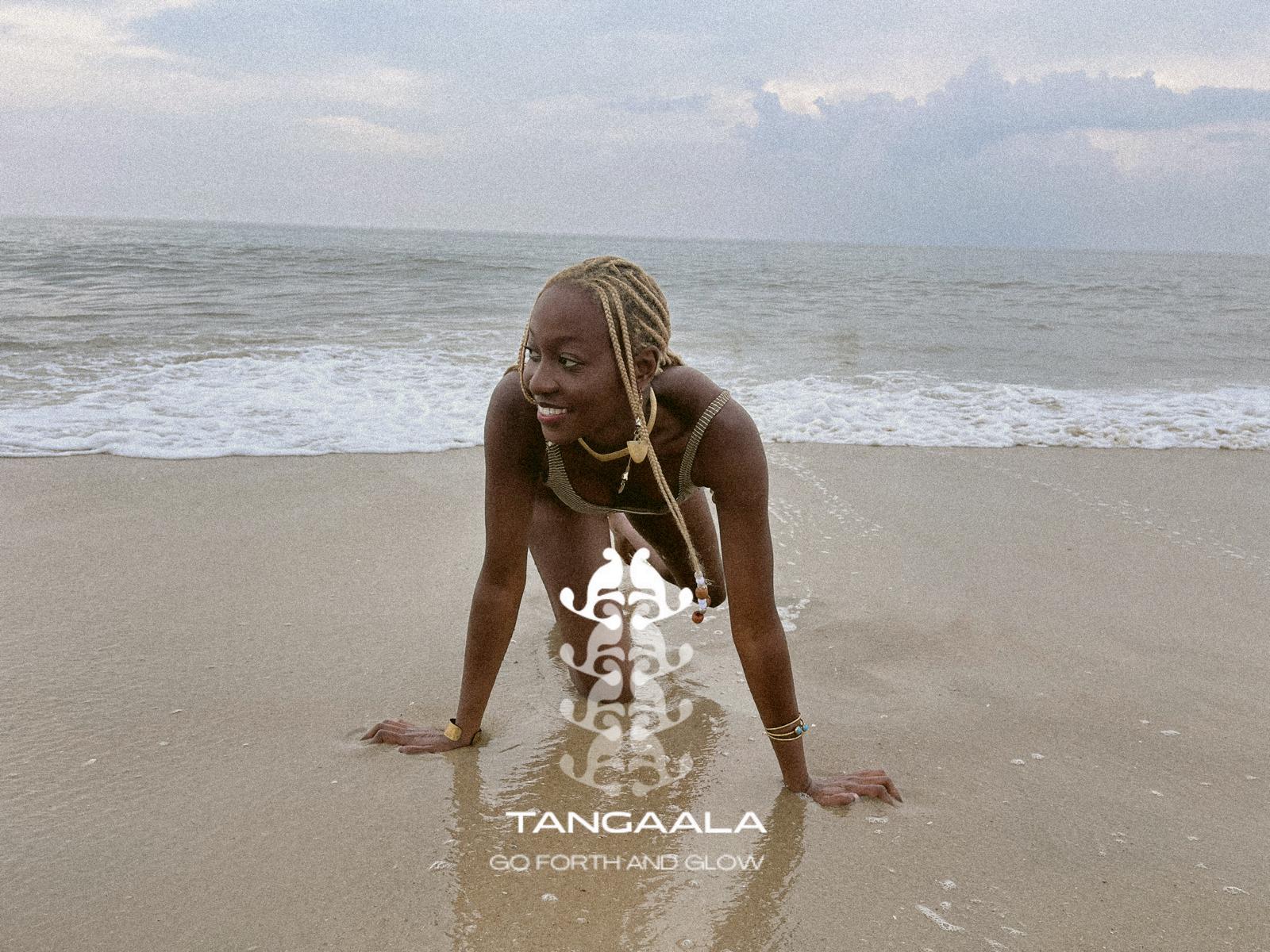
Tangaala emerged out of putting those pieces back together to form a more intentional reconstruction of my own identity. The name means “to glow” in Luganda, and it carries that reconstruction with it. The brand’s aim is to give its wearers permission and courage to exist wholly and take up space.
I’m sure it wasn’t obstacle-free, but would you say the journey has been fairly smooth so far?
No, not smooth. Though the friction wasn’t always where I expected it. The hardest part, honestly wasn’t external. It was learning to trust a vision before there was any proof it would work. When you’re building something from nothing, there’s nothing to point to except your own conviction that it’s worth doing. Doubt is innately built into that process, which is standard with creative work, whether or not anyone else weighs in. You’re constantly making a case to yourself for something that doesn’t exist yet.
Then there’s the doubt that comes from outside, and that’s a different weight entirely. I’m navigating the very stereotypical African family expectation that still views the “traditional” path as the safest one, which makes sense when you’re trying to survive, which a lot of them were, but that’s not necessarily the reality anymore. I understood that instinct, though. I built a career in business, got my MBA, worked with established organizations, so I understand the comfort a conventional professional identity can bring, and the social, financial, and psychological safety that path seemed to offer.
When the doubt closest to you echoes the doubt already living in your head, it gets isolating fast. You’re not just second-guessing the work, you’re doing it without the people who are supposed to be your safest landing feeling fully behind you. But creatively, I keep getting pulled to something I can’t fully name yet. The struggle isn’t convincing myself my ideas are good. It’s learning to keep moving on them without the reassurance of already knowing they’ll work, and often without the reassurance of the people closest to me either.
Alright, so let’s switch gears a bit and talk business. What should we know about your work?
At its core, my work uses what’s literal and personal to tell a bigger story about belonging.
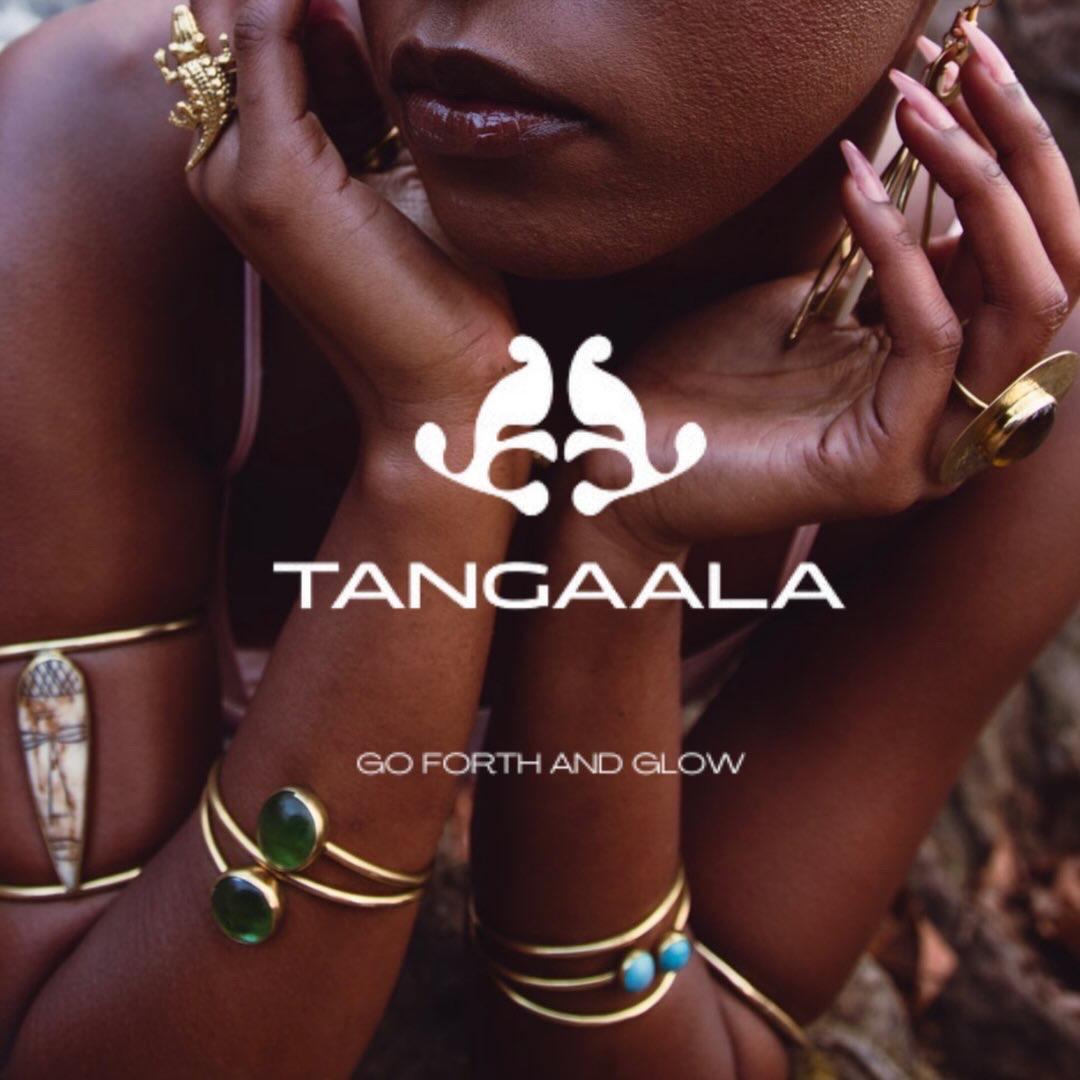
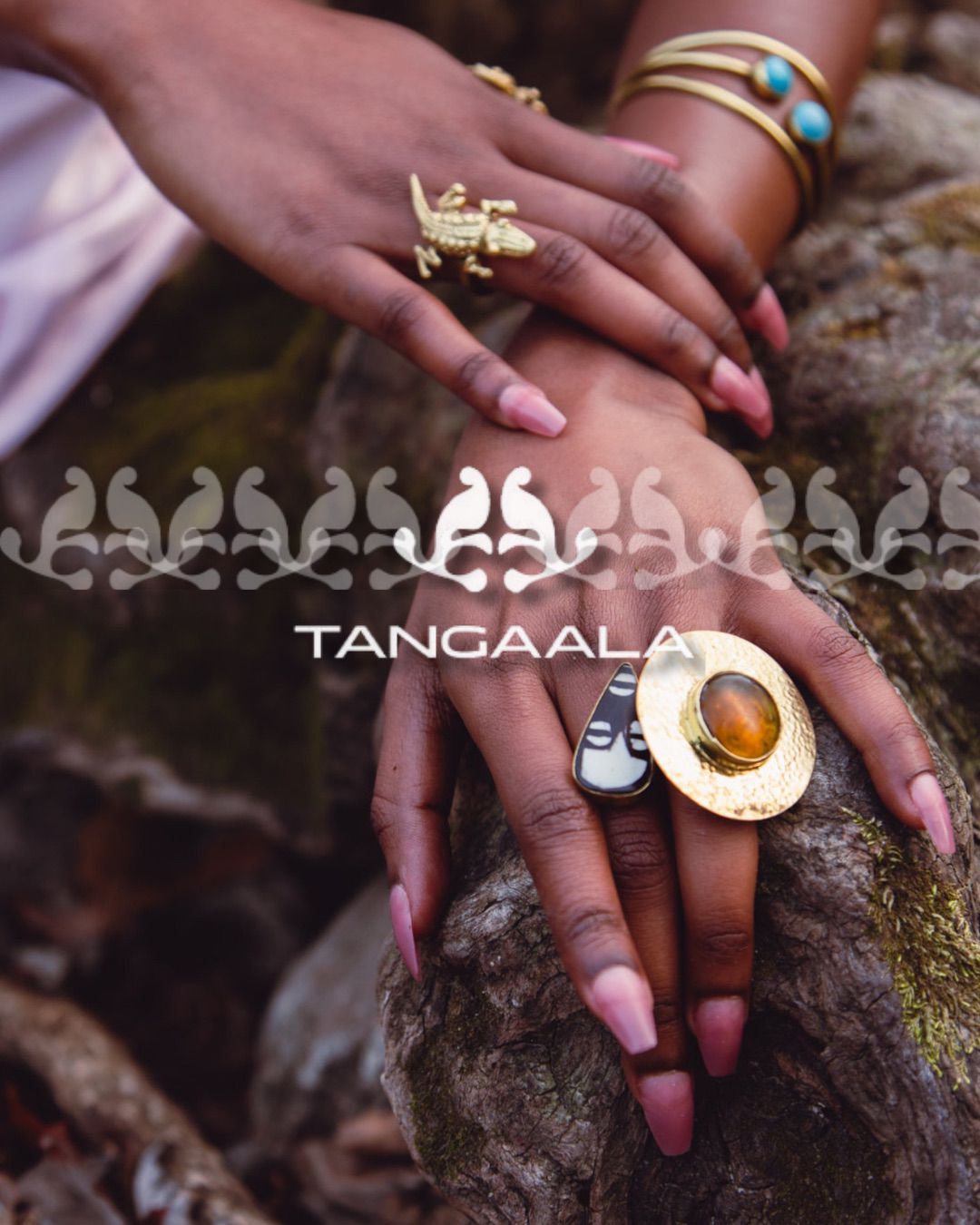
With Tangaala, that means handcrafted jewelry using sustainably sourced often recycled materials, designed with a maximalist sensibility. There’s a scrap to heirloom idea underlying a lot of what I make and the belief that everything has the capacity to be something with enough vision and will.
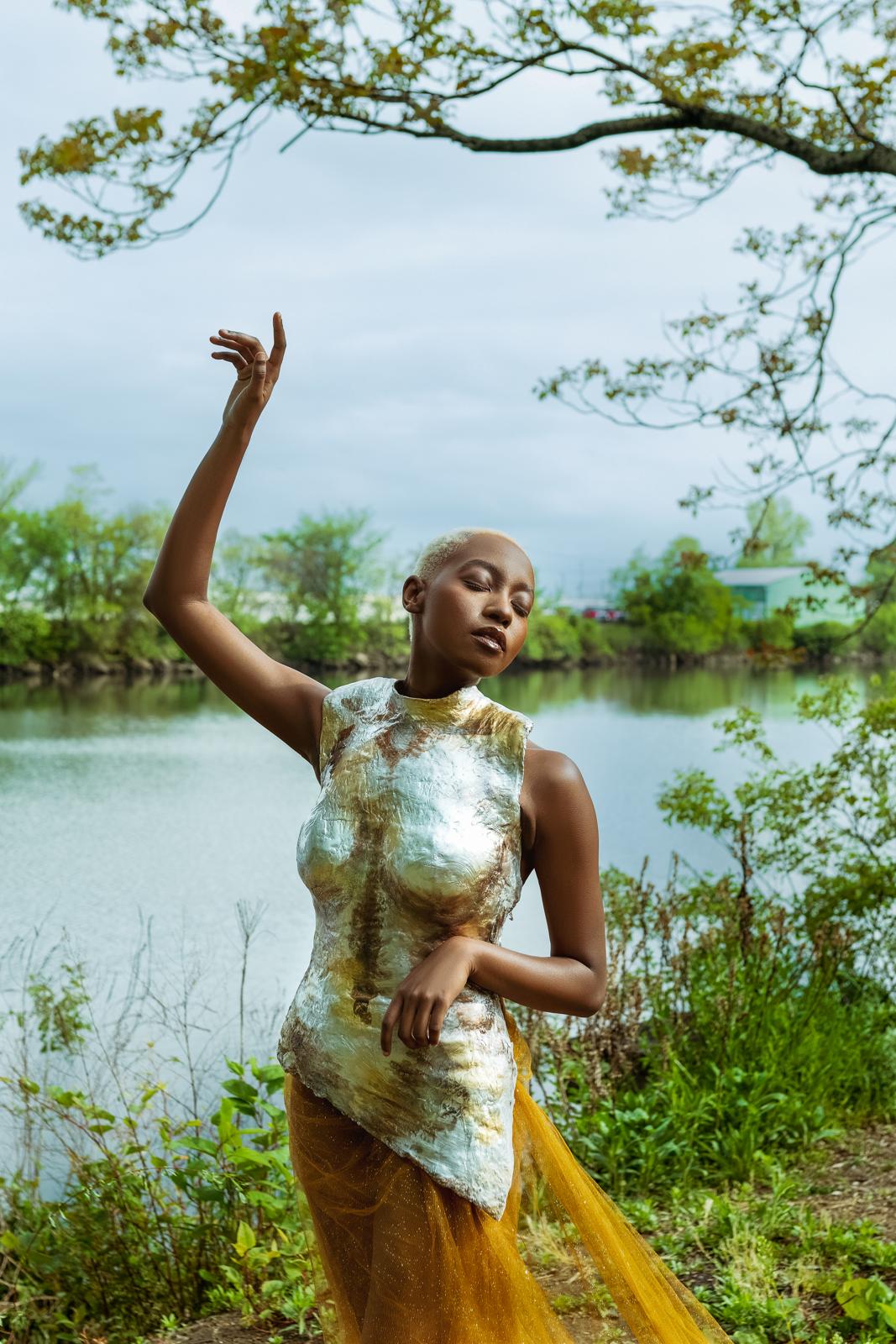
That same instinct shows up in Lolwe Textiles, where I’m working on turning the fiber in water hyacinth from Lake Victoria into a sustainable textile. It’s an invasive plant that chokes the Lake’s ecosystem, so I’m interested in what it means to take something considered a problem and give it a second, valuable life. That work has been recognized by the Clinton Global Initiative.
What I’m most proud of, though, is that I built a real business foundation, through my MBA and years of working at organizations like Deloitte and Tiffany & Co., and am now using it in service of something much less conventional. I don’t see that analytical and the creative as being in tension, but rather as working in tandem with one another. Being able to hold both is rarer in this space than people assume.
Risk taking is a topic that people have widely differing views on – we’d love to hear your thoughts.
I don’t think of myself as a risk-taker in the adrenaline sense. I’m not drawn to risk for its own sake. But I’ve come to see that staying “safe” in a traditional career while a real pull toward something else sat unaddressed was its own kind of risk. It’s a quieter one, because it doesn’t look like risk from the outside, but I’d argue it’s implications are deadlier. The biggest risk I’ve taken is probably stepping away from the safety of an established professional identity to build Tangaala and Lolwe Textiles. I had a version of success that was legible to everyone around me, and I’m choosing to build something that isn’t as legible to anyone, sometimes including myself. There’s no guarantee either brand works, and I don’t know that there will be a finish line where I get to say it definitely paid off, but that’s a risk I’m willing to take.
My view on risk now is that most of it isn’t about the odds but rather about how long you can tolerate being unproven. Building from nothing means operating for a long stretch without external validation, without data, sometimes without full support from the people closest to you. The actual risk stops being failure (failure is just an inevitable part of the process). It’s whether you can hold your own belief in yourself steady enough, for long enough, before the world gives you any reason to. Looking back, the isolation that defined my childhood was good practice for this.
If I’m honest about what makes it bearable for me, it’s staying tethered to something specific and personal rather than chasing an abstract idea of success. For me that’s my home, East Africa, a region mostly overlooked and the strong sense that what I’m building, though personal to me, is in service of something bigger than me. It’s my ability to see something worth building where everyone else hasn’t bothered to look. When the risk is in service of something that specific, it stops feeling reckless and starts feeling like the only honest option.
Pricing:
- Cuffs & Bangles – $36 – $42
- Chockers & Collars – $42 – $75
- Earrings – $35 – $40
- Rings – $20 – $30
Contact Info:
- Website: https://tangaala.com/pages/our-story
- Instagram: https://www.instagram.com/tangaala/
- Other: https://www.tiktok.com/@tangaalajewelry