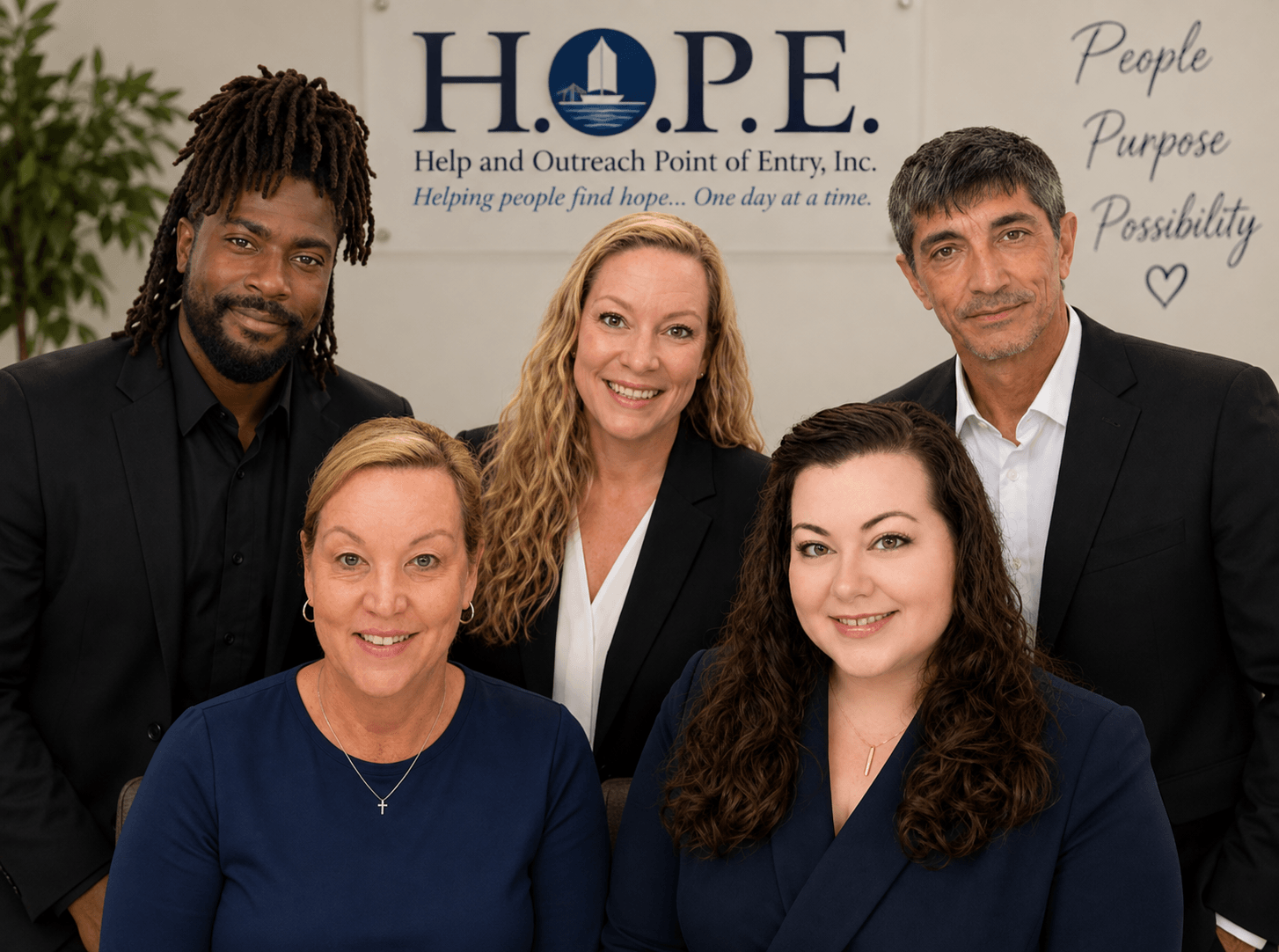




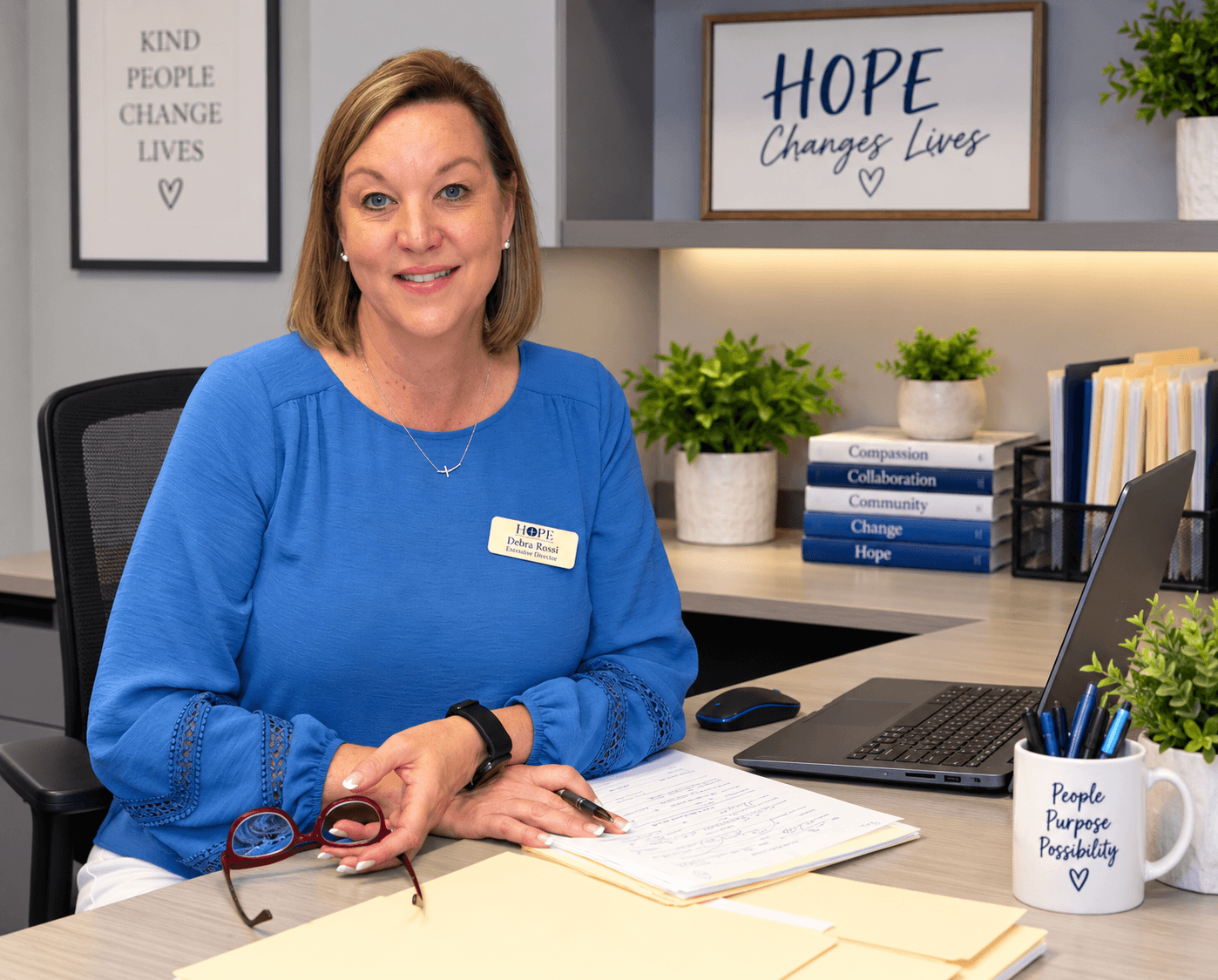
Today we’d like to introduce you to Debra Rossi.
Hi Debra, we’re thrilled to have a chance to learn your story today. So, before we get into specifics, maybe you can briefly walk us through how you got to where you are today?
My journey to H.O.P.E. was born from loss. After losing two close family members, I was grieving and looking for a way to move forward when I saw an opportunity to volunteer at a local shelter. I have always told my children, “The best way to get over yourself is to help someone else,” so I decided to take my own advice.
That decision changed my life.
Through volunteering, I began to see homelessness, poverty, addiction, and the barriers people face in ways I never had before. It was also during this time that I learned about Help and Outreach Point of Entry, Inc. (H.O.P.E.).
At the same time, I was struggling to help my 30-year-old nephew, who had recently been released from incarceration. He was battling heroin addiction while grieving the loss of both his mother and grandmother. I watched him try to navigate systems that seemed unnecessarily complicated. Even something as basic as obtaining an ID was filled with obstacles. Then I discovered that H.O.P.E. was helping people overcome those same barriers every day. Suddenly, the work became very personal.
At that time, H.O.P.E. was only open two days a week from 10 a.m. to 2 p.m. Volunteering meant taking time off from my full-time job, but I did it—and it changed the direction of my life. If you had told me in 2020 that four years later I would become the Executive Director, I would have laughed.
My professional background was in construction accounting, not social work. I knew how to manage finances and run a business, but I had no formal education in human services. Looking back, though, I can see how I was being prepared in other ways. I had spent years independently learning about unconscious bias, discrimination, cultural differences, and the social systems that affect people’s lives. More personally, I had been trying to learn something much simpler and much harder: how to love people without judgment.
In April 2024, H.O.P.E. faced a leadership crisis. I was serving as Treasurer of the Board when the Board Chair asked if I could step in temporarily and help on an hourly basis. I agreed. What began as helping where I could quickly became a full-time commitment, and I accepted the position of Executive Director.
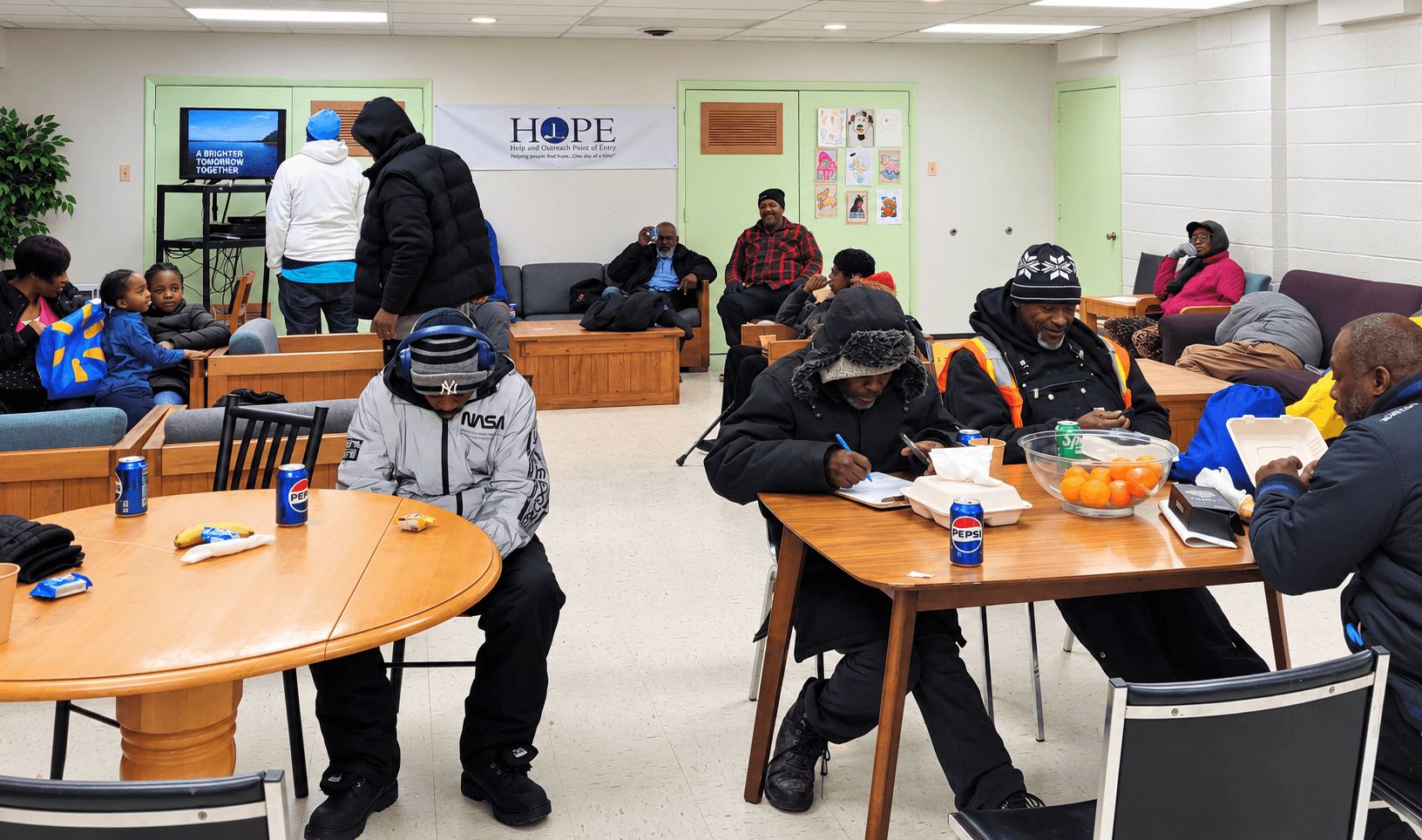
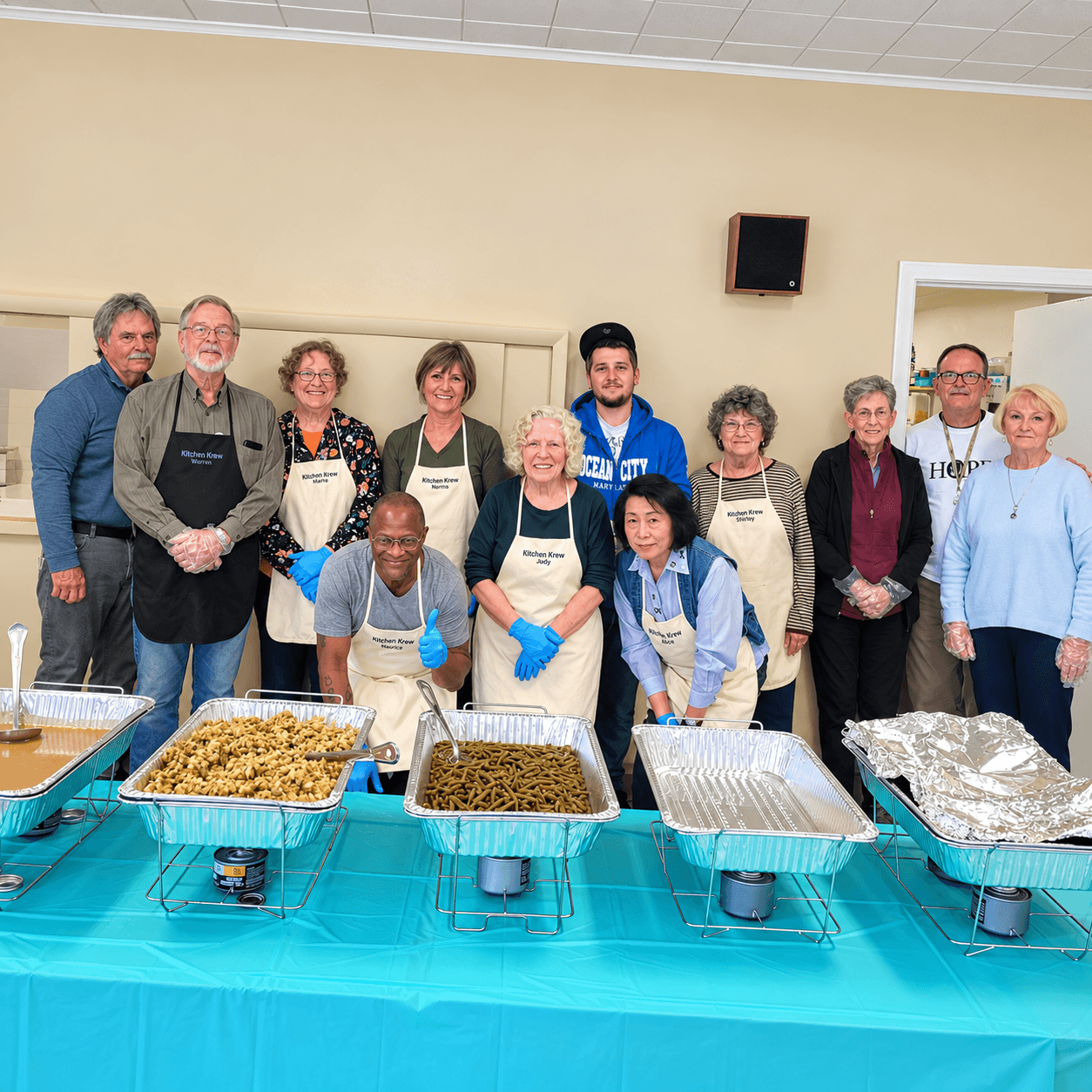
The transformation since then has been remarkable, but it has never been mine alone. I have an exceptional staff and an extraordinary team of volunteers who believe deeply in the people we serve. Together, we have grown from being open two days a week to four days a week and now serve as many as 100 people in a single day. We provide lunch every operating day and expand our hours during dangerous weather. This past winter, there were weeks when we opened seven days a week because temperatures did not rise above freezing.
When I became Executive Director, I had never written a grant. I immediately started asking questions, seeking help, and learning everything I could. This year, H.O.P.E. will exceed $1 million in grant funding across our programs—something I could never have imagined when I first walked through the door as a volunteer.
But the numbers aren’t what keep me here. The people are.
Love is an amazing motivator, and I truly love the people we serve. I have learned that everyone has a story. The person experiencing homelessness, the person struggling with addiction, the person returning from incarceration, or the person who simply cannot find their way through a complicated system—there is always more to their story than what we see on the surface.
And if you’re really lucky, they will trust you enough to share a little of that story with you.
That’s what H.O.P.E. has taught me, and it’s ultimately how I got to where I am today.
Can you talk to us a bit about the challenges and lessons you’ve learned along the way. Looking back would you say it’s been easy or smooth in retrospect?
It has definitely not been a smooth road. There has been so much to learn and so much to juggle. Honestly, there are days when I would rather just hang out with our clients, make coffee, hand out supplies, and listen to their stories—but I rarely get to do that anymore.
As H.O.P.E. has grown, so have the responsibilities. We’ve expanded our staff, programs, and community partnerships, but there is never really a point when you feel caught up. There are grant deadlines, reporting requirements, meetings, donor relationships, budgets, staff development, and the everyday responsibility of keeping the organization running. I’ve learned much of it in real time while doing the work.
Then there are the challenges that can’t be put on a calendar. Every season brings different needs and different crises—from blizzard conditions in the winter to extreme heat in the summer. We encounter people with significant mental health or medical needs and sometimes discover that the level of care they need simply isn’t available in our community. Those are some of the hardest moments because you desperately want to find a solution.
My natural instinct is to solve the crisis in front of me. One of the most important lessons I’ve learned as a leader is to pause. A decision that may seem like the right solution for one person can unintentionally put the organization, our staff, or other clients at risk. Compassion is at the heart of what we do, but compassion also has to come with responsibility.
Thankfully, I have built an incredible network of community collaborators, and they have become my safety net. When difficult decisions have to be made, I don’t have to make them alone. I have people I trust who will answer the phone, talk through a situation, respond when needed, and remind me that collaboration is one of our greatest strengths.
Funding has brought its own lessons. I’ve learned not to chase every opportunity or believe that every grant is meant for us. What aligns with our mission will come, and sometimes a “no” simply redirects us toward something that is a better fit.
Most importantly, I’ve learned not to be afraid of making mistakes. Some of the best lessons I’ve learned came from getting something wrong, owning it, and doing it differently the next time. I’m still learning. I hope I always will be.
Alright, so let’s switch gears a bit and talk business. What should we know?
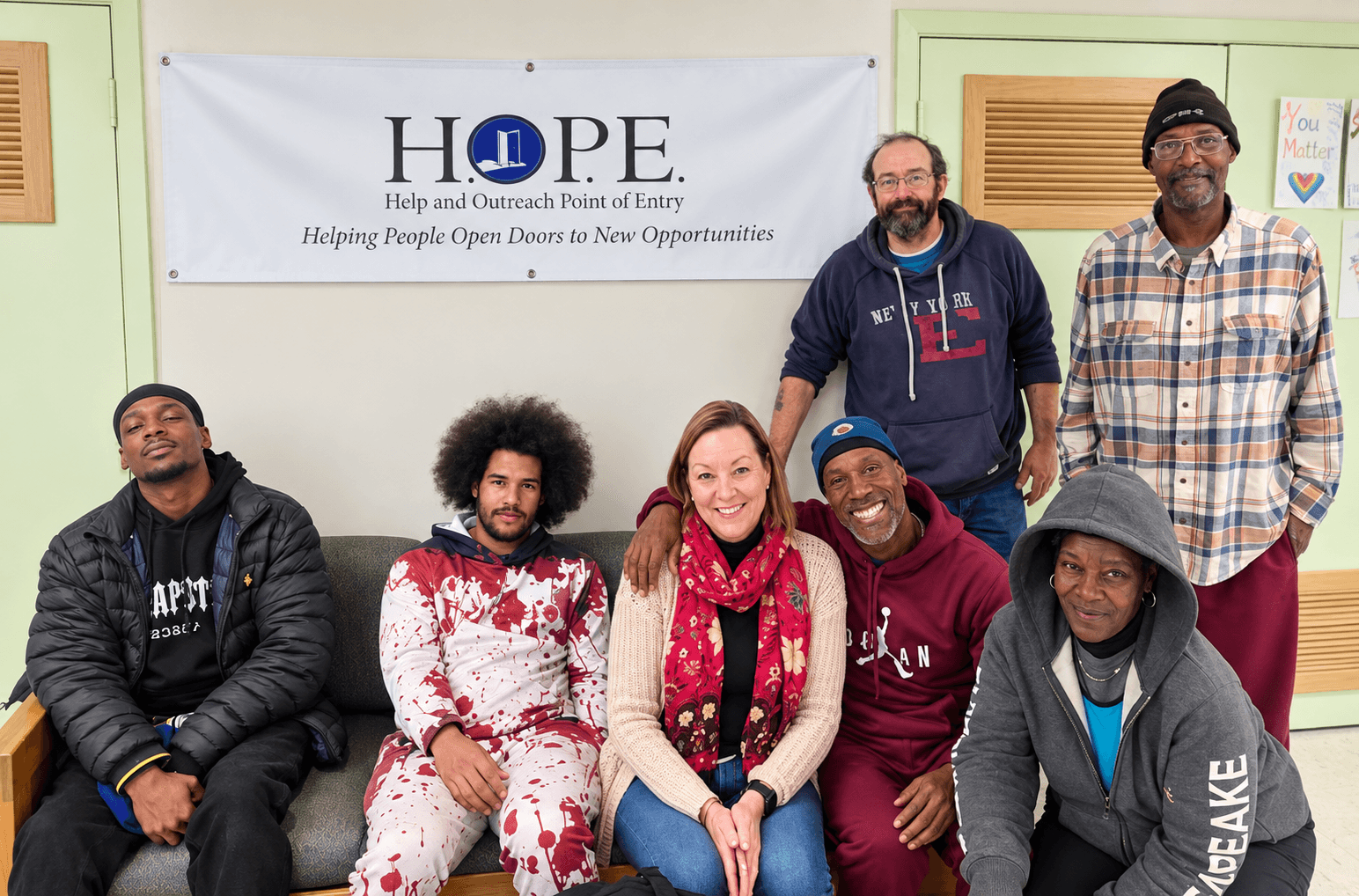
Help and Outreach Point of Entry, Inc.—H.O.P.E.—is a nonprofit organization serving individuals experiencing homelessness, poverty, addiction, and other vulnerable circumstances on Maryland’s Lower Eastern Shore. At the heart of everything we do is a simple belief: people deserve to be treated with dignity, kindness, and compassion, regardless of where they are in their lives.
What sets H.O.P.E. apart is that we are truly barrier-free. You don’t need an appointment. You don’t have to be sober. You don’t have to have identification, insurance, income, or even know exactly what kind of help you need. You can simply walk through our door.
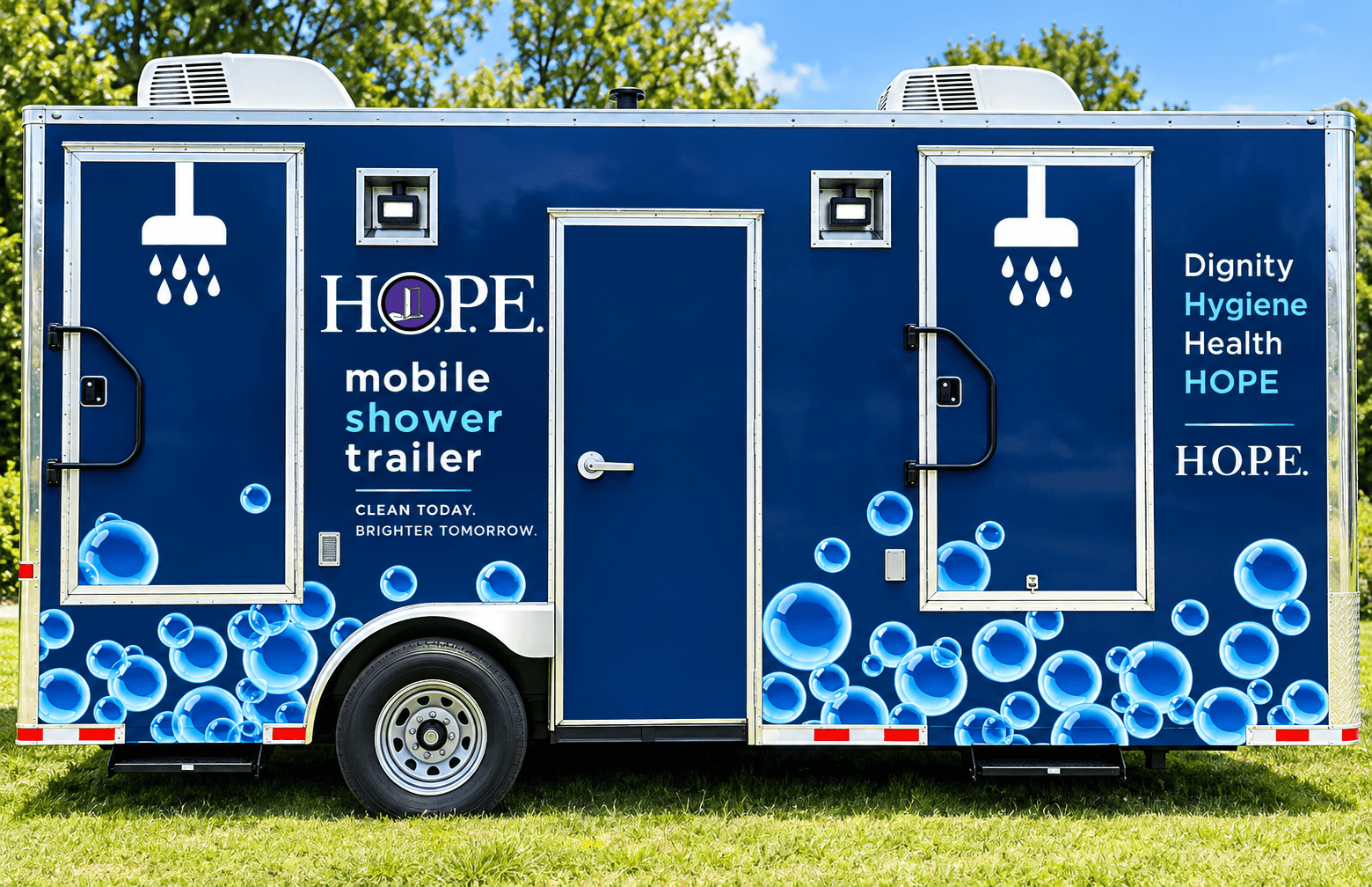
Sometimes what a person needs first is very basic—a hot meal, a shower, clean clothes, laundry, a place to receive mail, or somewhere safe to sit for a few hours. But those basic needs often open the door to something much bigger. While someone is having lunch or drinking a cup of coffee, we have an opportunity to build trust. That relationship may eventually lead to obtaining identification, accessing healthcare, entering treatment, finding employment, reconnecting with benefits, or beginning the process of finding housing.
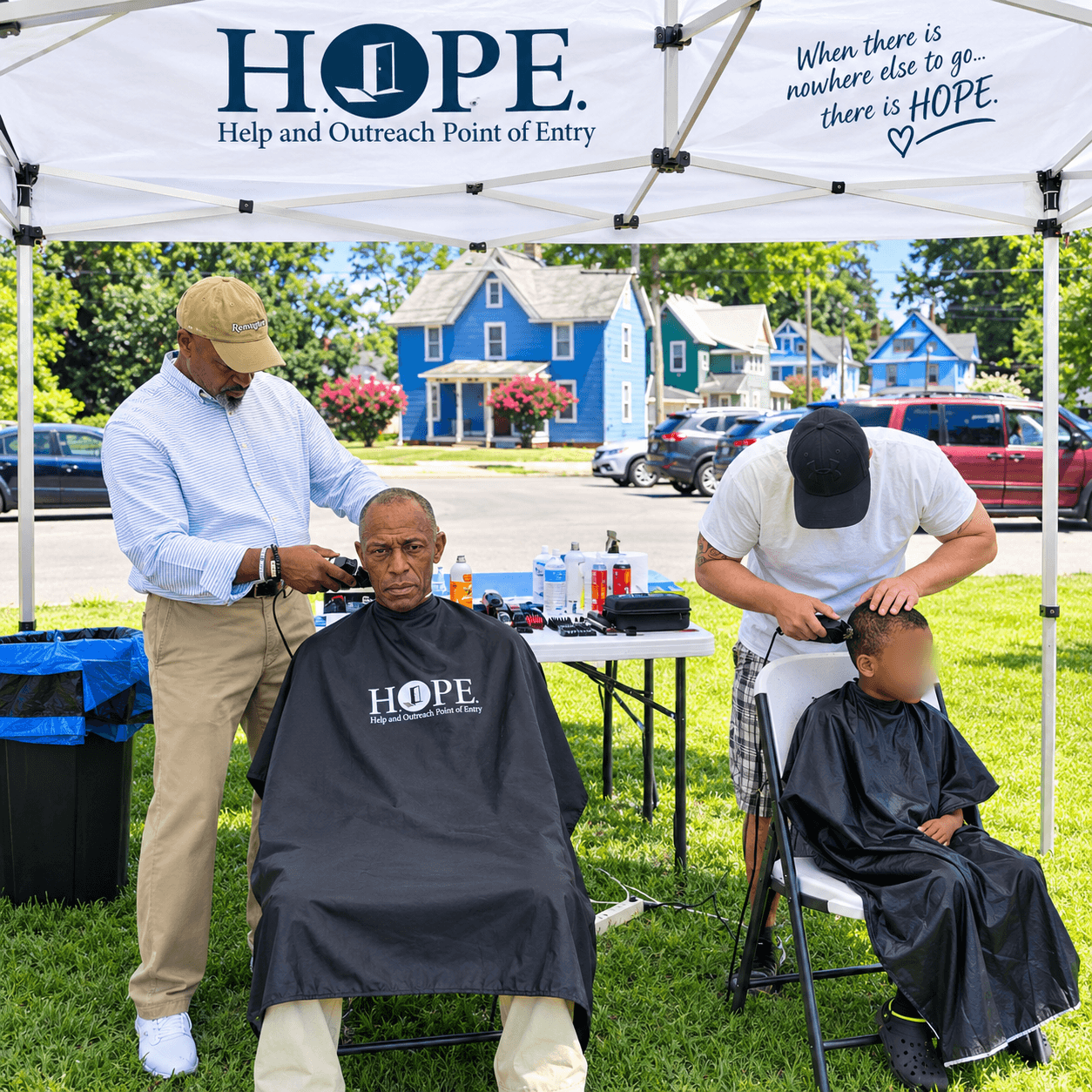
We specialize in helping people navigate the gaps between systems. Our programs include our barrier-free day shelter, Feeding H.O.P.E., assistance obtaining vital documents, adult oral health services, street outreach, re-entry support, transportation assistance, and individualized navigation and case management. Just as importantly, we have developed strong partnerships with healthcare providers, behavioral health and recovery organizations, government agencies, shelters, and other nonprofits. We know we cannot—and should not—try to do everything ourselves. Our strength is often knowing who can help and making sure our client actually gets connected to them.
I think what we are best known for, though, is meeting people where they are. We serve people who may have been turned away elsewhere, who have struggled to navigate complicated systems, or who have simply stopped believing that anyone will help them. We don’t begin by asking, “What did you do to get here?” We begin by asking, “What do you need today?”
I am incredibly proud of how much H.O.P.E. has grown, but I am even more proud that growth has not changed who we are. As we have added programs, staff, funding, and partnerships, we have worked very hard to protect the culture that makes H.O.P.E. special. We know our clients’ names. We celebrate their successes. We worry about them when we haven’t seen them. We notice when someone needs a coat, when someone hasn’t eaten, or when someone just needs another person to sit beside them and listen.
Our name has become our brand in the truest sense of the word. **H.O.P.E. is not just what we are called; it is what we want people to experience when they walk through our doors.**
If there is one thing I want readers to know about us, it is this: circumstances can change, people can change, and sometimes the first step toward something better is simply having someone believe that your story isn’t over.
When there is nowhere else to go, there is H.O.P.E.
How do you think about luck?
I have a complicated relationship with the word “luck.” Some of the hardest things that have happened in my life ultimately led me to some of the most meaningful things, so it can be difficult to separate good luck from bad luck.
Loss was what initially led me to volunteer. My nephew’s struggles helped me understand barriers I might otherwise never have seen. A leadership crisis at H.O.P.E. created an opportunity I certainly wasn’t looking for. None of those things felt lucky when they were happening, but each one changed the direction of my life.
Where I do feel incredibly fortunate is with people. The right people have shown up at the right times—staff members, volunteers, Board members, community partners, funders, and mentors who were willing to answer my questions and share what they knew. When I became Executive Director, there were so many things I didn’t know how to do. I learned very quickly that you don’t have to know everything if you are willing to ask for help and surround yourself with people who know things you don’t.
I also believe opportunity matters, but you have to be willing to say yes to it. I could have decided I was too busy to volunteer. I could have said I wasn’t qualified to lead a nonprofit because my background was in construction accounting, not social services. I could have let my first unsuccessful grant convince me that I wasn’t a grant writer. There have been many moments when the safer answer would have been “no.”
So, have I been lucky? Absolutely. But I think some of the greatest “luck” in my life arrived disguised as something I never would have chosen.
I’ve learned not to judge a chapter while I’m still in the middle of it. Sometimes the thing that feels like a setback, a closed door, or even a heartbreak is quietly changing the direction of your life. You may not understand why until much later.
Pricing:
- $500.00 puts us closer to having a mobile transportation unit.
- $300.00 provides 10 IDs
- $100.00 provides 50 meals
- $50.00 buys a tent
- $30.00 buys a sleeping bag
Contact Info:
- Website: https://www.hopesby.com
- Facebook: https://www.facebook.com/profile.php?id=61557808046617