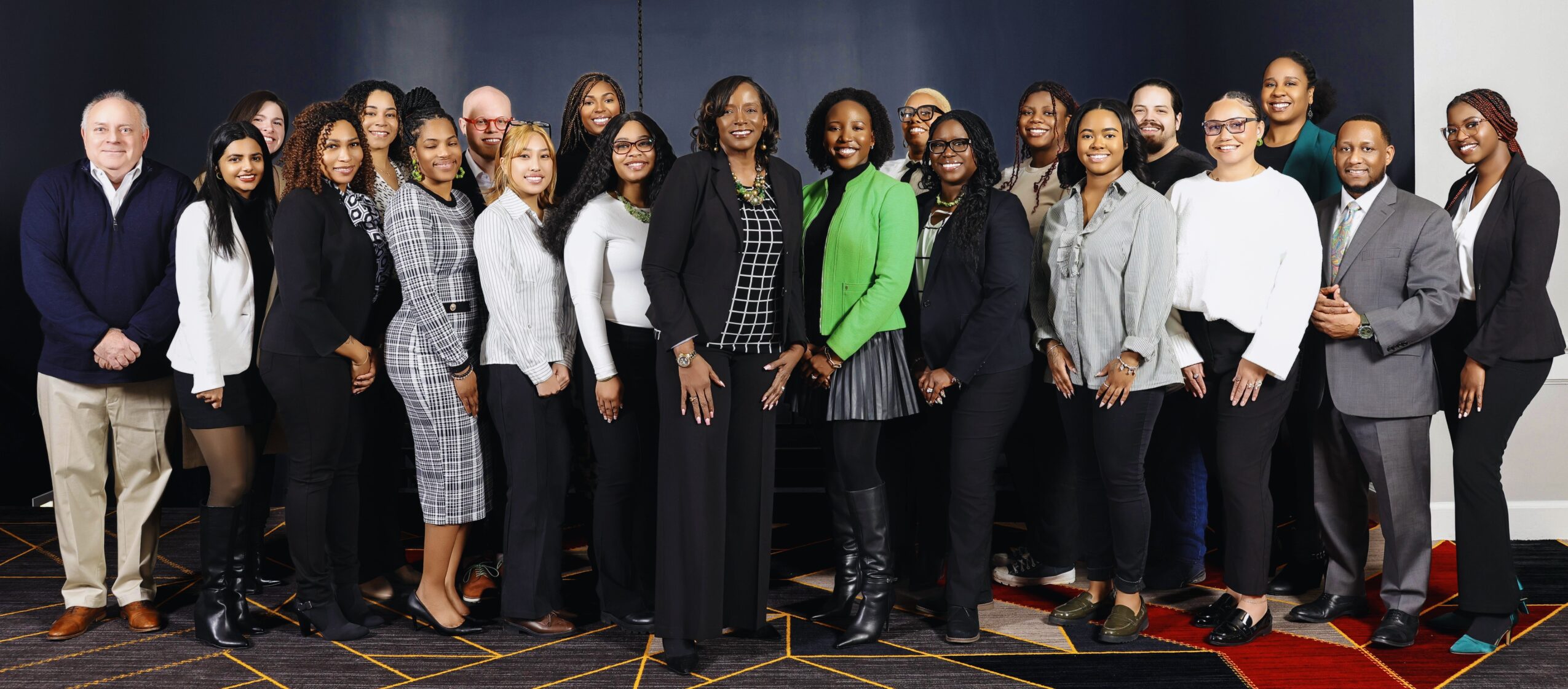




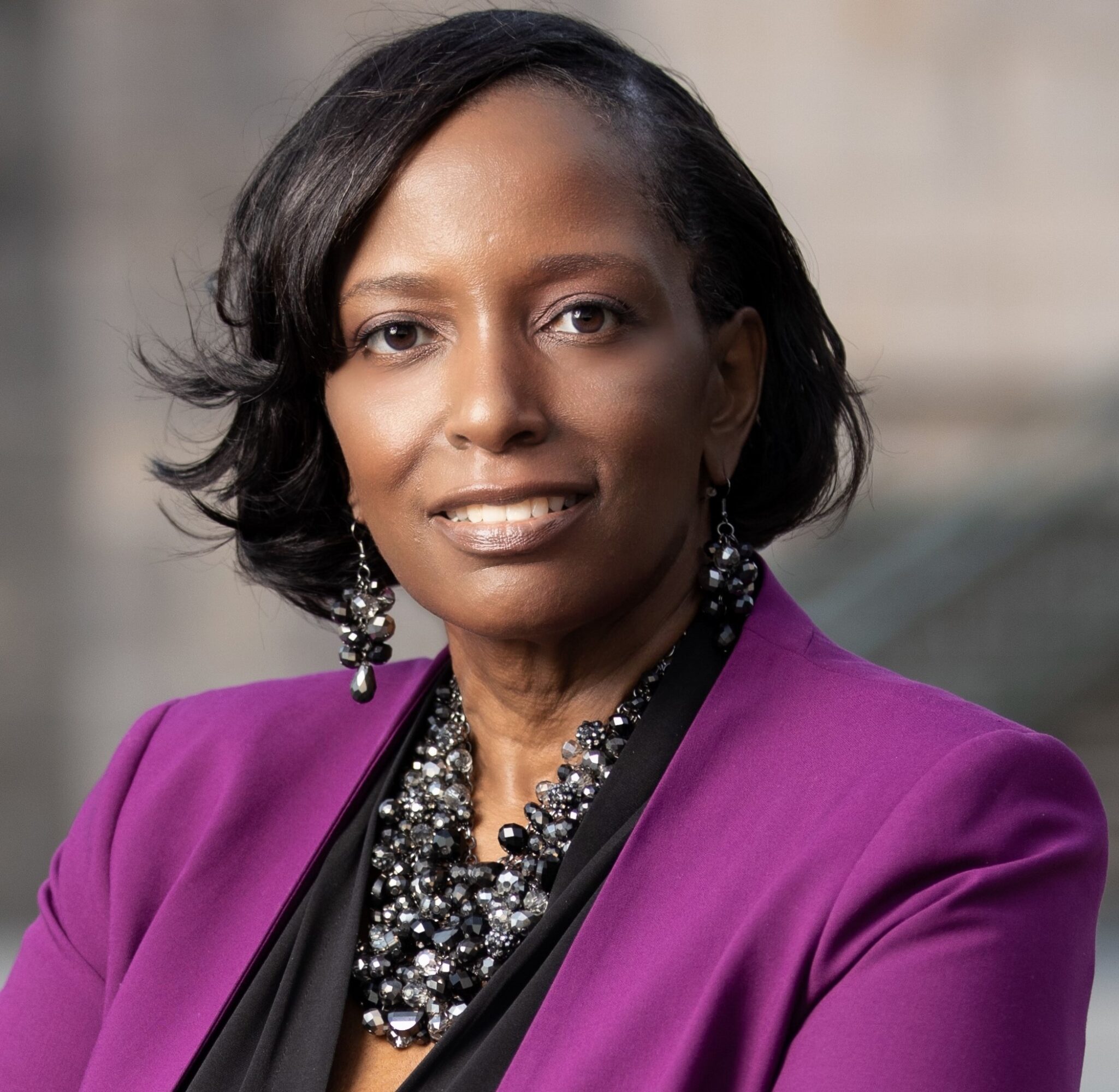
Today we’d like to introduce you to Dr. Shauna Moore Reynolds.
Hi Dr. Shauna, please kick things off for us with an introduction to yourself and your story.
My journey into the counseling profession began nearly 30 years ago, and in many ways, it grew out of both my professional interests and my own life experiences. I have always been drawn to helping people navigate difficult seasons, understand themselves more deeply, and recognize that what they have been through does not have to define where they are going.
Over the years, I have had the opportunity to serve in many different roles within the mental health profession: as a counselor, clinical supervisor, professor, department chair, trainer, and practice owner. Each of those experiences helped shape the clinician and leader I am today. I eventually earned my doctorate in Counselor Education and Supervision, but some of my greatest lessons have come from simply sitting with people during some of the most challenging moments of their lives.
SMR Counseling Services grew from my desire to create a counseling practice where people could receive high-quality mental health care while also feeling genuinely seen, heard, and respected. I wanted to build something that felt professional but still personal. A place where clients were not treated like a diagnosis or a number.
What began as my vision eventually grew into a group practice serving children, adolescents, adults, couples, and families. Over the years, we have worked with clients experiencing anxiety, depression, trauma, grief, relationship concerns, life transitions, and many other challenges. We have also developed a strong commitment to serving veterans, first responders, federal employees, college students, and individuals from diverse cultural backgrounds.
One thing that has always been important to me is meeting people where they are. For some clients, that means traditional clinical counseling. For others, spirituality and faith are an important part of how they understand healing, so our clinicians can incorporate those areas when the client desires it. We also believe that mental health care should be accessible, which is why SMR has worked with many major insurance plans and has offered sliding-fee and reduced-cost options whenever possible.
I often describe counselors as “Personal Mental Health Trainers.” Just as people may work with a trainer to strengthen their physical health, sometimes we need someone to help us strengthen our emotional health, develop healthier coping skills, understand patterns, and keep moving forward.
Like many businesses, SMR has also had to evolve. The pandemic changed the way people receive mental health services, and our clients increasingly began choosing telehealth because of its convenience, privacy, and flexibility. Rather than holding tightly to the way counseling had always been delivered, I realized that listening to our clients was more important. As SMR continues to evolve, we are expanding our focus on telehealth so that we can make counseling more accessible to people throughout Maryland.
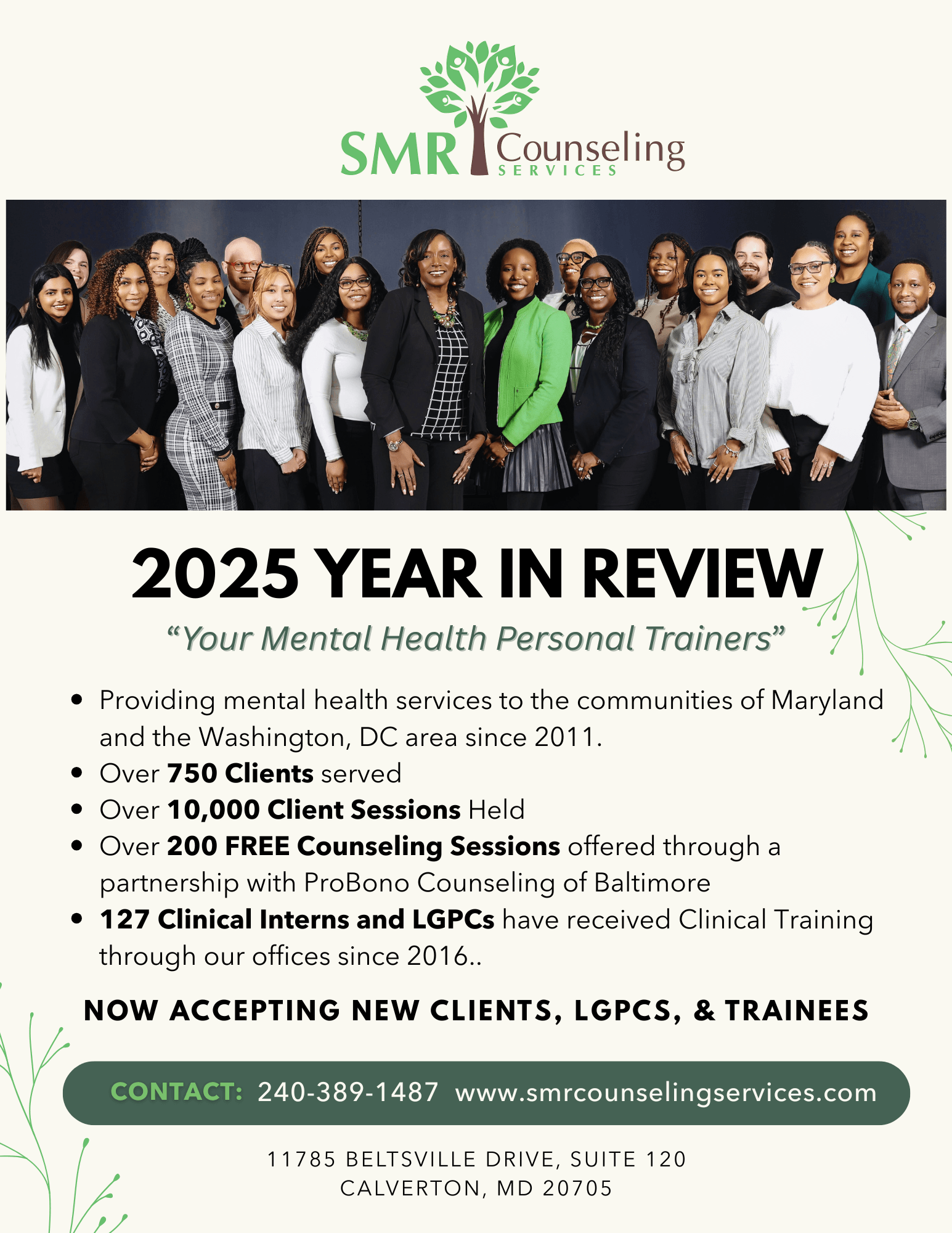
I am incredibly proud that SMR has also become a place where counselors have grown professionally. We have trained interns, mentored new clinicians, and watched people who once trained with us return as licensed professionals. That part of the journey has been especially meaningful to me because my goal has never been simply to build a counseling business. I wanted to build something that contributes to the profession and to the community.
When I look back over the years, there have certainly been challenges, changes, and moments when I had to reinvent both myself and the business. But the mission has remained very simple: help people know that they matter, that asking for help is a sign of strength, and that they do not have to navigate life’s difficult moments alone.
Today, I feel grateful for what SMR Counseling Services has become, but I am also excited about where we are going next. We are continuing to grow our telehealth presence, develop community partnerships, and find new ways to make quality mental health care easier to access. After nearly three decades in this profession, I still believe deeply in the power of counseling and in the possibility of healing, growth, and change.
Would you say it’s been a smooth road, and if not what are some of the biggest challenges you’ve faced along the way?
It definitely has not always been a smooth road. Like most business owners, especially those working in healthcare and mental health, I have had to learn how to adapt, make difficult decisions, and keep moving forward even when the path was not clear.
One of the biggest challenges was the pandemic. Before COVID-19, so much of counseling was centered around in-person care. We had office space, clinicians working onsite, and clients who were accustomed to coming into the office for their sessions. Then, almost overnight, everything changed. We had to quickly transition services to telehealth while still making sure our clients felt connected, supported, and cared for during an incredibly stressful and uncertain time.
What surprised me was how much many of our clients came to appreciate telehealth. It gave them more flexibility, eliminated travel time, and made it easier to fit counseling into busy schedules. Over time, we began to see that the way people wanted to receive mental health care had changed. That required me to change as a business owner as well. Sometimes the hardest part of leadership is recognizing that what worked in the past may not be what works best moving forward.
We have also had to navigate ongoing changes in insurance benefits, reimbursement, authorizations, and coverage. Mental health providers often have to balance the clinical needs of clients with the realities of changing insurance policies and administrative requirements. Those changes can affect both clients and practices, and they have required us to become more flexible, informed, and intentional about how we deliver services.
Another challenge has been learning when to hold on and when to let go. As SMR grew, there were times when I thought growth meant more office space, more locations, and doing things the way they had traditionally been done. Over the years, I have learned that growth can also mean simplifying, becoming more efficient, and listening closely to what clients are actually asking for.
Our continued transition toward telehealth is a reflection of that. It is not about stepping away from the work we do. It is about making the work more accessible and sustainable.
There have certainly been difficult seasons, but every challenge has taught me something about leadership, resilience, and the importance of being willing to evolve. I am proud that through all of those changes, the heart of SMR Counseling Services has remained the same. We are still committed to providing compassionate, high-quality mental health care and making sure our clients know they matter.
Great, so let’s talk business. Can you tell our readers more about what you do and what you think sets you apart from others?
SMR Counseling Services is a group mental health practice built around one simple belief: people deserve to feel seen, heard, supported, and respected when they ask for help.
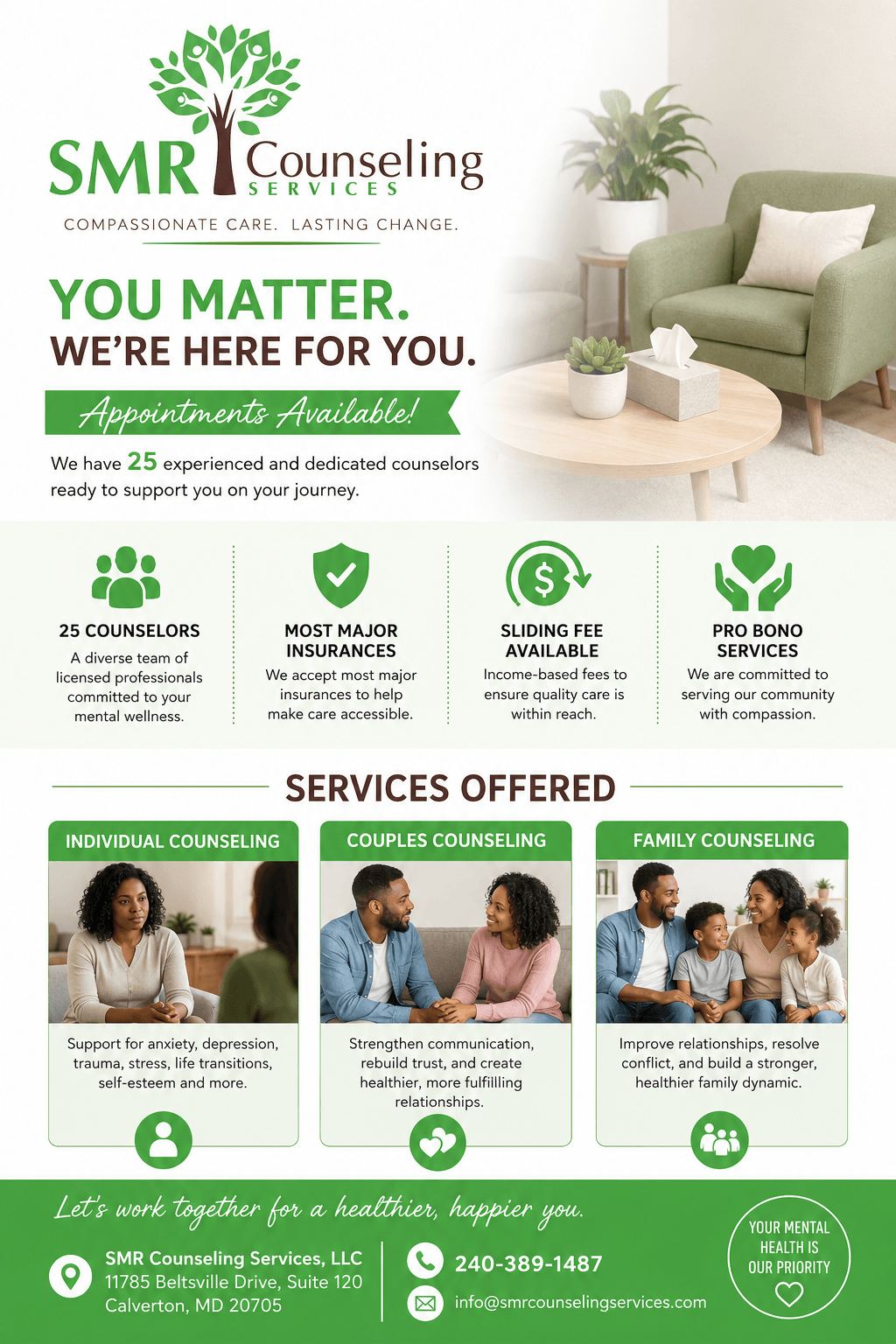
We provide counseling services for children, adolescents, adults, couples, and families, with a growing emphasis on telehealth so that clients can receive support in a way that is convenient, private, and easier to fit into their lives. Our clinicians work with a wide range of concerns, including anxiety, depression, trauma, grief, relationship challenges, life transitions, stress, family concerns, and many of the everyday issues that can affect emotional well-being.
We are especially known for our work with trauma, grief, first responders, veterans, federal employees, college students, and individuals from diverse cultural backgrounds. We also understand that mental health does not exist separately from culture, family, spirituality, work, relationships, and life experiences. Because of that, we try to look at the whole person, not just the symptoms that brought them to counseling.
One thing that sets SMR apart is that we do not believe counseling should feel one-size-fits-all. Every client is different. Some people want a very clinical and skills-based approach. Others may want to explore relationships, identity, trauma, grief, or major life transitions. For some clients, spirituality and faith are an important part of their healing, and when requested, that can be respectfully incorporated into the counseling process.
Cultural responsiveness is also very important to us. We want clients from all backgrounds to know that they can come into therapy without having to leave parts of themselves at the door. Representation matters, but so does having clinicians who are willing to listen, learn, understand differences, and create a space where people feel safe being themselves.
I often refer to our counselors as “Personal Mental Health Trainers.” We are not here to tell people how to live their lives. We are here to help clients strengthen the emotional muscles they already have, develop new coping tools, recognize unhealthy patterns, set boundaries, heal from painful experiences, and become more intentional about their mental and emotional wellness. Just like physical health, I believe mental health deserves ongoing attention and care.
Accessibility has also been an important part of our mission. We work with many major insurance plans and have historically offered sliding-fee, reduced-cost, and pro bono opportunities when resources allow. We never want someone to assume that counseling is automatically out of reach simply because of cost or circumstances.
Another part of SMR that I am extremely proud of is our commitment to the next generation of mental health professionals. Over the years, we have served as a training site for counseling interns and developing clinicians. Some individuals who began their journey with us as students have gone on to become licensed counselors and have even returned to SMR as professionals. As a counselor educator and clinical supervisor, that part of our work is very close to my heart.
Brand-wise, I am most proud that SMR has developed a reputation for being both professional and personable. I never wanted us to become such a large organization that people stopped feeling cared for. Even as we have grown and evolved, I want clients to feel that there are real people on the other side of the phone, computer screen, or counseling session who genuinely care about what happens to them.
As we continue expanding our telehealth services, I want readers to know that getting counseling does not have to mean waiting until life becomes unbearable. Therapy can be preventive. It can be a place to process, grow, heal, prepare for change, strengthen relationships, or simply have a confidential place to talk.
At SMR Counseling Services, our message has always been simple: You matter. Your mental health matters. And you do not have to figure everything out by yourself.
Before we let you go, we’ve got to ask if you have any advice for those who are just starting out?
My biggest advice to anyone just starting out is to give yourself permission to grow into the person and professional you are becoming. You do not have to have everything figured out in the beginning.
When I started, I thought success meant working harder, saying yes to every opportunity, and constantly pushing toward the next accomplishment. Over time, I learned that success also means knowing your limits, protecting your peace, setting boundaries, and being intentional about what you say yes to.
I also wish I had understood earlier that being good at your profession and being good at running a business are two very different things. You can be an excellent counselor, clinician, or helping professional and still need to learn about finances, insurance, staffing, marketing, leadership, policies, and business operations. Do not be afraid to ask for help in the areas where you are not an expert.
Another lesson I have learned is not to become so attached to your original plan that you miss what is happening in front of you. Businesses change. Industries change. People change. Technology changes. What worked five or ten years ago may not be what your clients or customers need today. Being willing to evolve is not failure. Sometimes it is the very thing that allows you to keep going.
I would also tell people not to compare their beginning to someone else’s middle. We often see the finished product, the successful business, the degree, the title, or the recognition, but we do not see the sacrifices, disappointments, mistakes, and difficult decisions that happened along the way.
Build relationships. Find mentors. Treat people well. Be willing to learn. Take care of your reputation, because your name will often enter rooms before you do.
Most importantly, remember why you started. There will be seasons when the numbers, responsibilities, and stress can make you lose sight of the purpose behind the work. For me, that purpose has always been helping people. When things became difficult, returning to that purpose helped me make better decisions about what needed to stay, what needed to change, and sometimes what I needed to let go.
If I could speak to the younger version of myself, I would probably tell her, “You do not have to prove everything all at once. Build it. Learn from it. Enjoy it. And give yourself permission to change along the way.”
Contact Info:
- Website: https://www.smrcounselingservices.com
- Instagram: smrcounselingservices
- Facebook: https://www.facebook.com/smrcounselingservicesllc
- LinkedIn: https://www.linkedin.com/company/smr-counseling-services/?viewAsMember=true