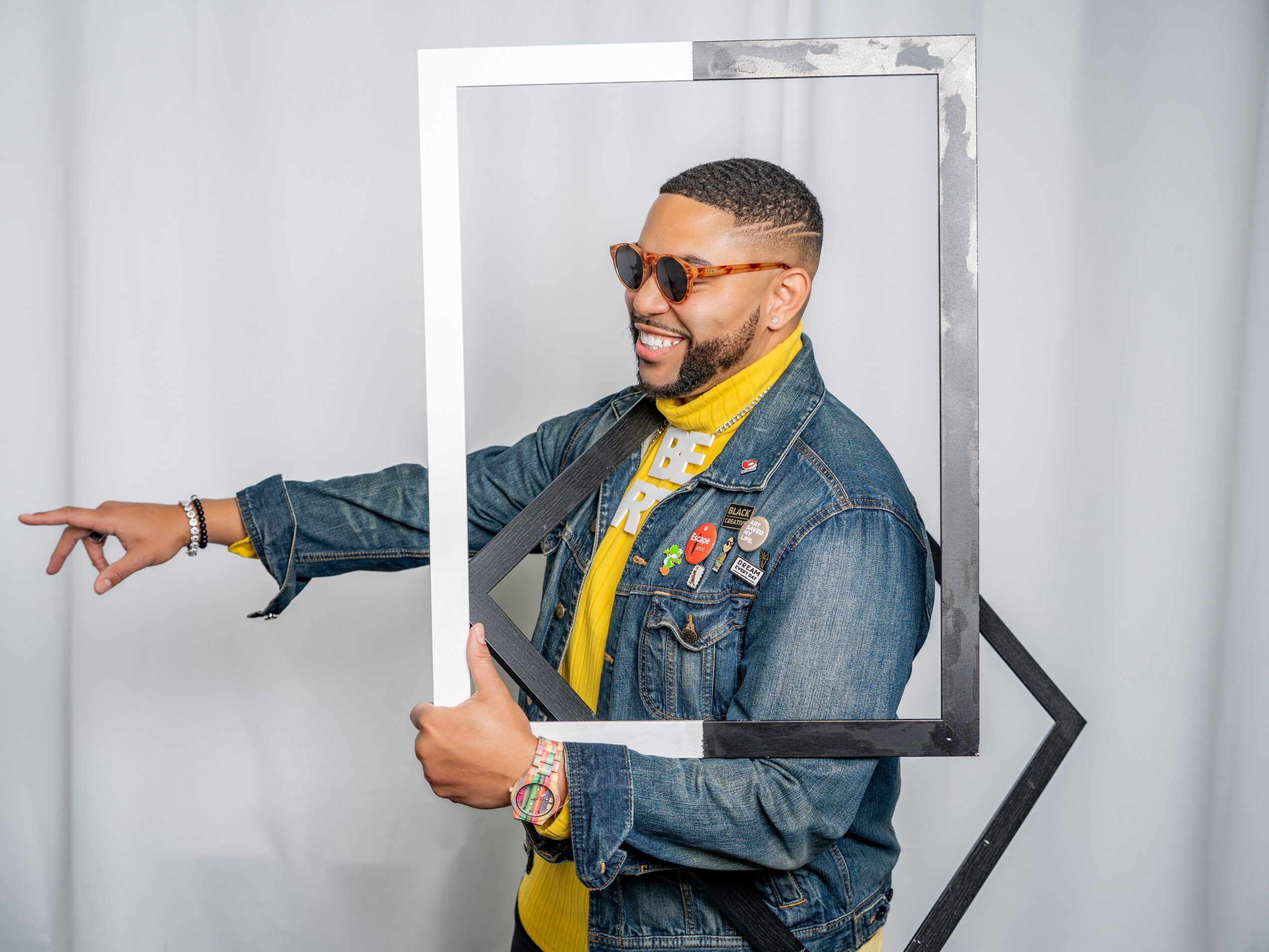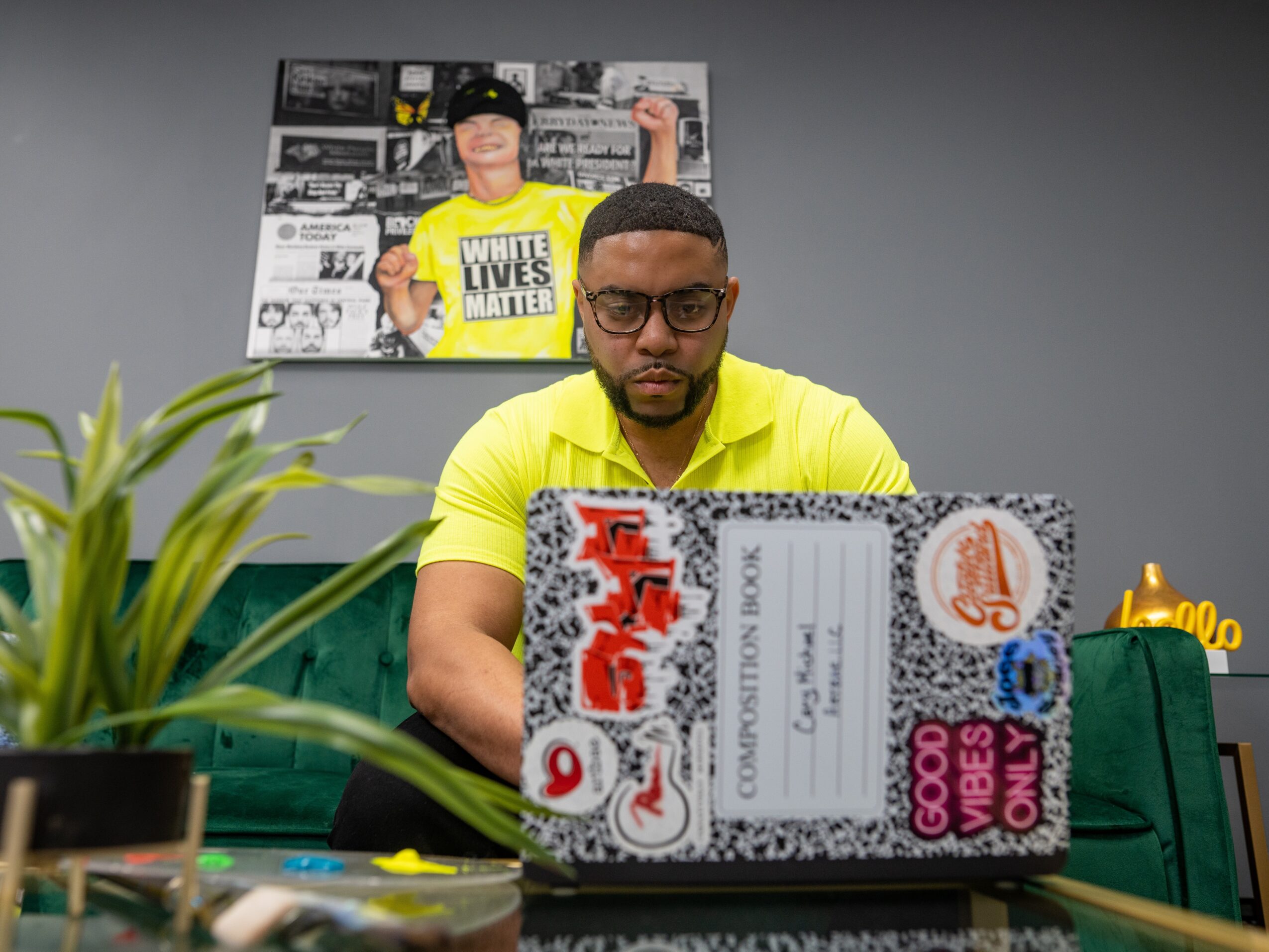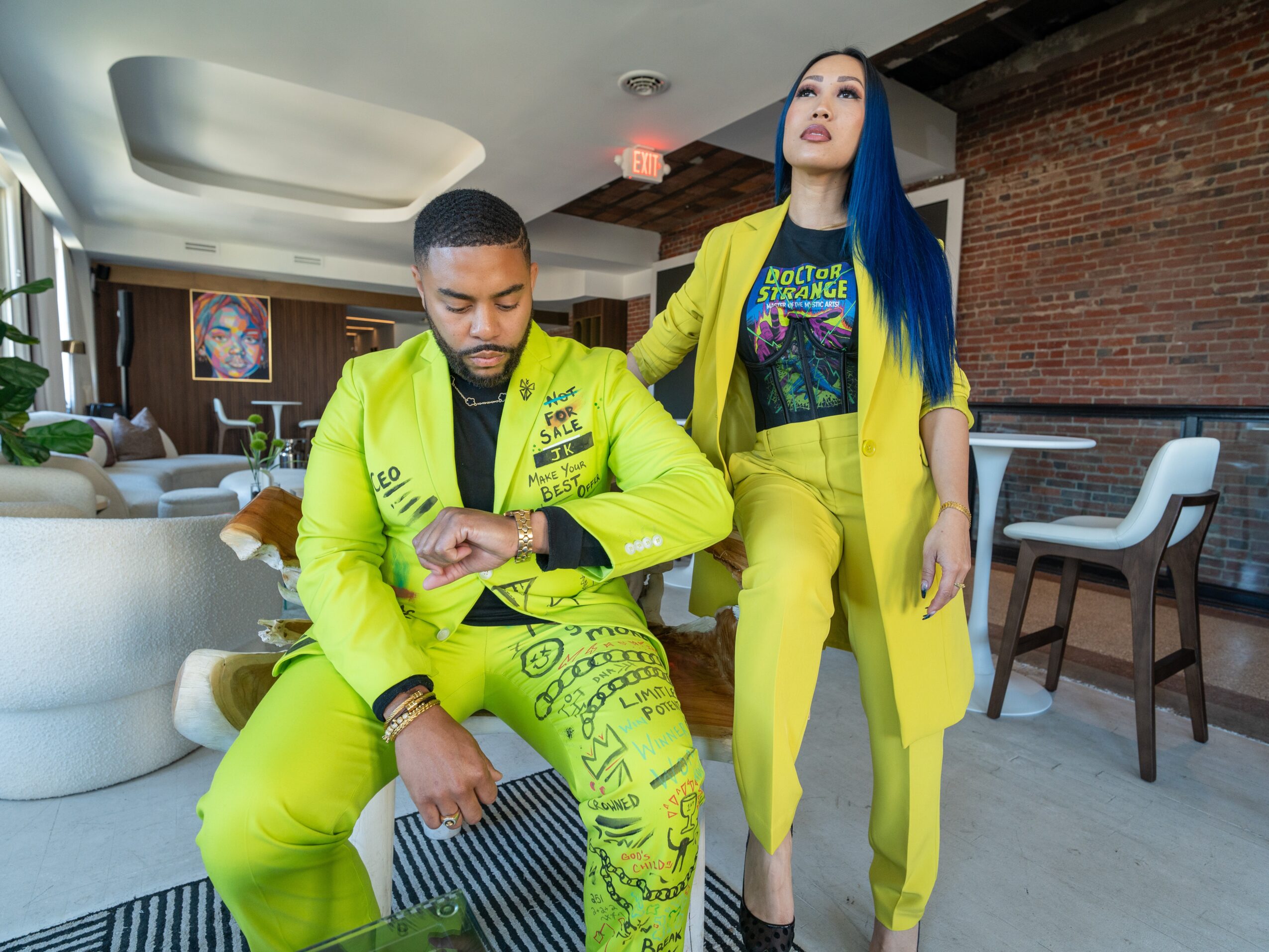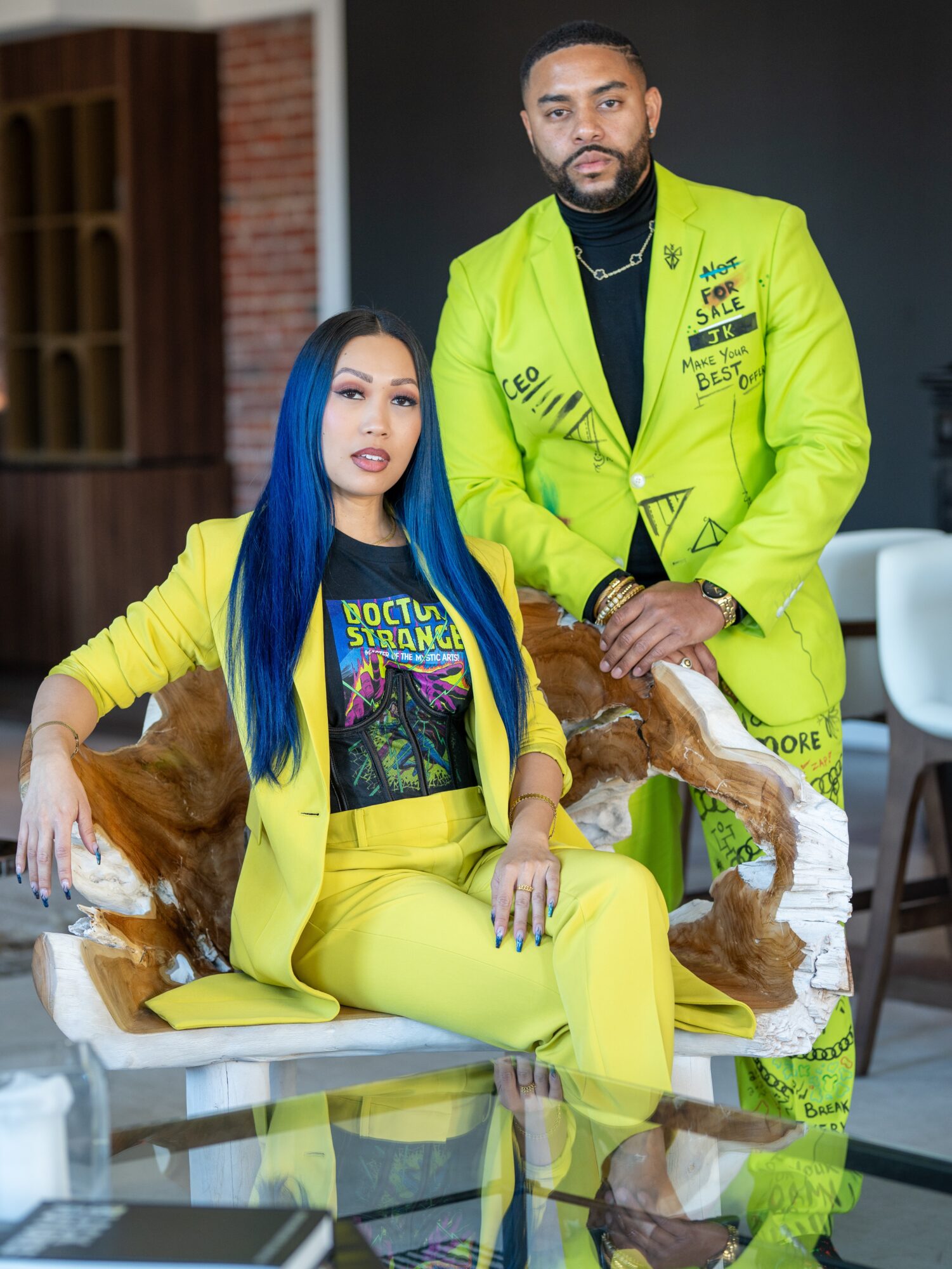



Today we’d like to introduce you to Cary Michael Robinson.
Hi Cary Michael, we’d love for you to start by introducing yourself.
My journey really started with a question I didn’t fully have the words for at the time: What does it mean to create something that actually changes people’s lives?
I’ve always been drawn to art… not just as expression, but as impact. But, before fully stepping into that path, I began my academic journey studying engineering at Tuskegee University. After transferring to Florida A&M University, I made a pivotal decision to shift my major to Fine Arts with a minor in Graphic Design, aligning more deeply with my creative calling. That transition grounded me not only in artistic practice, but also in structure, systems, and problem-solving, skills that I didn’t realize at the time would become essential to how I build today.
As I leaned further into creativity, I began exploring painting, mixed media, and design, using my work to reflect on identity, culture, and the world around me. What started as personal expression quickly evolved into something bigger, a way to connect, challenge, and inspire.
At the same time, I built a career as a Design Examiner at the U.S. Patent and Trademark Office, which gave me yet another lens, one rooted in how ideas are protected, scaled, and brought into the world. That duality, creativity and structure, became the foundation of everything I do.
As I became more involved in the arts community, I noticed a pattern I couldn’t ignore. There were incredibly talented creatives everywhere, but many were stuck in cycles of visibility without sustainability. They were being seen, but not always supported. That realization shifted everything for me.
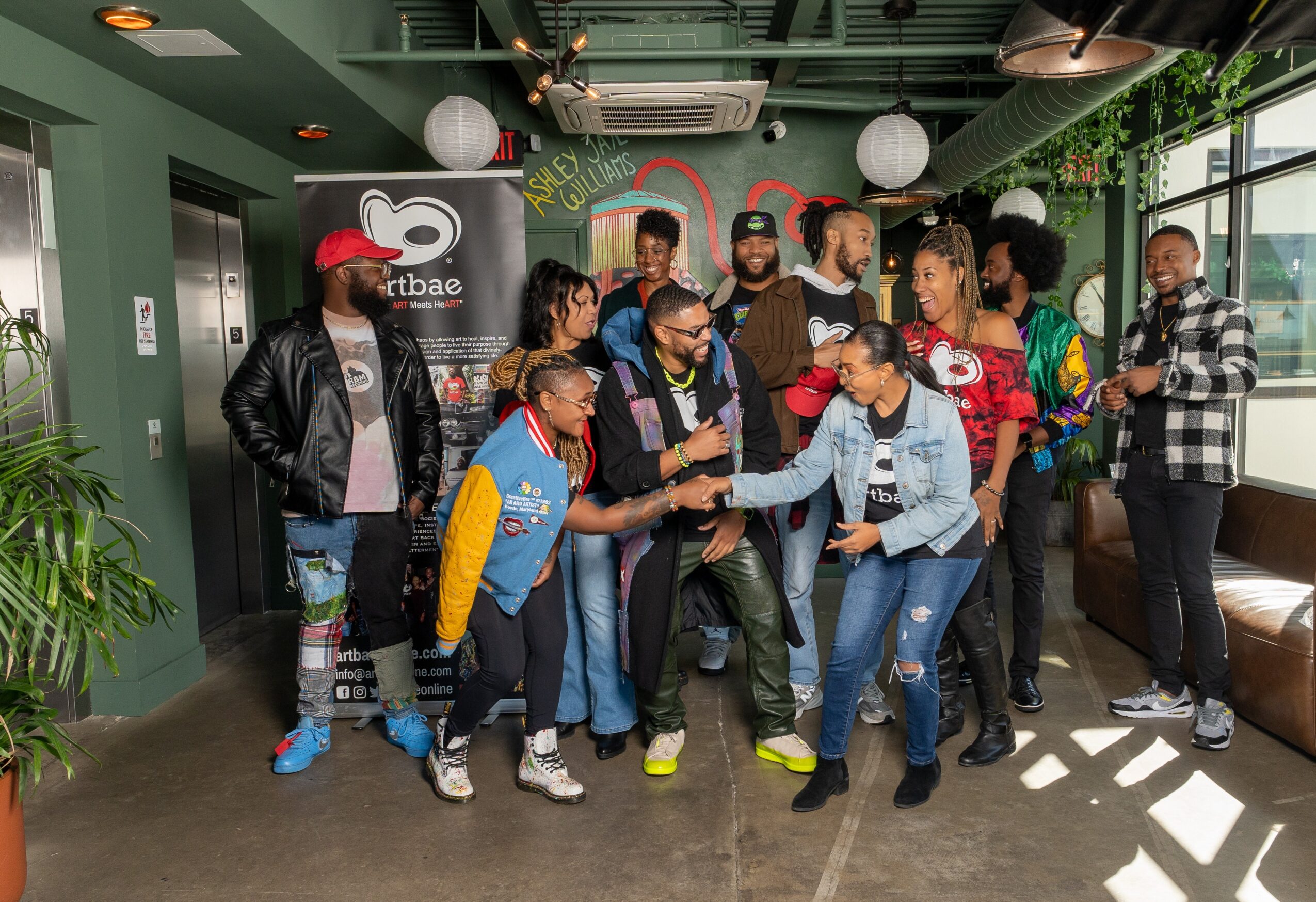
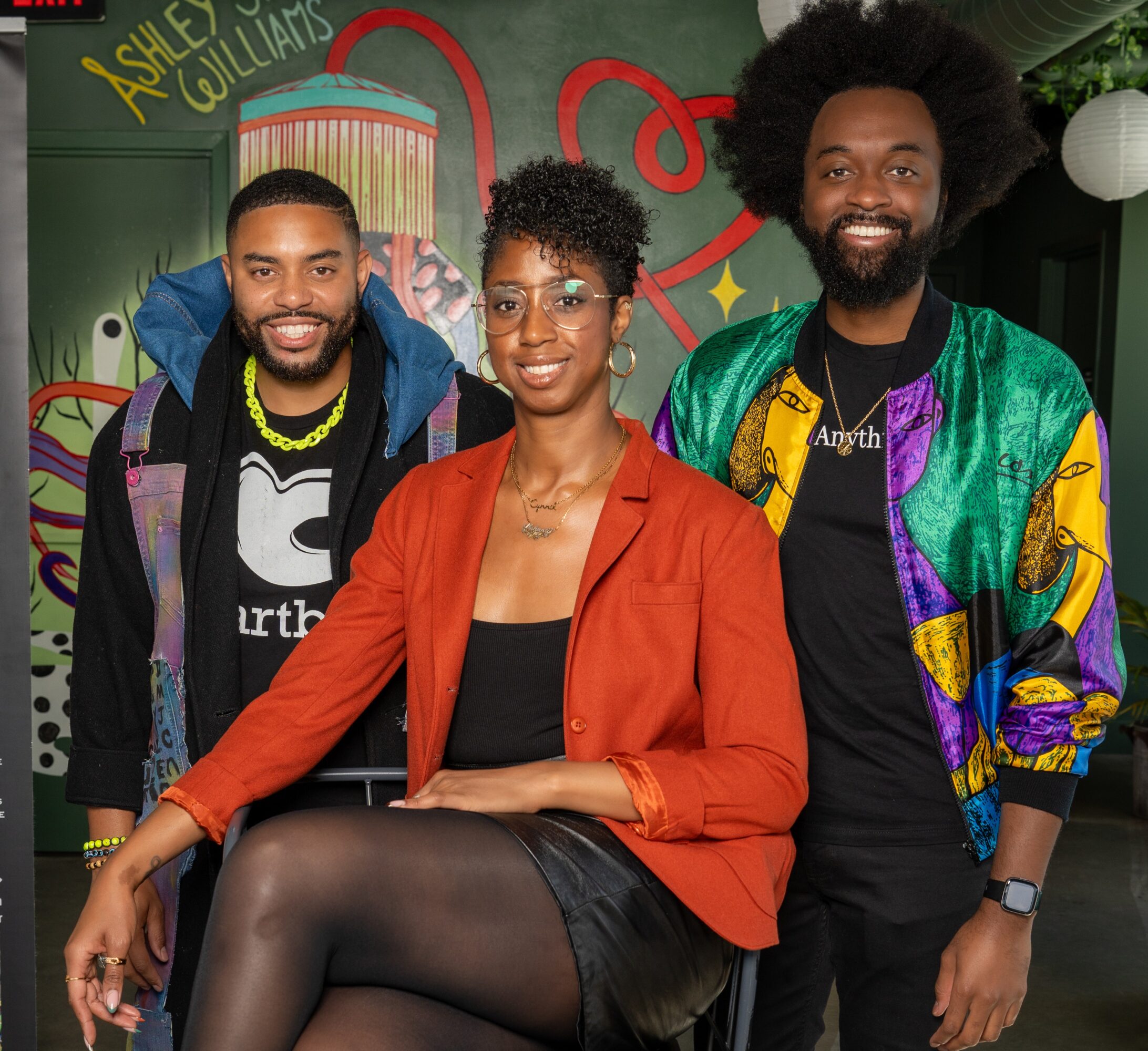
What started as a platform to highlight artists evolved into Artbae, an award-winning creative ecosystem focused on advocacy, education, and opportunity. From curated exhibitions and cultural events to artist placements in spaces like the Milk & Honey restaurant franchise, and partnerships with venues like Metrobar and BE Lounge, the mission has been to build real pathways, not just moments.
Alongside that, I launched the Artbae Foundation, creating programs like Created2Create and HeART2Hustle to support the next generation of creatives through both personal and professional development. Because for me, it’s not just about making art, it’s about helping people realize they can build a life through their creativity.
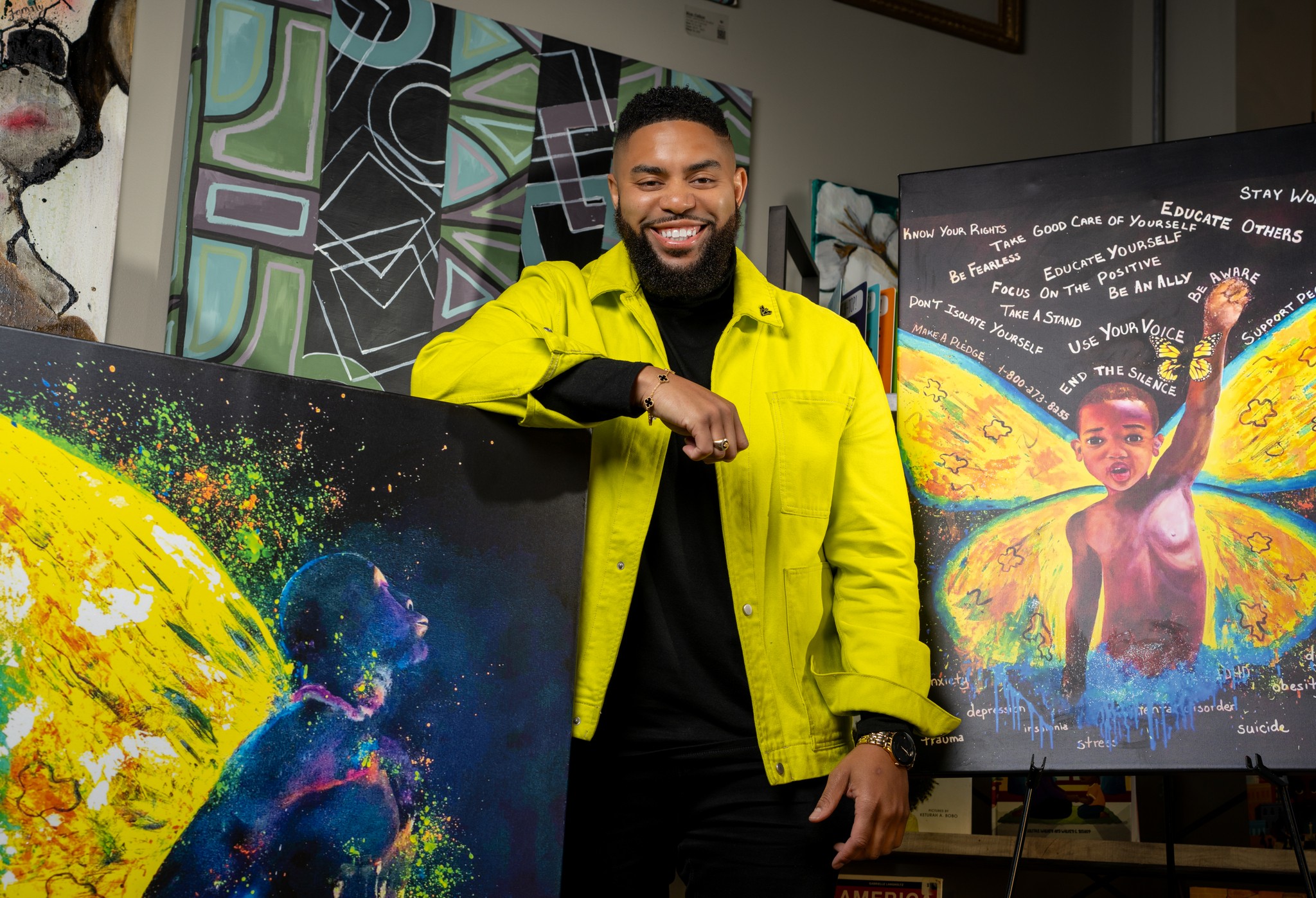
My own artistic practice continues through ongoing series like Sethemba: Man of Tomorrow, where I explore themes of transformation, healing, and purpose through a character that evolves from caterpillar to butterfly, a reflection of the journey we’re all on.
Looking back, nothing about the path has been linear. It’s been a combination of faith, intention, and being willing to evolve. But every step, from engineering to fine arts to building Artbae, has pointed toward the same thing: creating something that not only inspires people, but actually creates opportunities for them.
And truthfully, it still feels like the beginning.
Can you talk to us a bit about the challenges and lessons you’ve learned along the way. Looking back would you say it’s been easy or smooth in retrospect?
It hasn’t been entirely smooth, but I’m grateful for the journey because every challenge helped shape how I move today.
One of the earliest struggles was making the decision to shift from engineering into visual arts. For me, it felt aligned, it felt like purpose. But not everyone saw it that way. I was met with some ridicule and skepticism from people who had a more linear view of success, what you “should” do, what feels safe, what looks stable. That was one of the first moments where I had to really trust myself and my faith, even when others didn’t fully understand the vision.
Financially, there were also real challenges. After leaving Florida A&M, I had to put myself through graduate school at the Savannah College of Art and Design, which required a different level of discipline and sacrifice. At times, it felt like I was building without the same level of support or resources that some of my peers had access to, so I had to be resourceful and figure things out on my own.
Professionally, I faced my share of rejection too. There were opportunities I didn’t get, roles I wasn’t selected for, doors that didn’t open when I thought they would. But in hindsight, those moments were pivotal. Instead of waiting for validation, I started creating my own opportunities, curating my own shows, building my own platforms, developing my own projects. That shift is really what laid the foundation for everything I’m doing now.
And truthfully, a lot of the journey has felt smooth in the sense that things have continued to align over time. But that smoothness came from learning how to move with intention, how to stay grounded in purpose, and how to keep going even when things weren’t immediately working out.
Every challenge pushed me to become more self-sufficient, more creative, and more committed to building something that didn’t just depend on permission, but was rooted in vision.
Alright, so let’s switch gears a bit and talk business. What should we know about your work?
I consider myself an interdisciplinary artist and cultural builder. At the core of my work is the belief that true innovation happens at the intersection of disciplines, so I intentionally blend visual art with elements like technology, environmentalism, mental health, and social impact. I’m not interested in creating work that exists in isolation. I’m interested in creating experiences and narratives that challenge people to think differently, feel more deeply, and see connections where they may not have before.
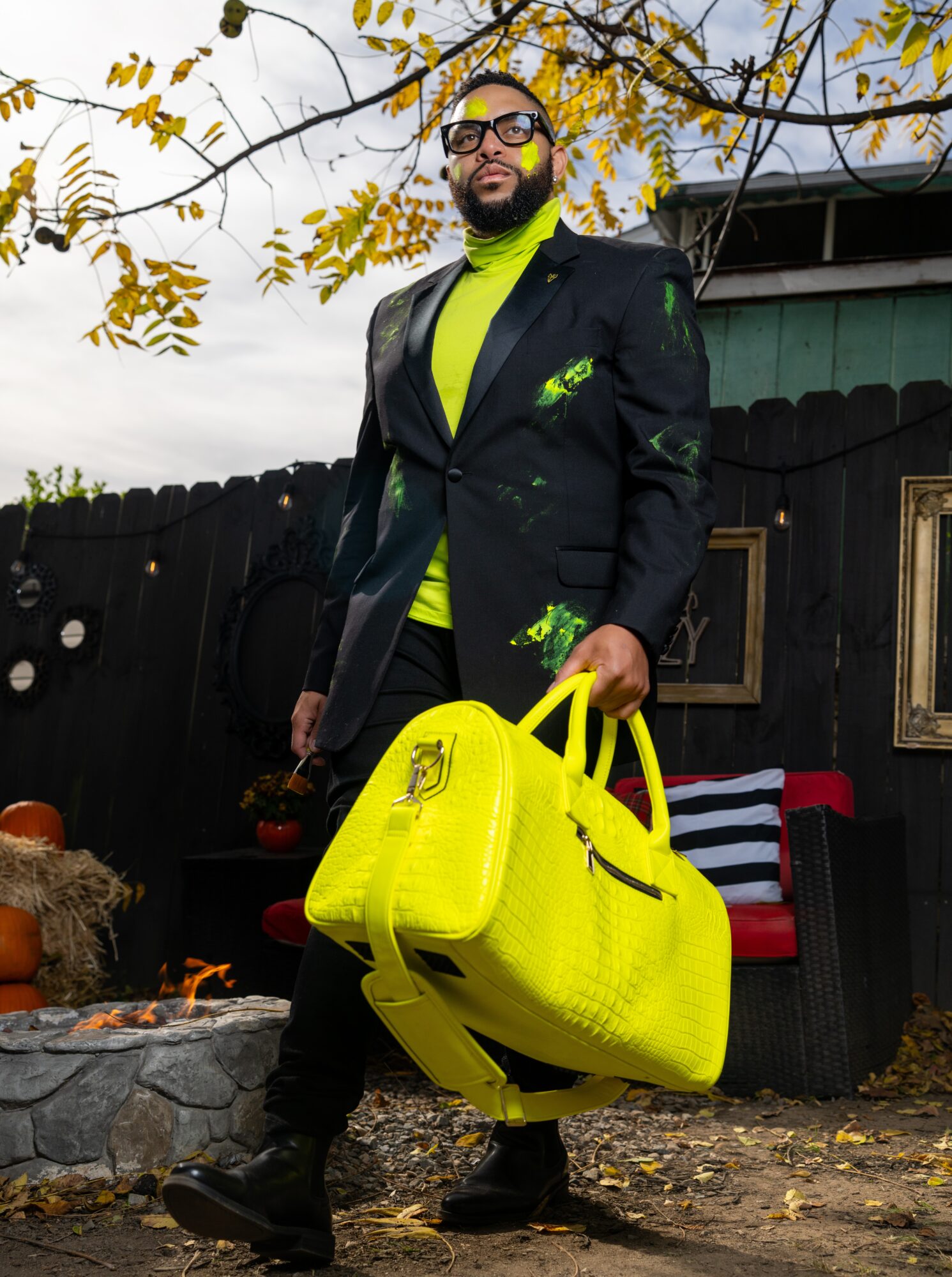
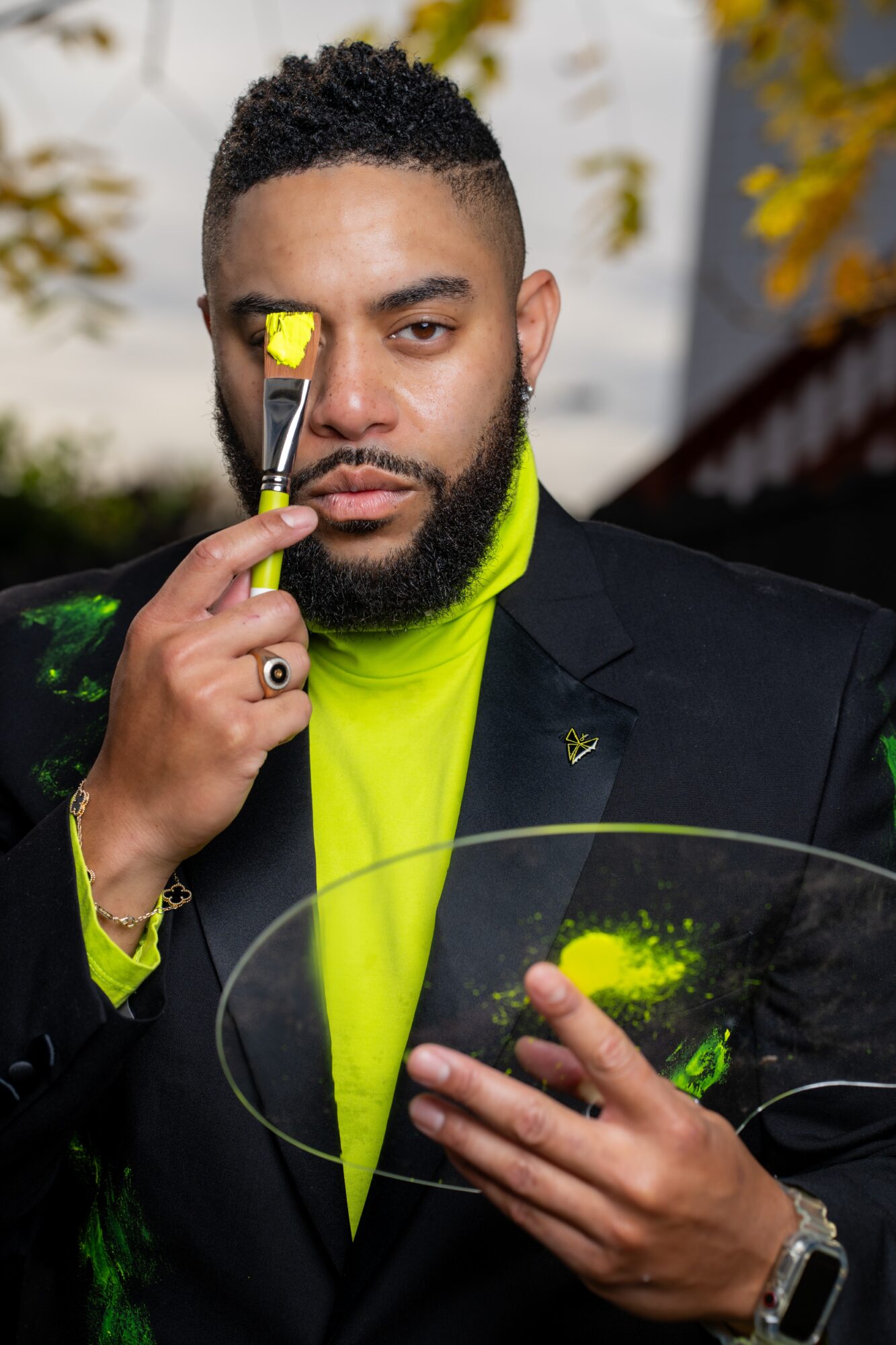
Visually, I’m known for my attention to detail and my ability to capture not just likeness, but essence. Whether it’s a portrait or a conceptual piece, I’m focused on the subtle things, the energy in someone’s eyes, the emotion in their expression, the story behind their presence. I often pair that realism with vibrant, layered backgrounds, incorporating abstraction, collage, music references, and themes tied to culture and social justice. My use of bold color, especially chartreuse yellow, has also become a signature element across my work.
One of the moments I’m most proud of as an artist was a portrait I created of Prince in 2016 entitled, “Purple REIGN.” The piece featured a “Purple Rain”-inspired abstract drip background and unexpectedly gained widespread attention, ultimately appearing during a Prince tribute performance by Stevie Wonder at the BET Awards. This was before “going viral” was even a thing, so to see that level of organic recognition, including being featured on the news in my hometown of Mobile, Alabama, was a defining moment for me. It affirmed that my work could resonate at a larger scale.
I’m also proud to have received the 2020 Mayor’s Arts Award for Emerging Creative through Artbae. While I don’t create for validation, moments like that do serve as meaningful acknowledgments of the impact and intention behind the work, and they help build credibility as I continue to grow.
Beyond individual pieces, one of my most significant contributions is the development of my ongoing narrative universe centered around Sethemba, a swallowtail butterfly superhero character whose name means “hope” in Zulu. Sethemba represents transformation, resilience, and guidance, a modern-day symbolic figure who bridges culture, identity, and social awareness. That body of work is my way of building something larger than a single artwork, something that lives across time, mediums, and audiences.
What truly sets me apart, though, is that my work doesn’t stop at art for art’s sake. I intentionally merge art with advocacy. Whether it’s through my personal practice or through Artbae, I’m focused on uplifting others, raising awareness around social issues, and creating platforms and opportunities for creatives to thrive. My work is as much about impact and community as it is about aesthetics.
At the end of the day, I don’t just see myself as creating art. I see myself as building culture, telling stories that matter, and helping shape spaces where creativity can actually lead to change.
What sort of changes are you expecting over the next 5-10 years?
I think the industry is moving toward a place where art is no longer confined to a single medium, it’s becoming an ecosystem of experiences, identities, and intellectual property.
Over the next 5–10 years, we’re going to see a major shift from artists simply creating standalone works to building fully realized worlds and visual universes. The lines between fine art, entertainment, technology, and brand-building are already starting to blur, and that’s only going to accelerate. Artists won’t just be known for individual pieces, they’ll be known for the stories, symbols, and systems they create.
For me, visual identity is a huge part of that future.
I’m intentionally building toward a universe through my Sethemba: Man of Tomorrow series, where my characters can live across multiple platforms, whether that’s animation, film, comics, merchandise, toys, or even interactive and immersive spaces. The goal is to create something that feels culturally rooted but globally accessible, something that can resonate across generations and mediums.
I think we’ll also see:
Stronger integration of art and technology, including digital environments, immersive experiences, and expanded storytelling formats
Artists owning more of their intellectual property, rather than just producing work for others
A rise in interdisciplinary creators, people who move fluidly between art, design, culture, and business
More intentional consumer behavior, where people want to support artists, small businesses, and culturally relevant work over mass-produced, generic content
Another major shift is recognition. Visual identity will matter more than ever. The artists who stand out will be the ones who can create a distinct, recognizable language, whether that’s through color, symbolism, or narrative. For me, that looks like the swallowtail butterfly, chartreuse tones, and themes of transformation and hope. I want people to see those elements and immediately know what they represent and who they’re connected to.
Ultimately, I see the industry moving toward ownership, expansion, and impact.
Artists won’t just be creators, they’ll be world-builders, entrepreneurs, and cultural architects. And the ones who are able to combine strong storytelling, clear visual identity, and real-world application will be the ones who not only stay relevant, but help shape what the future of the industry actually looks like.
Pricing:
- Original Artwork: $1,500 – $10,000+
- Exhibition Curation: $5,000 – $25,000+
- Creative Direction & Consulting: $150 – $250/hour
- Event Hosting / Facilitation: $500 – $2,500 per event
- Monthly Creative Consulting Retainers: $1,500 – $5,000
Contact Info:
- Website: carymichael.com | artbaeonline.com
- Instagram: instagram.com/carymichael_ instagram.com/artbaeonline instagram.com/artbaefoundation
- Facebook: https://www.facebook.com/artbaeonline
- LinkedIn: https://www.linkedin.com/in/carymichael/ https://www.linkedin.com/in/artbaellc
- Twitter: https://x.com/artbaeonline
- Youtube: https://www.youtube.com/@artbae5208