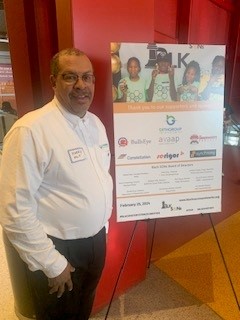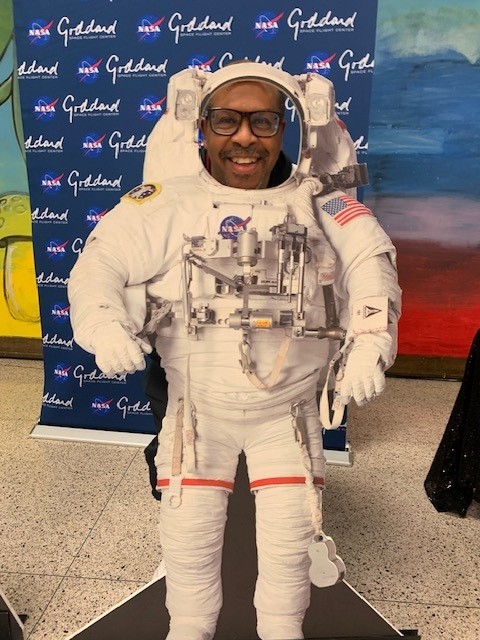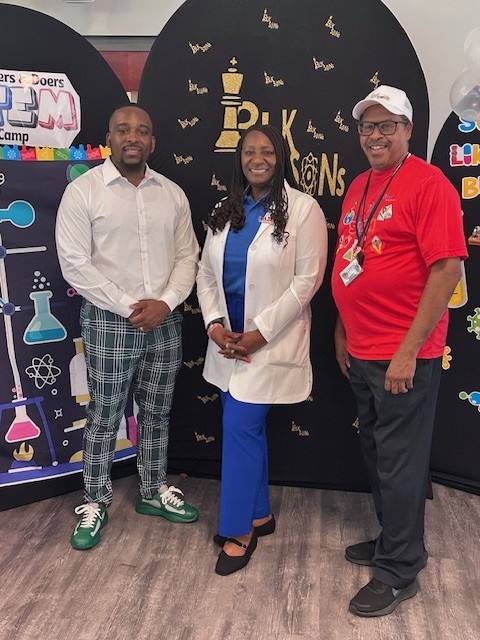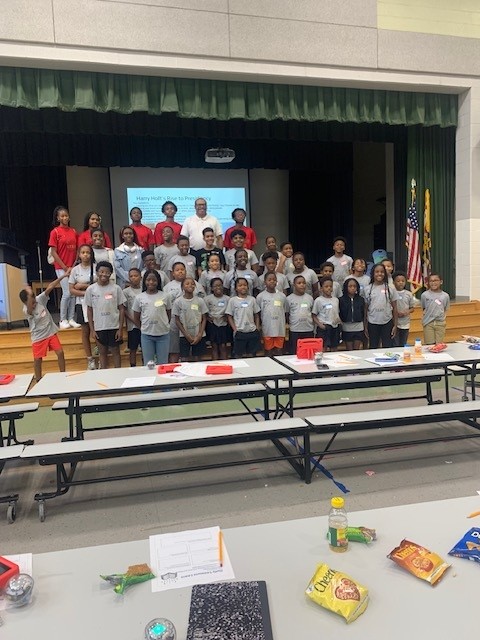




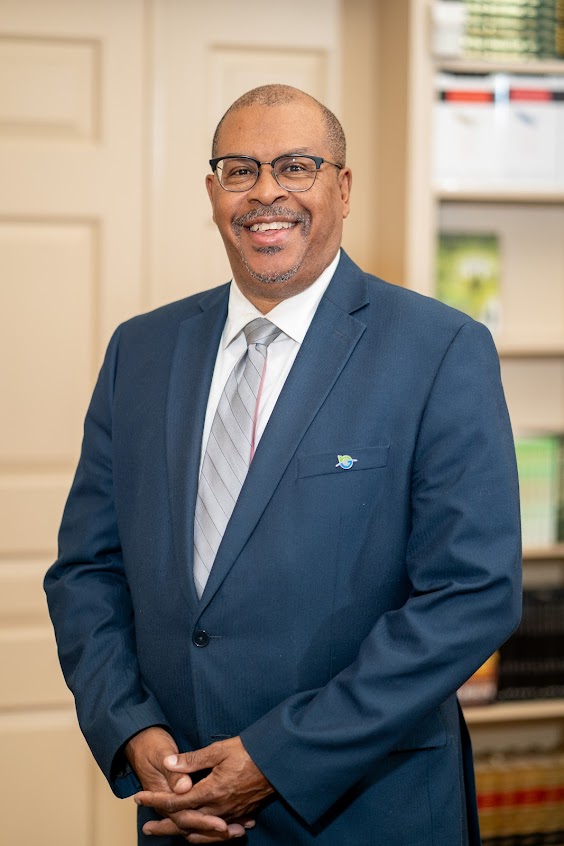
Today we would like to introduce you to Harry Holt.
Hi Harry, it is an honor to have you on the platform. Thanks for taking the time to share your story with us – to start maybe you can share some of your backstory with our readers?
My name is Harry William Holt Jr. I was born and raised in the Hill District of Pittsburgh, Pennsylvania. My mother was a Licensed Practical Nurse. Which, in those days, required one year of community college beyond high school. My father only completed the sixth grade and did not read well, write well, or have strong math skills. But he was great with his hands and tools. He was a Korean War Veteran and learned carpentry as a trade. My mother struggled with substance abuse, and it took a toll on my family. My parents divorced when I was 9 years old. When my dad moved out, he eventually remarried, and my new stepmother was white and Jewish. I have two brothers from that wedding. My mother also had a third child by another man. I have one sister and one brother from my mother. So, I grew up the oldest of five children, celebrating Christmas, Chanukkah, Easter, and Passover. Although my parents and grandparents died when I was young, I am close to all my siblings today.
Both of my parents encouraged me and required me to stay on top of my academics when I was in school. Starting in the first grade. I attended public schools in Pittsburgh. I excelled in my schoolwork. By third grade, along with nine other students from McKelvy School in Pittsburgh, a counselor placed us in a special program called Project Uplift. Once a week, we were pulled out of class and placed in a special classroom and provided more challenging math and science instruction. It was at this time that a counselor working at my school, who was working with a program called A Better Chance, met with my mom, and tried to encourage me to apply to A Better Chance when I was transitioning from Elementary to middle school. But I told my mother I did not want to leave my neighborhood school. I went on to be the top male, getting promoted from my sixth-grade class. I was in Junior Achievement, and my father made me participate in Boy Scouts. I only did Boy Scouts for a couple of years, but it still taught me some discipline. I played little league baseball, basketball, and I was an exceptional bowler. I bowled in tournaments all over the city and even in other parts of the state. I won lots of Bowling trophies and bowled on television as a teenager.
I went to Fifth Avenue High School for seventh grade and was in advanced classes there. I had an English teacher named Mr. Donus Crawford who had our class create a television variety show, and we were on TV. At this time, Fifth Avenue went from seventh grade to 12th grade. It was the same high school that my mother had attended. By the end of my seventh-grade year, I was identified again as a strong student, and they pulled ten of us out of Fifth Avenue and sent us to a brand-new middle school in the Jewish neighborhood in another part of the city. I attended Reizenstein Middle School for eighth grade. At Reizenstein, I took Scholars classes took Algebra and French. It was the only black student in my classes. During this time, I recall participating in the Koppers Explorers program which exposed me to several types of engineering. I also represented my Junior Achievement Region at a national conference at Bowling Green University in Ohio. With each of these experiences I gained confidence and understood that I had some academic abilities and just the drive to accomplish what I set my mind to.
From Reizenstein, I was bused to the suburbs to attend a brand-new high school called Brashear High School. At John A. Brashear, it was made up of students bused from across the city. It was 40 to 50 percent black students. But in my scholar classes, I was one of two students. I continued to take advanced math, science, and French. In tenth grade I got the chance to visit Paris and Nice, France. I raised money and collected money from neighbors to help offset the cost of the trip. Seeing the Eiffel Tower made me think that all the other fabulous things I had read about in other parts of the world must exist. You see, my parents had taken me to Niagara Falls, and my mother had taken me on a bus trip to visit St. Louis to see the Arch. My cousin and I, at 13 years of age, had traveled to Cleveland, Ohio, to go to a cousin’s graduation. So, I was comfortable travelling and visiting other places as a child.
During the summer of my freshman and sophomore years of high school. I was a member of the Upward Bound Program at Carnegie Mellon University. Staying on campus all summer, living in dorms, and meeting other smart kids from all over the greater Pittsburgh area put more wind under my sails. I had also been in plays during my sophomore year in high school, gaining more confidence to perform in front of crowds. During my sophomore year of high school, that same counselor from elementary school visited my mother again, and this time my mother made me apply to A Better Chance. I was accepted and wanted to stay in Pittsburgh, attending a private school in the suburbs called Shadyside Academy, but they wanted me to repeat my sophomore year. They said I needed to be able to attend their program for three years to gain full benefit. I told my mother no way. I am a 3. 5 GPA Scholar, had already taken Algebra 2 and Chemistry. They sent my application to a public-school program in Topsfield, Massachusetts, and I was accepted and attended Masconomet Regional High School in Boxford, Massachusetts. A Better Chance really changed my life.
From participating in A Better Chance living in Topsfield, Massachusetts, for two years, I learned that there were so many more opportunities out there. I was recruited to attend Brown University. I went to Brown and studied Chemical Engineering. While I attended Brown, I participated in INROADS/Pittsburgh, a career development organization that provided me with paid career-related internships and provided professional development training. I did this for all four years that I was in college. I was the Vice President for the National Society of Black Engineers. I also joined the Alpha Phi Alpha Fraternity. I returned to Pittsburgh to work as a Chemical Engineer for Calgon Corporation. Then I got married and moved to Baltimore, marrying my girlfriend from college, whom I met at Brown. She was from Baltimore. In 1985, I moved to Baltimore, and my entire adult life and all my professional career have been spent in Baltimore. I taught math at Dunbar High School in 1985. Later, I worked for IBM as a Systems Engineer. While at IBM, I mentored INROADS interns. I was active in the Alpha Phi Alpha graduate chapter and worked with high school-age students. I participate in the Urban League, NAACP, Big Brothers and Big Sisters.
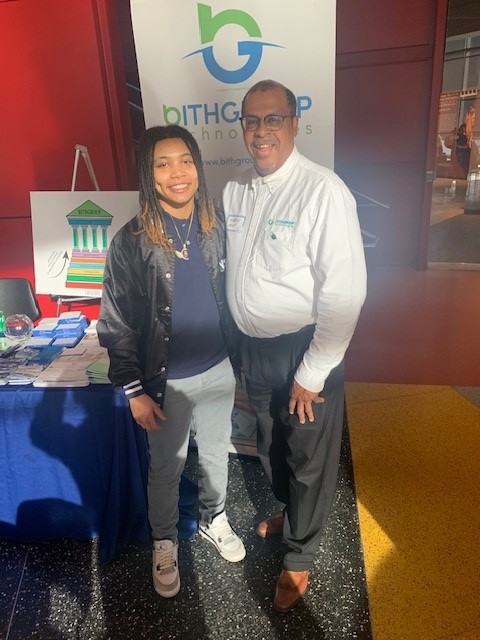
Later, I went to the Amos Tuck School of Management at Dartmouth College. I received my master’s in business administration and worked for Price Waterhouse as a Management Consultant. I mentored INROADS interns at Price Waterhouse. I later joined BITHGROUP Technologies as a Vice President of Training. I started to work on my doctorate at George Washington University to get a PhD in Organizational Behavior and Human Resource Management. I became an adjunct professor at Morgan State University and have instructed students there for more than 20 years. Taking ten of my students to China in 2014. For eight years, I left Corporate America and was the Regional Director for INROADS Mid-Atlantic Region and had six hundred interns working with 100-plus organizations across Philadelphia, Harrisburg, Delaware, Maryland, DC, Virginia, and parts of West Virginia.
I continue to work with Upward Bound at Baltimore City Community College, INROADS, A Better Chance, Urban Alliance, and College Bound. I authored a book entitled “You Can Get There from Here, From a Historically Black College or University to Greatness.” I am the Vice President of the Board of Trustees for the Irvine Nature Center. I am the President of the Brown University Alumni Association, and I am a trustee for Brown University. Finally, I work as an adjunct Professor for the University of Baltimore, teaching Entrepreneurship at the SEED School of Maryland, College Algebra at Dunbar High School, Financial Literacy at the SEED School of Maryland, and Economics at the Baltimore Leadership School for Young Women.
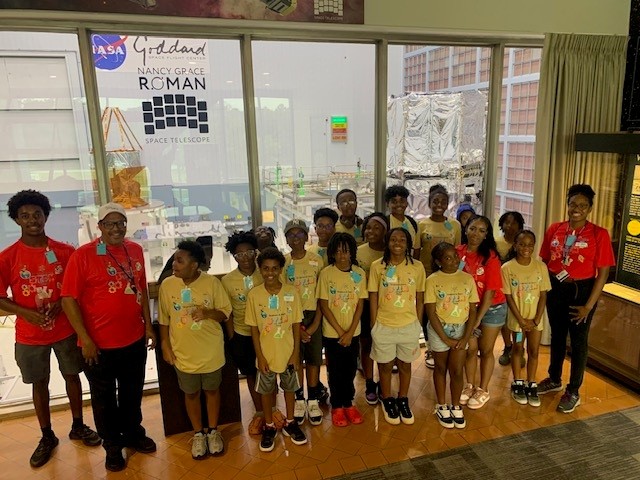
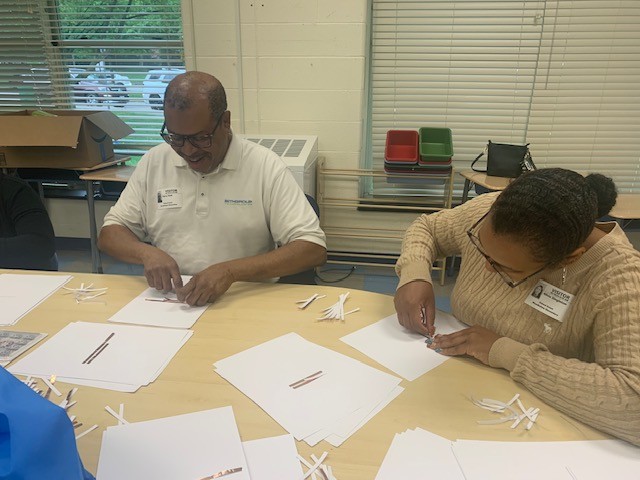
In my spare time, I am the President of Black SON, where we focus on providing STEM experiential learning experiences to students from kindergarten through 12th grade. We hope to increase the pipeline of STEM professionals from underrepresented communities in Baltimore City and Baltimore County. You see, to me, “Education is the great Equalizer.” I can easily embrace and believe in this mission because it is the way I have been able to accomplish what I have. So, I must be a servant leader first and help others to achieve their dreams like some many others have assisted me along the way.
Can you talk to us a bit about the challenges and lessons you have learned along the way? Looking back would you say it’s been easy or smooth in retrospect?
Growing up in the heart of the ghetto, with beer gardens on the corner, and prostitution close by. I had uncles who were in and out of prison, friends who were in gangs, doing drugs, smoking refer and drinking alcohol. My mother was an alcoholic, and she smoked and was in and out of violent relationships. I recalled my father threatening one of her boyfriend’s not to touch his kids. I recall my other getting restraining orders against my younger brother’s father. I also recall protecting my siblings from my mother when she was intoxicated and not allowing her to beat them. We grew up on welfare, food stamps, and government handouts. We had roaches, mice, and rats in our home. There was a lot of noise in my neighborhood day and night. I was teased at school because I had a white stepmother.
Working in business environments where they did not really respect minority and women employees. Not giving them a fair chance to contribute their best work and effort. Lowering expectations and assuming that I was not as capable as some of the other team members.
All right, so let us switch gears a bit and talk about business. What should we know about your work?
Black SONs is focused on advancing equitable access to STEM education for communities underrepresented in the STEM workforce. Our mission is to improve math and science proficiency and to expand STEM exposure, education, and workforce representation within communities underrepresented in the STEM Workforce.
Any big plans?
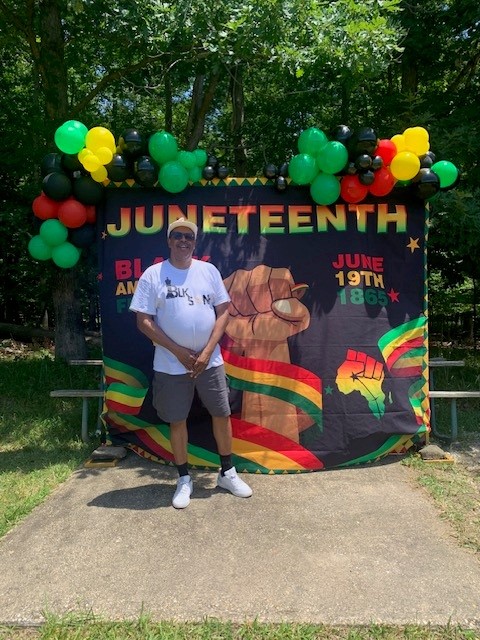
Black SONs plan to continue to develop programs and community engagement opportunities designed to inspire, educate, and empower communities underrepresented in the STEM workforce. Continue to host an Annual Men’s Power Brunch in April 2026, Juneteenth Family Reunion Cookout on Friday, June 19, 2026, at Patapsco Valley State Park; the Dreamers and Doers STEM Camp, a six-week summer program running June- July 2026 at Coppin State University. The Empower H.E.R. Teen Summit on Saturday, May 9, 2026, The STEM CEO Challenge in November 2026 at Morgan State University, and the Winter STEM Extravaganza in December 2026 at Baltimore Polytechnic Institute. We are working towards offering some year-round math and science tutoring support offered after school and on weekends.
Contact Info:
- Website: https://www.blacksuccessnetworks.org
- Instagram: @blacksuccessnetworks
- Facebook: Black Success Oriented Networks
- LinkedIn: Black Success Oriented Networks
- Other: info@blacksuccessnetworks.org