




Today we’d like to introduce you to Emily Dove.
Emily, we appreciate you taking the time to share your story with us today. Where does your story begin?
I remember graduating high school and feeling like everyone else had a plan except me.I had absolutely no idea what I wanted to do with the rest of my life- I changed my college major at least four times, everything from sports management (I played soccer at Towson University and, for a while, thought I’d coach college soccer) to elementary education and everything in between. I never imagined psychology or social work would be in my future—Considering I had failed psychology in college, that career path wasnt exactly looking like an option.
College ended up being one of the most challenging seasons of my life. During that time, I struggled with an eating disorder and spent time in residential treatment. I dont remember much from my stay, but what I do remember was the social worker assigned to my floor. She was warm, funny, and had a way of making an incredibly difficult experience feel just a little bit lighter. I remember thinking, This is what I want to do. I also realized that my own experiences, while painful, would one day allow me to connect with clients in a genuine and compassionate way.
So I switched my major to psychology—second time’s the charm—and completely fell in love with it.
After earning my undergraduate degree, I completed my Master of Social Work at Arizona State University. During that time, my husband and I moved back and forth from the east coast to the west coast. Along the way, we welcomed two incredible children into our family. As grateful as we were for all of the adventures, we eventually realized we were ready to stop moving and put down roots.
That brought us home to Leonardtown, Maryland, where I was born and raised.
To say I’m excited to be back would be an understatement. I love this little town—the horse and buggies passing by, the local coffee shop just down the street, the sense of community. It feels like something straight out of a Hallmark movie.
When we moved back, I opened my private practice, and it has been one of the most rewarding decisions I’ve ever made. My professional experience has taken me through hospital social work, inpatient behavioral health, eating disorder facilities and child protective services. Each job proved to be challenging in the most rewarding ways.
My most recent role was as a therapist at an eating disorder treatment center, where I had the privilege of working with individuals and their families as they navigated the challenges of eating disorder recovery. Day after day, I had the honor of sitting alongside people during some of the hardest moments of their lives. I witnessed their pain, their resilience, and, over time, their incredible growth. Watching clients reclaim their lives and families begin to heal was the most rewarding experience I’ve ever had. It was through those moments that I knew I wanted to continue this path and dedicate my career to being a therapist.
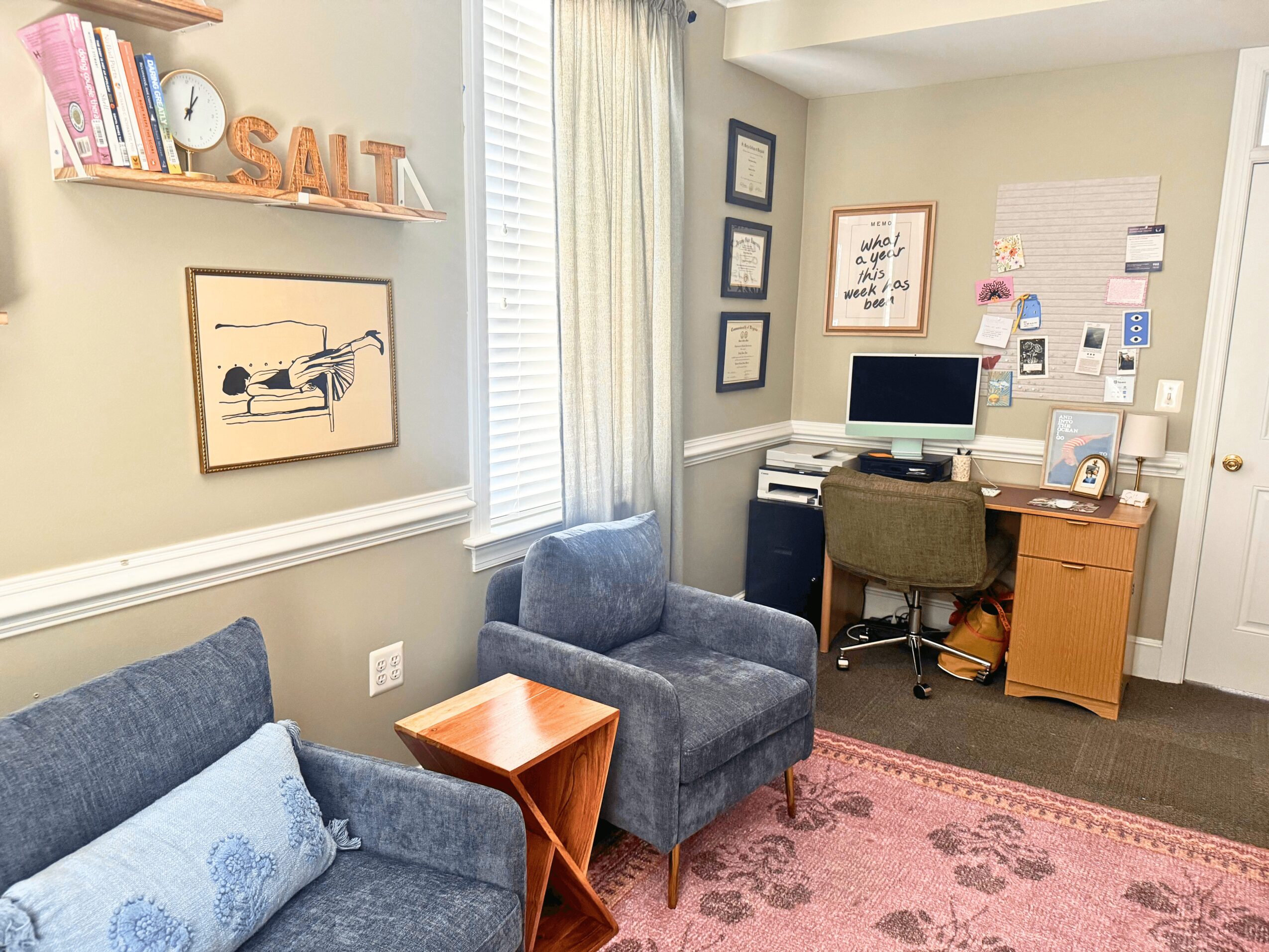
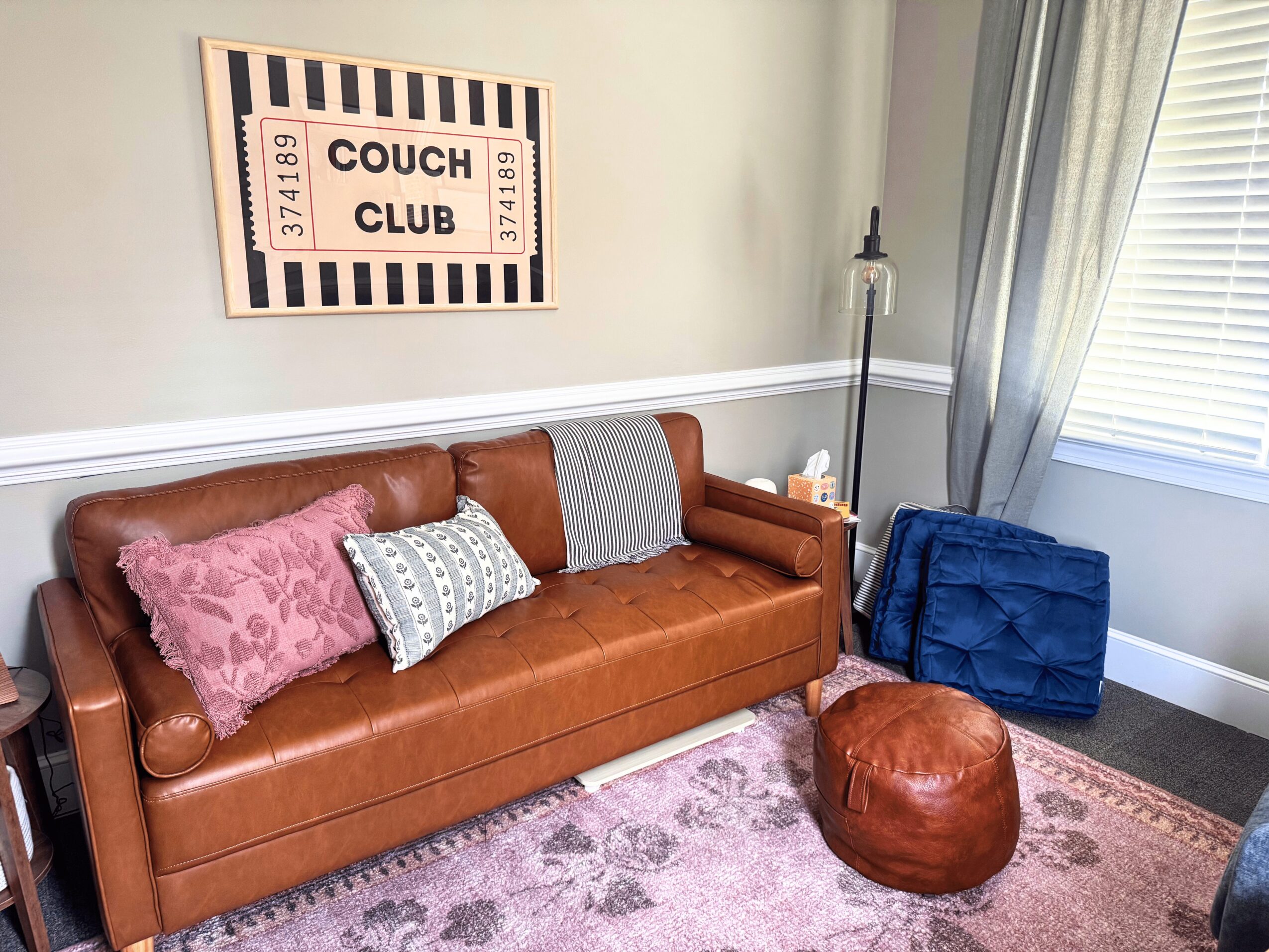
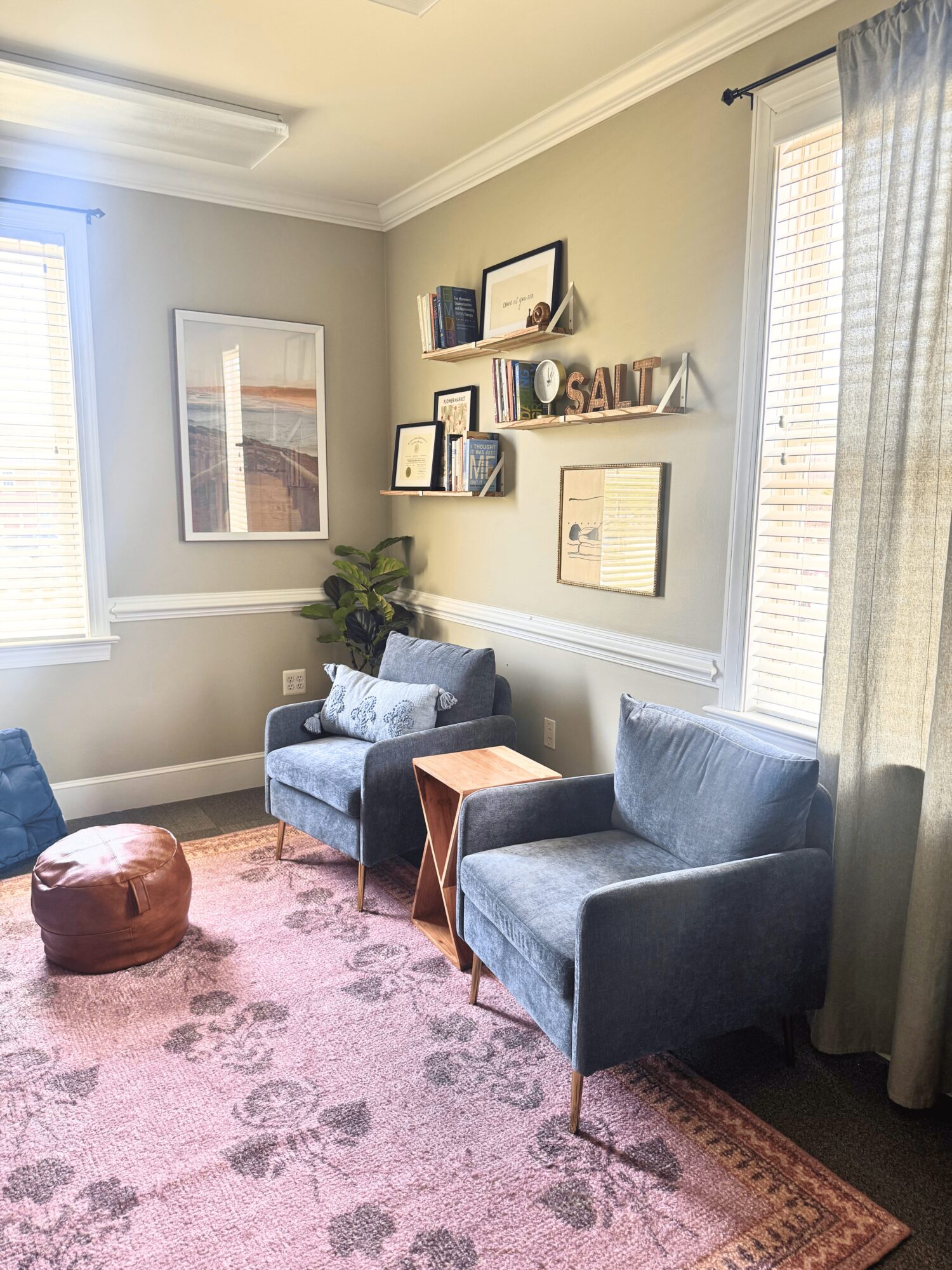
What I love most about private practice is the opportunity to create a space that feels safe, welcoming, and comfortable—more like a home than a clinic. My hope is that every client who walks through my door feels the warmth, authenticity, and compassion that I once experienced from a therapist who changed the course of my own life. It’s an incredible privilege to now walk alongside others as they begin their own healing journeys.
Would you say it’s been a smooth road, and if not what are some of the biggest challenges you’ve faced along the way?
I would love to say the transition has been completely smooth—that I immediately had a full caseload and felt like I knew exactly what I was doing— but anyone who has started something from scratch knows that’s rarely how it works
The biggest challenge has been learning to be patient. Building a private practice takes time, and I’ve had to trust that the right clients would find me when the timing was right. I’ve also been intentional about making sure I’m the right fit for the people who reach out. If I truly believe another therapist could better serve someone’s needs, I would much rather help them find that person than simply fill my schedule. My priority has always been providing the best possible care, not just growing my practice.
Of course, there have been days where I’ve walked out of my office wondering, “Was that good enough? Did I help?” Not because I don’t love this work, but because I care so deeply about making sure my clients receive the best care I can provide.
Thanks for sharing that. So, maybe next you can tell us a bit more about your work?
I am a Licensed Clinical Social Worker and the owner of Salt Psychotherapy, a private practice serving adolescents and adults throughout Maryland and Virginia. I specialize in working with individuals navigating eating disorders, trauma, anxiety, depression, and relationship challenges.
My approach is rooted in creating a space where clients feel genuinely seen, heard, and accepted. I believe healing happens through connection, and I strive to build a relationship where clients feel safe enough to be their authentic selves.
Clients often tell me that one of the things that sets me apart is my ability to make them feel comfortable from the moment they walk through the door. Therapy can be intimidating, so I work hard to create an environment that feels warm, welcoming, and genuine. While I know when to hold space for life’s hardest moments, I also believe there is room for humor in therapy when it’s appropriate. Laughter has a unique way of building connection, easing tension, and reminding us that even in the midst of difficult seasons, we’re still human. I’d like to think I’m pretty good at making people laugh!
What I’m most proud of isn’t simply becoming a therapist—it’s being able to use my own life experiences to better understand and connect with the people who sit across from me. Having faced my own challenges, I know how vulnerable it can feel to ask for help. That perspective allows me to meet clients with empathy, compassion, and without judgment.
I take great pride in is creating a therapy experience that doesn’t feel overly clinical or intimidating. My goal is for clients to walk into my office, take a deep breath, put their feet up, and know they’re entering a space where they can be completely themselves. Some days that means working through difficult trauma or learning practical coping skills. Other days, it simply means having a place to unload after an incredibly hard week. If a client is looking for guidance or solutions, I’m happy to offer evidence-based tools and suggestions. If they simply need someone to listen, validate their experience, and sit with them in whatever they’re carrying, that’s just as important. I believe therapy should feel like a collaborative conversation—not a checklist or an interrogation—and I strive to meet each client exactly where they are.
How do you define success?
Success has changed a lot for me over the years. Early on, I probably would have measured it by achievements or milestones. Now, I define success by the impact I have on the people I serve and by whether I’m living a life that aligns with my values.
As a therapist, success isn’t about “fixing” someone. It’s about creating a space where people feel safe enough to be vulnerable, helping them discover strengths they didn’t know they had, and watching them build a life that feels meaningful to them. Some of the most successful moments in my career aren’t the big breakthroughs—they’re the quieter ones. A client standing up for themselves for the first time, trying a meal they once feared, setting a healthy boundary, or simply saying, “I feel like myself again.”
Personally, success also means maintaining balance. It means being present for my family, taking care of my own well-being, and continuing to grow both as a therapist and as a person. If I can end each day knowing I showed up authentically, treated people with compassion, and made even a small positive difference in someone’s life, I consider that a successful day.
Contact Info:
- Website: https://www.saltpsychotherapy.org