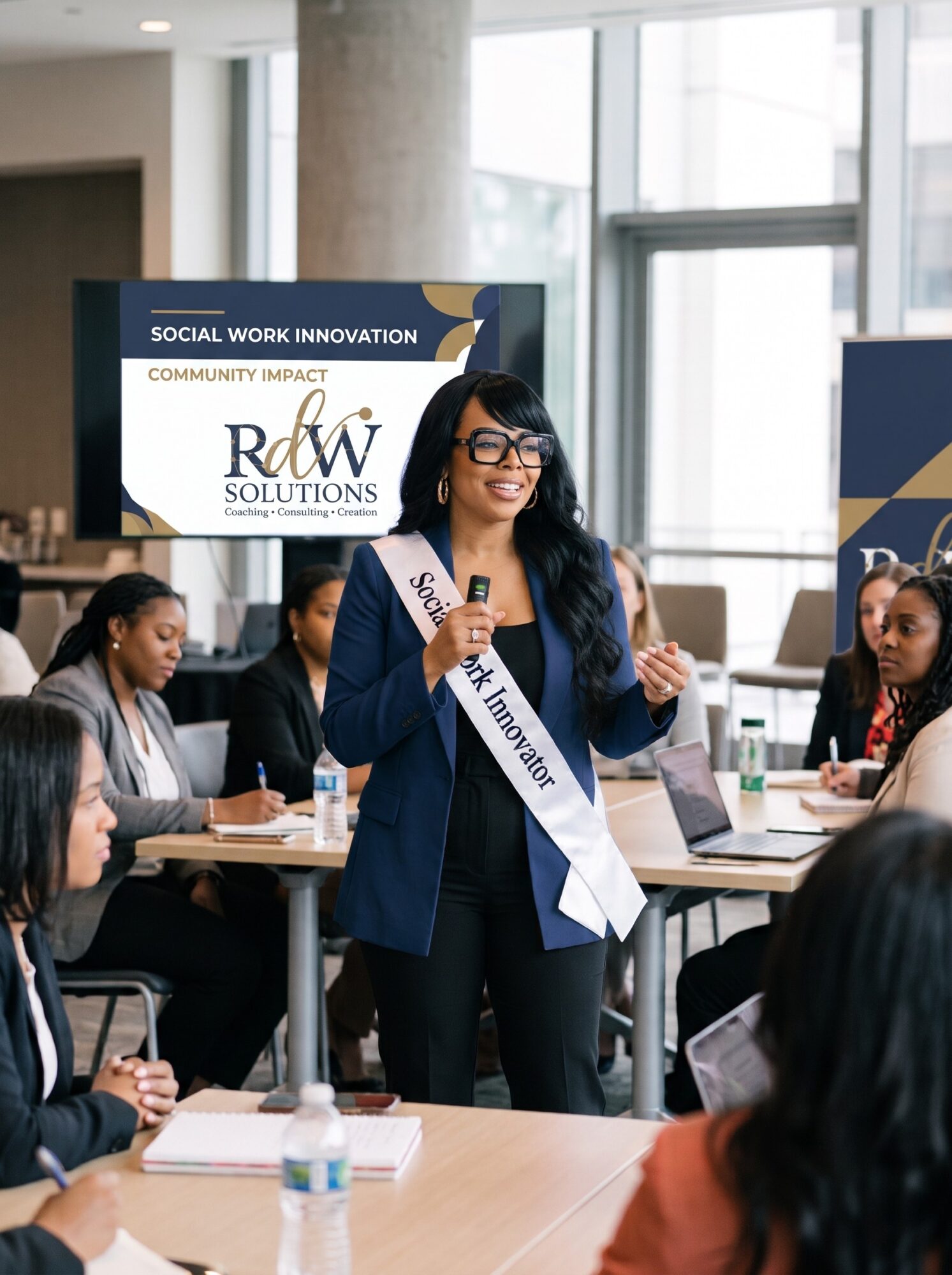



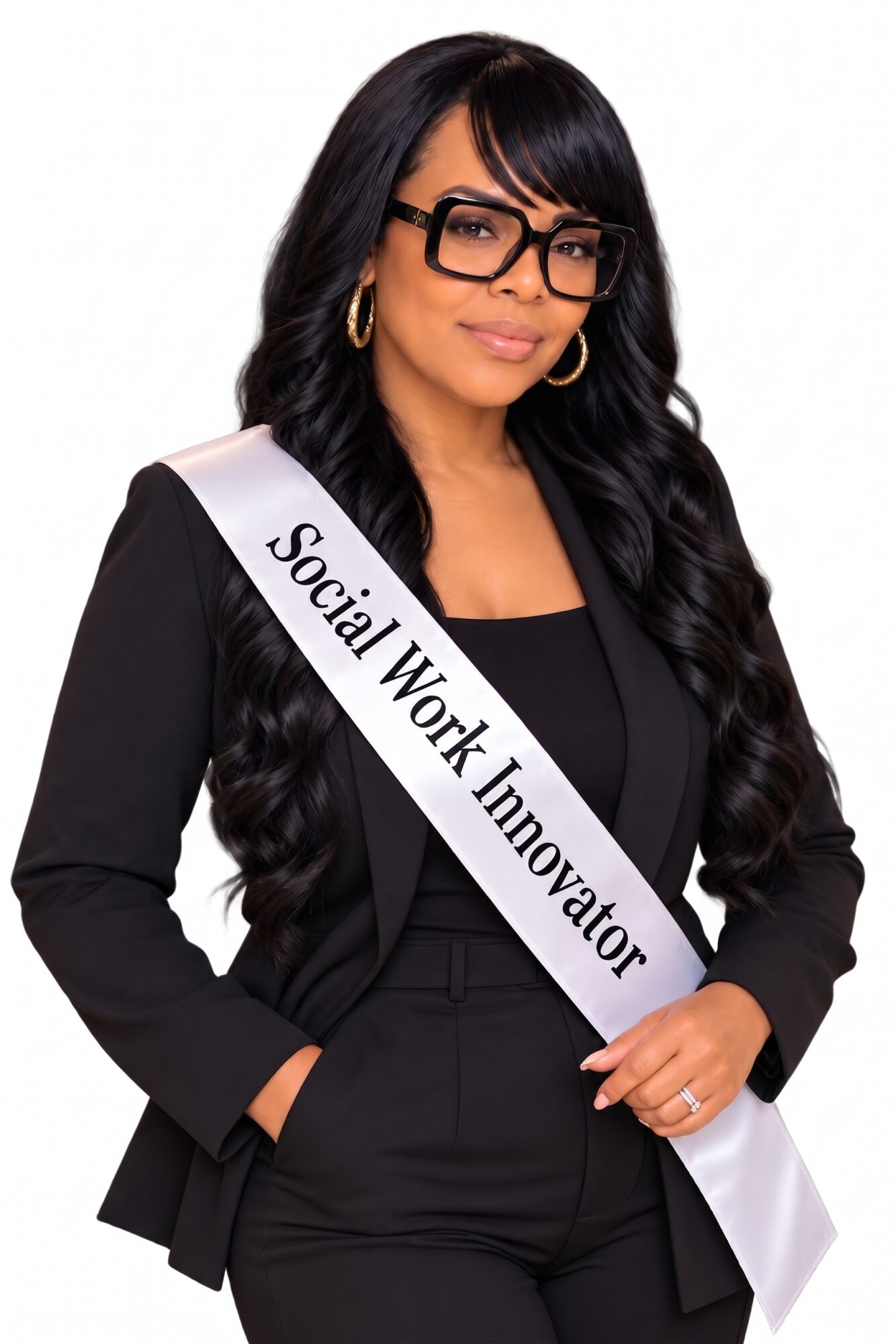
Today we’d like to introduce you to Renetta Weaver.
Hi Renetta, so excited to have you with us today. What can you tell us about your story?
I’ve always been a change agent. I just didn’t always realize how everything I was doing connected.
For more than two decades, I’ve worked as a clinical social worker, helping people navigate some of life’s biggest transitions. I’ve worked with people carrying emotional weight, people navigating physical weight through bariatric journeys, people experiencing grief, and people trying to figure out who they are becoming in the next chapter of their lives.
For a while, I wondered how all these different areas of my work fit together.
And then it clicked.
I wasn’t doing a bunch of unrelated things. I was doing what I’ve always done: helping people navigate change.
My journey into artificial intelligence started in a place you probably wouldn’t expect—a public speaking class.
I was learning how to become a better speaker when Alicia Little came into our community and demonstrated how AI could help people write books, develop ideas, and create speaking opportunities.
I was fascinated! I started experimenting with ChatGPT on my own, not because I wanted to become an AI consultant, but because I was curious about what this technology could do.
Then life happened.
My mother-in-law passed away, and like so many people do when someone they love dies, I found myself asking, “What can I do to help?”
My sister-in-law needed help preparing the obituary for the funeral home, and I volunteered.
I gathered everything I knew about my mother-in-law—her life, her story, the things that made her special—and turned to ChatGPT to help me organize it.
Within a short time, we had an obituary and a beautiful tribute honoring her life.
And I remember thinking, “Wait a minute. This didn’t take my brain away!”
It didn’t replace my memories, my knowledge, or my love for my mother-in-law. It simply helped me organize what was already inside me.
That was my first real aha moment.
Then I thought about my young niece and nephew. I knew they were grieving, too, and as a clinical social worker who had facilitated grief groups, I understood that children don’t always have the words to explain what they’re feeling.
Sometimes they need stories. Sometimes they need pictures. Sometimes they need a way to understand their emotions through someone else’s experience.
So I started working with ChatGPT to develop a way to help children understand grief.
I brought my clinical knowledge, my experience, and my understanding of childhood grief. AI helped me organize those ideas.
And before I knew it, I said, “Wait a minute. This sounds like a book!”
That experience became my first children’s book, *A Journey Through Children’s Grief*.
And that’s when I began seeing AI differently.
It wasn’t about replacing what I knew. It was about expanding what I could do with what I knew.
Around that same time, I was seeing something else in my private practice.
Professionals were coming in worried about layoffs, career uncertainty, and the future of their work. They had spent years developing knowledge and expertise, but suddenly they were questioning whether any of it would still matter.
And the conversation around AI wasn’t helping.
People were hearing, “The bots are taking over. AI is coming for your job. You’re going to be replaced.”
But I kept thinking, we’re teaching people about the technology without preparing them for the change.
As a social worker, I recognized that fear, uncertainty, and professional identity were part of this conversation.
People didn’t just need to learn how to write prompts. They needed help recognizing that their years of experience still had value.
I wanted them to see that AI could be an expansion tool, not an eraser.
That’s what led me to develop the SWAI Method, which stands for Social Work and AI Method. It’s grounded in my AAA approach: Awareness, Answers, and Action.
I start by listening. I ask people about their experiences, their fears, their goals, and their readiness for AI. Then we develop a personalized plan and identify the tools that make sense for their lives or work.
Because I don’t believe people need every AI tool out there. They need the right tools.
I also created The AI Soft Life®, built around a belief I hold deeply: we have got to stop thinking that everything has to be hard in order for it to count.
We can work faster, smarter, and more efficiently without losing our creativity, our expertise, or ourselves in the process.
And for me, that means something especially personal now that I’m navigating caregiving responsibilities.
I want my time back.
I often compare life to an hourglass. We’re each given a certain amount of sand, and that sand is constantly flowing. We can make more money, but we cannot make more time.
So if AI can help me spend less time doing repetitive tasks and more time caring for my family, enjoying my husband, getting enough sleep, laughing with friends, or simply living, then that’s meaningful to me.
That’s what The AI Soft Life® is about.
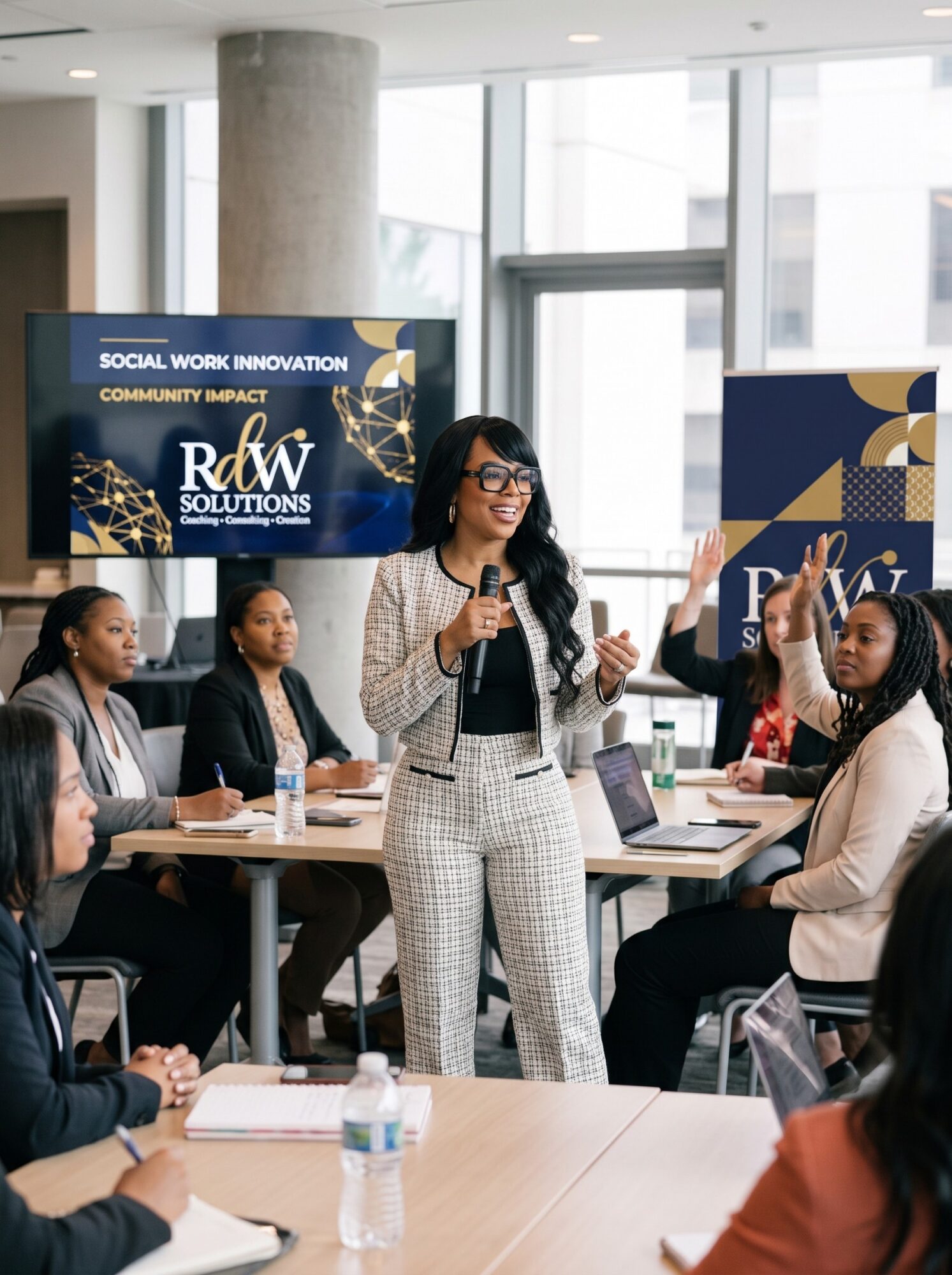
My work has since opened doors I never imagined when I first started experimenting with ChatGPT. I’ve had opportunities to speak about AI readiness nationally and internationally, including at the NASW annual conference in Chicago, AI Innovation conferences, and an engagement at Cambridge University.
I’ve also been honored with the Social Work Innovator of the Year award from my alma mater, the University of Maryland, and a Global Thought Leader award from the London Organization for Skills Development.
Receiving recognition from my alma mater was especially meaningful because I had always believed social work and AI belonged together, even before others recognized that connection.
Today, I’m committed to helping people across generations, professions, and communities prepare for artificial intelligence.
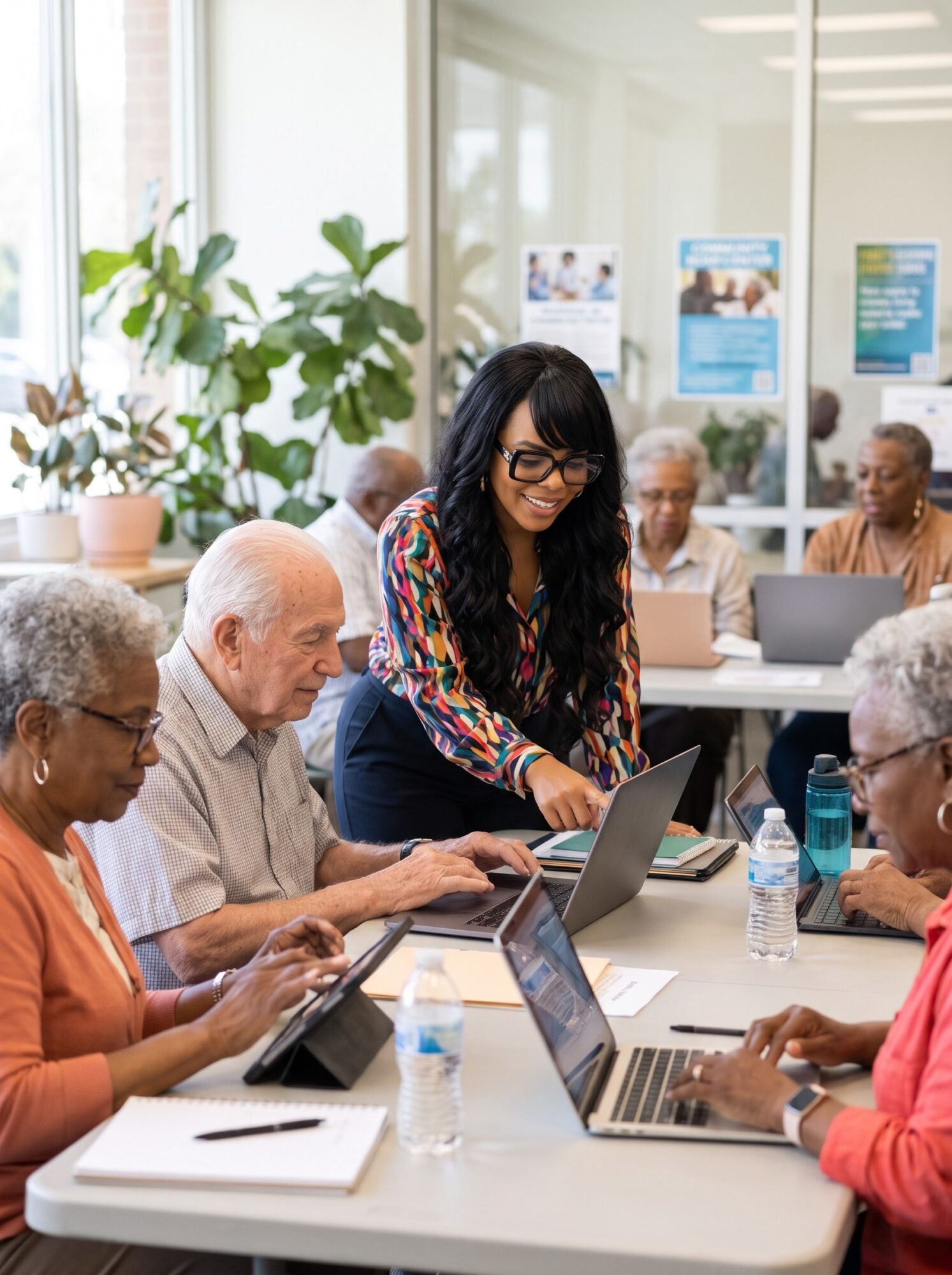
I teach AI readiness to professionals, organizations, and even older adults in my own 55-and-older community. And I love watching someone go from saying, “I’m not a technology person,” to “Oh my gosh! I can’t believe I just did that!”
Those moments remind me why this work matters.
My goal is to become a global voice for AI readiness and help ensure that people aren’t left behind because they’re afraid of technology.
Because my greatest fear isn’t AI itself.
**My greatest fear is that people will get left behind because they’re afraid of AI.**
I want people to recognize that they don’t have to erase everything they’ve spent their lives becoming just because technology is changing.
Their knowledge still matters. Their wisdom still matters. Their experience still matters.
And I often remind people that the greatest AI tool they’ll ever have is their own brain.
Looking back, I’ve come to realize something beautiful about my journey.
I didn’t stop being a social worker when I entered the world of artificial intelligence.
I simply found another way to be the change agent I’ve always been.
Alright, so let’s dig a little deeper into the story – has it been an easy path overall and if not, what were the challenges you’ve had to overcome?
Has it been a smooth road? Absolutely not! But one thing I’ve learned over the years is that just because the road isn’t smooth doesn’t mean you’re traveling in the wrong direction.
One of my biggest challenges has been getting people to understand the connection between everything I do.
I’ve spent more than two decades as a clinical social worker, working in behavioral health, bariatric weight loss, grief, wellness, and personal reinvention. Then I entered the world of artificial intelligence.
And I remember asking myself, “How in the world do all these things fit together?”
For a while, I was looking at the different areas of my work instead of recognizing the one thing they all had in common.
And then it clicked.
**I’m a change agent. That’s what I’ve always been.**
Whether I’m helping someone navigate physical weight, emotional weight, a career transition, or the uncertainty of learning AI, I’m helping people move through change.
Once I understood that, I could see the value in everything I brought to the table.
But getting other people to recognize that value was another challenge.
When I started connecting social work and artificial intelligence, I knew the two belonged together. I never doubted that.
Social workers are trained in human behavior, motivational interviewing, stages of change, and helping people navigate uncertainty. Yet much of the AI conversation was focused almost entirely on technology.
Everyone wanted to talk about tools, automation, prompts, and productivity. And those things are important, but I kept asking, “What about the people?”
What about the employee who’s terrified of losing their job? What about the professional who believes they’re too old to learn something new? What about the organization investing in AI without preparing its employees for the change?
I realized that one of my biggest challenges would be helping people understand that **AI adoption isn’t just a technology strategy. It’s a people strategy.**
That’s part of what led me to develop my SWAI Method, which stands for Social Work and AI Method. Through my AAA approach—Awareness, Answers, and Action—I help people acknowledge where they are, identify what they need, and create personalized plans for moving forward.
Another challenge has been navigating the belief that we have to work ourselves to exhaustion for our accomplishments to count.
I’ve experienced that pressure myself, especially while managing different professional responsibilities, building new opportunities, and navigating changes in my personal life.
I’m also in a season of caregiving that I didn’t necessarily anticipate.
And caregiving has reminded me of something important: life doesn’t stop changing just because we’re busy building our dreams.
That’s one of the reasons I created The AI Soft Life®.
I believe we can get things done faster, smarter, and better, and they still count. We don’t have to burn ourselves out in the process.
I often compare life to an hourglass. We’re each given a certain amount of sand, and it’s constantly flowing. We can make more money, but we can’t make more time.
So I’ve become intentional about using AI to help me reclaim time for caregiving, family, rest, wellness, and the things I enjoy.
I’ve also turned my experiences and professional philosophy into books, including *The AI Soft Life Boss* and *The Change Agent’s Code: Why Social Workers Must Lead the AI Revolution, Not Fear It*.
Both books reflect lessons I’ve learned along the way: we don’t have to keep doing everything the hard way, and social workers don’t have to stand on the sidelines of technological change.
One of the most meaningful moments in this journey was receiving the Social Work Innovator of the Year award from my alma mater, the University of Maryland.
That recognition meant everything to me.
When I first began working at the intersection of social work and AI, there weren’t many people acknowledging what I was doing. But I knew the work mattered.
To have the institution where I studied social work recognize the value of that innovation was incredibly affirming.
It reminded me that sometimes you have to see the value in your vision before other people can recognize it.
And that’s one of the biggest lessons I’ve learned about reinvention.
**You don’t have to erase everything you’ve been to become who you’re meant to be next.**
Sometimes you simply have to recognize how everything you’ve experienced has been preparing you for the next chapter.
So no, the road hasn’t always been smooth.
But I wouldn’t trade the lessons.
Because I’ve learned that the most important part of navigating change isn’t having every answer before you begin.
It’s being willing to recognize your own value, embrace new possibilities, and keep moving forward—even when other people don’t yet understand where you’re going.
Appreciate you sharing that. What should we know about Total Transitions Ministry?
My work is centered on helping people navigate change, and today that work sits at the intersection of social work, wellness, reinvention, and artificial intelligence.
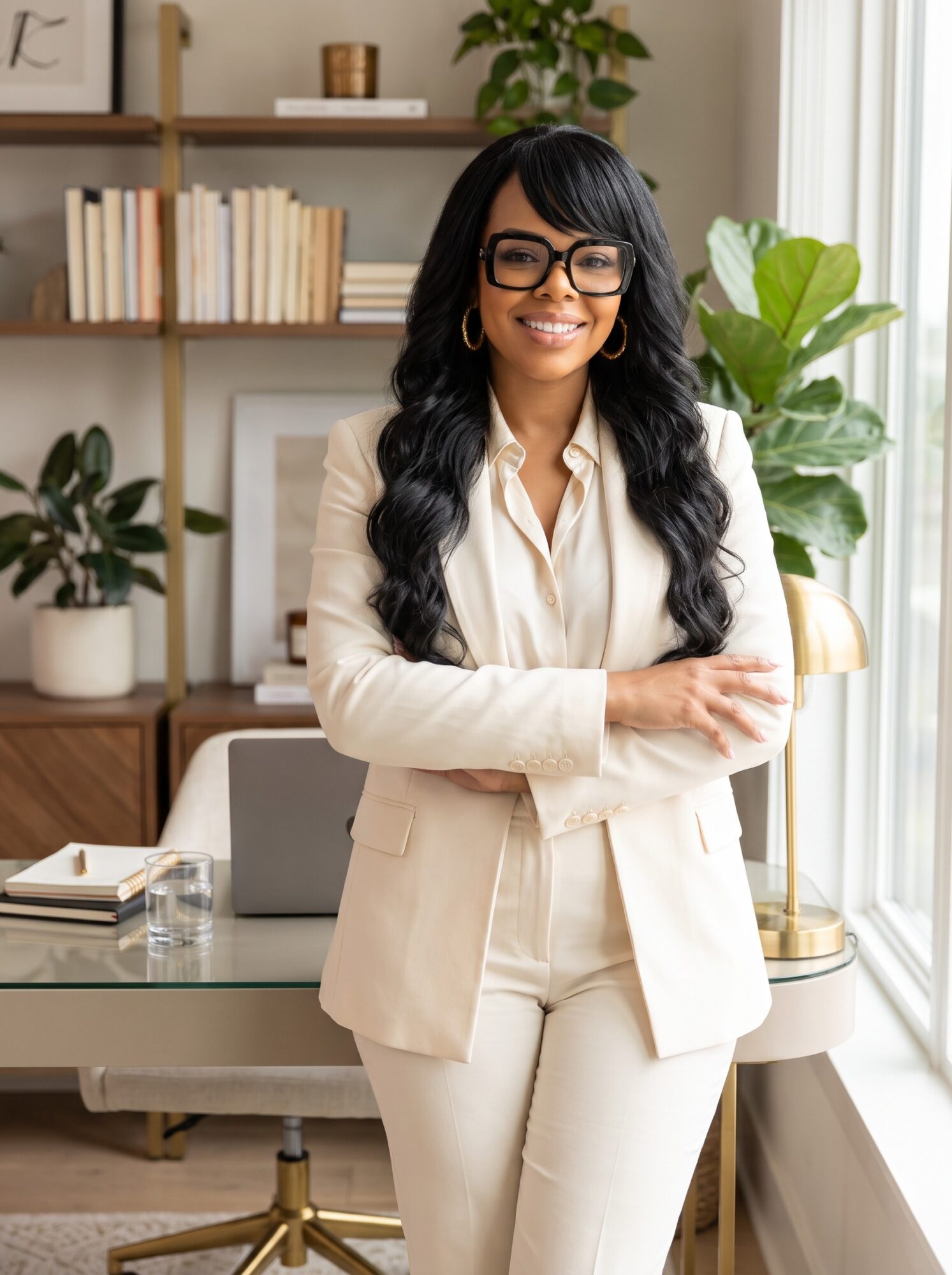
I’m a clinical social worker, speaker, author, and AI readiness consultant. I specialize in helping individuals, professionals, organizations, and communities become not just AI literate, but AI ready. A lot of people are teaching tools, prompts, and platforms, but my focus is on the human side of adoption. I help people understand what AI means for their lives, their work, their identity, and their future, so they can move from fear to readiness and from readiness to action.
My commitment to lifelong learning continues through my doctoral studies at Capella University, where I’m pursuing a Doctor of Human Services (DHS) with a specialization in Leadership and Organizational Management. I also hold a doctorate in Metaphysics. My educational journey reflects my belief that we must continue growing, evolving, and developing ourselves as we help others navigate change.
What sets me apart is that I approach AI through the lens of social work and change. Social workers have always been change agents, and I believe that perspective is deeply needed in the AI space. We understand human behavior, readiness for change, motivational interviewing, and how to meet people where they are. That’s why I developed the **SWAI Method**—the **Social Work and AI Method**—which uses my **AAA framework: Awareness, Answers, and Action**. I start by listening and asking curious questions about a person’s experience, fears, goals, and readiness. From there, we create a personalized plan and identify the right AI tools and strategies to help them move forward.
I’m also the creator of **The AI Soft Life®**, which is a registered trademark and a philosophy I’m deeply passionate about. The AI Soft Life® is built on the belief that we do not have to keep doing everything the hard way for it to count. I believe AI can help us reclaim time, reduce unnecessary burnout, and create more room for family, wellness, rest, creativity, and simply living. My goal is to help people stop seeing AI as an eraser and start seeing it as an expansion tool.
I offer speaking engagements, workshops, training, consulting, and educational experiences around AI readiness. I’ve spoken on these topics nationally and internationally, including at the NASW annual conference in Chicago, AI Innovation conferences, and in connection with Cambridge. I also teach AI literacy and readiness in my own 55-and-older community because I want older adults to know they are not too old to learn, grow, and participate in this changing world.
Brand-wise, I’m especially proud of the resources I’ve created to support people in different ways. I’m the author of **The AI Soft Life Boss** and **The Change Agent’s Code: Why Social Workers Must Lead the AI Revolution, Not Fear It**, both of which are available on Amazon. I also wrote **A Journey Through Children’s Grief**, which grew out of my work as a social worker and my desire to help children process grief in a compassionate and accessible way.
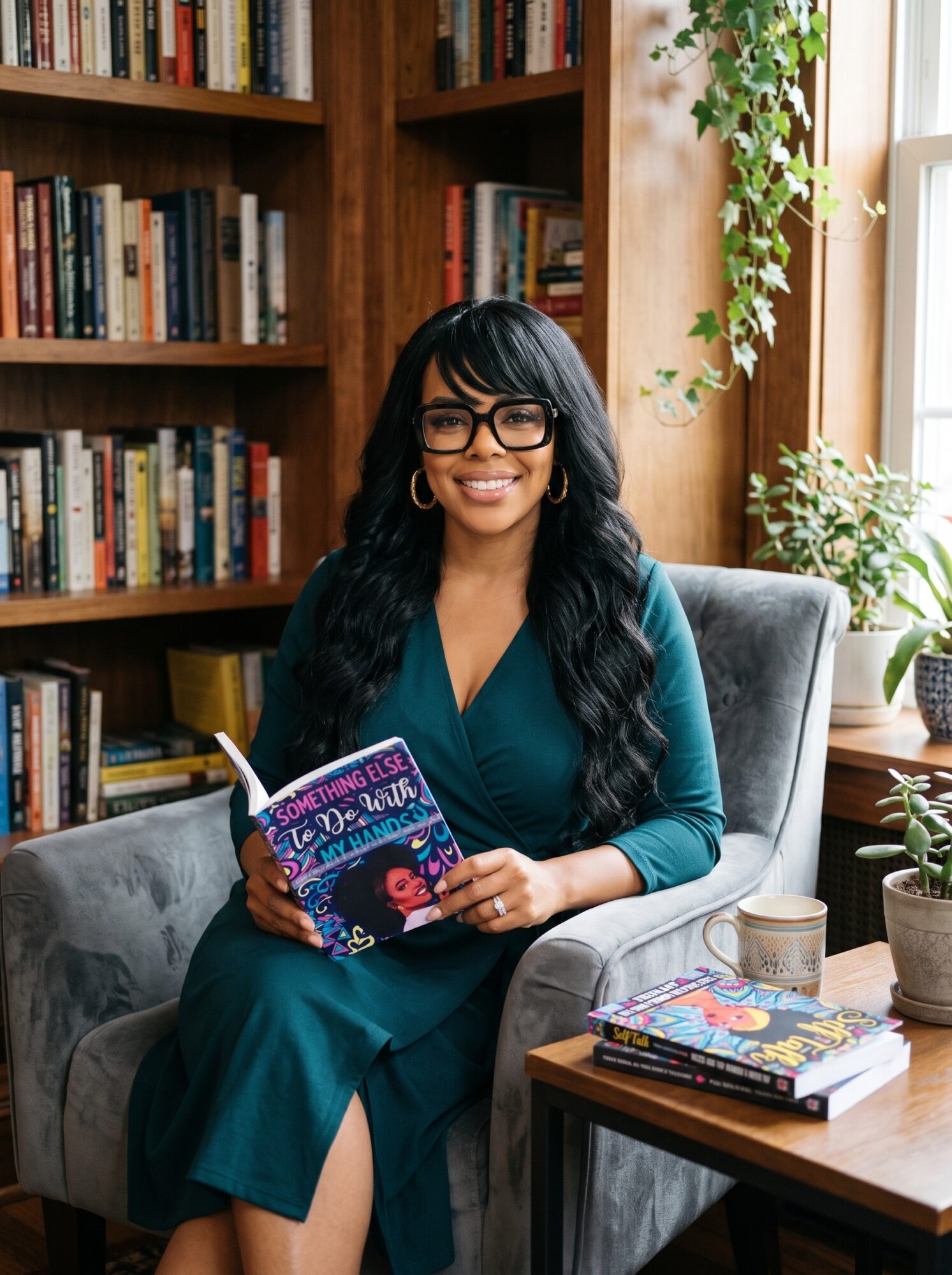
In addition, I’ve created coloring books that reflect my work in behavioral change, self-talk, and wellness. My flagship coloring book, **Something Else to Do with My Hands**, was inspired by my own bariatric weight loss journey and the need to find healthy alternatives and supportive coping tools. I’ve also created other coloring books focused on self-talk, love, affirmation, and wellness, including **A Mother’s Love** and **I Am Yoga**, which helps children practice positive affirmations.
Another point of pride is the recognition my work has received. I was honored by my alma mater, the University of Maryland, with the **Social Work Innovator of the Year** award for my pioneering work in social work and AI. I was also recognized as a **Global Thought Leader** by the London Organization for Skills Development. Those honors meant a lot to me because they affirmed the value of work I believed in from the very beginning.
What I most want readers to know is that my brand is about more than AI tools. It’s about helping people recognize their value, build on what they already know, and move confidently into what’s next. Whether I’m working with professionals, social workers, entrepreneurs, caregivers, older adults, or organizations, my mission is the same: to help people embrace change without getting left behind.
I often say that the greatest AI tool you will ever have is your own brain. My job is to help people use that brilliance, combine it with the right tools, and create new possibilities for their lives and work.
Before we go, is there anything else you can share with us?
If there’s one thing I want readers to take away from my story, it’s that you are never too old, too experienced, or too far along in life to learn something new, reinvent yourself, or create a different future.
I’ve spent more than two decades helping people navigate change, and one thing I know is that change doesn’t stop coming. Sometimes we choose it, and sometimes life chooses it for us. But we always have an opportunity to decide how we respond.
I believe artificial intelligence is one of the greatest technological changes of our time, and my biggest concern isn’t the technology itself. It’s that people will get left behind because they’re afraid of it.
I don’t want that to happen.
Whether you’re a social worker, entrepreneur, employee, caregiver, retiree, or someone who has never used ChatGPT, I want you to know that your knowledge, experience, and wisdom still matter.
You don’t have to erase who you are to embrace what’s next.
**AI can be an expansion tool, not an eraser.**
And I especially want employers and organizational leaders to remember that AI adoption isn’t just a technology strategy. It’s a people strategy. We have an opportunity to introduce AI in ways that support employees, encourage innovation, and consider human well-being alongside productivity.
I also want people to remember the philosophy behind The AI Soft Life®.
We’re given a certain amount of time in this life. I often compare it to an hourglass, with the sand steadily flowing. We can make more money, but we cannot make more time.
So why not explore how AI can help us spend less time doing repetitive things and more time enjoying the people, experiences, and moments that make life meaningful?
Sometimes that means starting with one simple question: “What is something I wish I had an assistant to help me do?”
You don’t have to figure everything out on your own.
Through my speaking, workshops, training, and consulting, I help individuals and organizations identify opportunities, develop personalized AI readiness plans, and learn to use the tools that make sense for them.
My goal is to help people move beyond simply consuming technology and begin recognizing how they can use it to create solutions.
And my invitation is simple: Don’t let fear convince you that the future doesn’t have room for you.
**The greatest AI tool you’ll ever have is your own brain.**
Let’s build on the knowledge you already have and discover what’s possible together.
You can learn more about my work at **RenettaWeaver.com**, reach me directly at **contact@RenettaWeaver.com**, or connect with me on social media at **@DrRenetta** and on LinkedIn as **Dr. Renetta Weaver**.
Because at the end of the day, I don’t just want people to learn how to use AI.
**I want them to recognize their brilliance, reclaim their time, and live life instead of just doing life.**
Contact Info:
- Website: https://renettaweaver.com
- Instagram: https://www.instagram.com/drrenetta
- Facebook: https://www.facebook.com/drrenetta
- LinkedIn: https://linkedin.com/in/drrenettaweaver