




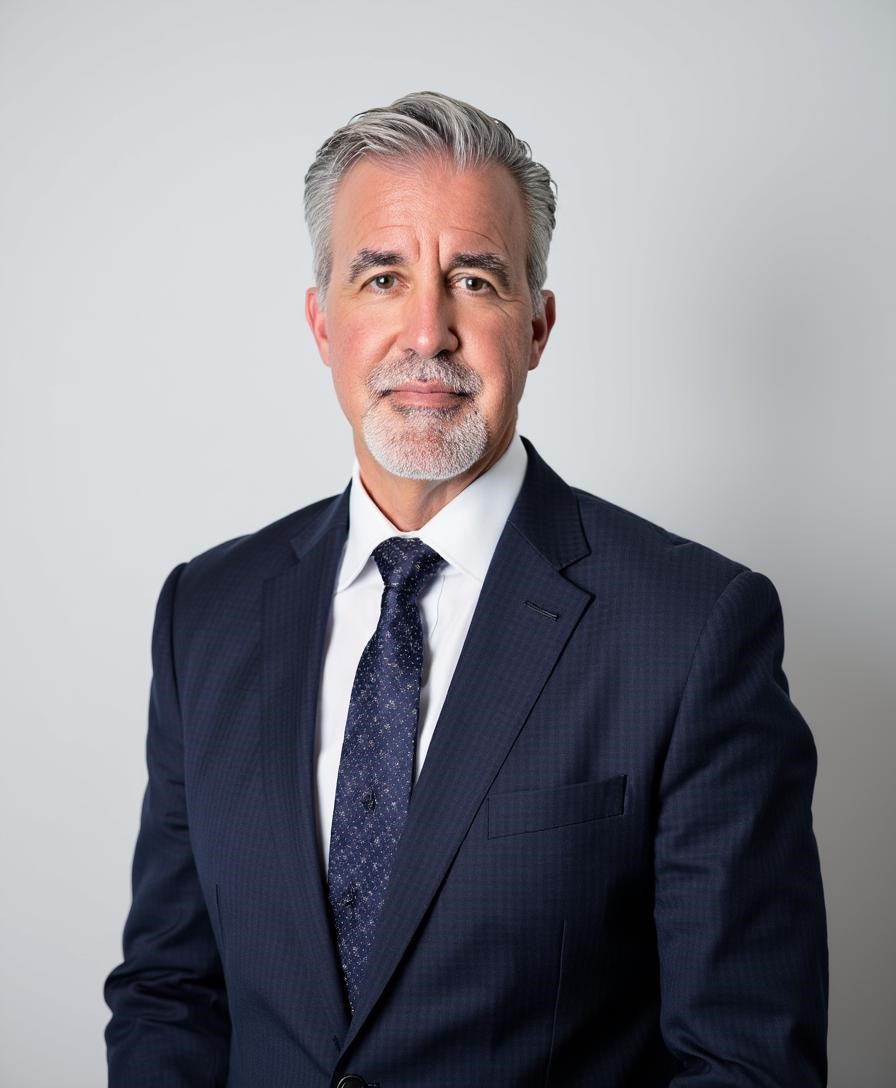
Today we’d like to introduce you to Anthony “Tony” Doran.
Hi Anthony “Tony” , please kick things off for us with an introduction to yourself and your story.
My name is Dr. Anthony “Tony” Doran, and I’m a clinical neuropsychologist and the founder of NeuroPro Concussion Clinic. My career has focused on understanding how the brain responds to injury and how people recover after concussion, trauma, and other neurological challenges.
My early exposure to traumatic brain injury came during my years working in military medicine and training environments. I trained at Harvard Medical School and spent twenty years working alongside the United States Navy, where I was frequently involved in the evaluation and care of service members dealing with mild traumatic brain injury and PTSD. Those experiences were formative because they showed me both the resilience of the human brain and the complexity of injuries that often appear invisible on traditional scans.
Later in my career I helped run one of the busiest concussion clinics in the country. At its peak the clinic was seeing between fifteen and twenty thousand patient visits each year. That level of clinical exposure allowed me to see an enormous range of concussion presentations and recovery trajectories. Over the course of my career I have evaluated more than thirty-five thousand individuals with mild traumatic brain injury and reviewed well over fifty thousand neurocognitive assessments.
Those experiences ultimately led to the creation of NeuroPro Concussion Clinic. Today NeuroPro operates as a national network working with more than thirty partner clinics and providing services in forty-five states. Our goal has always been to bring specialized concussion expertise to patients wherever they live rather than expecting them to travel long distances to find the right care.
At the end of the day, my work has always been about helping people understand what is happening in their brain and giving them a clear path toward recovery.
Alright, so let’s dig a little deeper into the story – has it been an easy path overall and if not, what were the challenges you’ve had to overcome?
Like most meaningful journeys, it has included both challenges and opportunities for growth.
One of the largest disruptions we all experienced was the COVID-19 pandemic. For healthcare providers, it forced us to rethink how care could be delivered. Clinics closed temporarily, patients were hesitant to travel, and traditional models of in-person care were suddenly very difficult to maintain.
The silver lining was the rapid development and expansion of telehealth services. What began as a necessity quickly revealed itself as a powerful tool for patient care. In the concussion world this was especially valuable. Many patients with mild traumatic brain injury experience slow reaction time, difficulty processing information, dizziness, or visual sensitivity. Asking those patients to drive long distances to appointments is often not ideal.
Telehealth allowed us to bring the clinic directly to the patient’s home. Instead of struggling through travel and stimulation, patients could be evaluated in a quiet, controlled environment. For many of them it actually improved the quality of the clinical interaction.
That shift accelerated the development of NeuroPro’s national model. What began as a local clinical practice evolved into a network that could support patients across the country.
Thanks – so what else should our readers know about NeuroPro Concussion Clinic | Caring Connections Mental Health | Neuropsychological Consulting Services ?
NeuroPro Concussion Clinic operates with three primary areas of focus.
The first is concussion care for athletes. We work with individuals across the entire spectrum of sport, from recreational youth leagues to Division I collegiate programs and professional or Olympic-level competitors. Our goal is to provide evidence-based evaluation and safe return-to-play guidance while protecting long-term brain health.
The second focus is personal injury and occupational concussion care. Many patients experience head injuries through motor vehicle accidents, workplace incidents, or slip-and-fall events. These cases often involve complex medical and legal issues, and our role is to provide detailed neuropsychological evaluation, treatment planning, and objective documentation of cognitive and functional changes following injury.
The third component is what we call Caring Connections, which is the mental health arm of NeuroPro. Brain injuries frequently intersect with emotional health, so we provide treatment for anxiety, depression, and adjustment difficulties. Our clinicians also conduct ADHD and learning disability evaluations and offer couples counseling when injury-related stress begins affecting family dynamics.
What makes this model unique is that all three areas intersect around the same central principle: understanding the brain and supporting the person behind the injury.
Professionally, I am very proud of the work I have been able to do with military veterans and active-duty service members. Many of them have experienced complex combinations of concussion, stress, and trauma. Being able to help them understand their symptoms and move toward recovery has been deeply meaningful.
On a personal level, the accomplishment I am most proud of is my family. My wife and I have been married for forty-three years, and there is absolutely no question that whatever professional success I have achieved is because of her support. Building a career that involves long days, travel, and constant responsibility would not have been possible without that foundation at home.
We have three children who have gone on to wonderful opportunities of their own. They attended schools such as the Naval Academy, Catholic University, and Johns Hopkins University, and each of them has built a meaningful and successful path in their own right. Watching them grow and pursue their goals has been far more rewarding than any professional milestone.
One piece of advice I often share with younger doctors is that you are being paid in more than just money. The real value of this profession comes from the experience you gain by seeing patients and learning from every clinical interaction.
Over the years I have evaluated more than thirty-five thousand individuals with mild traumatic brain injury and reviewed tens of thousands of neurocognitive tests. That volume of clinical exposure teaches lessons that cannot be found in textbooks. If you enjoy seeing patients and remain curious about what you are observing, that experience compounds over time.
The second piece of advice is simple: love your work. People sometimes ask how I can still work twelve, fourteen, or even sixteen hours in a day. The honest answer is that I don’t really feel like I’m working. I enjoy what I do. Every patient represents another family trying to understand a difficult situation, and helping them find clarity and direction is incredibly rewarding.
When you genuinely care about the work, the long hours feel less like effort and more like purpose.
The guiding question I ask every patient is very simple: “What can I do for you today?”
That question came from an experience earlier in my career that stuck with me. I had been seeing patients all day and was mentally moving quickly from one case to the next. I finished an appointment feeling confident that we had covered everything, but as the patient was leaving he mentioned that he actually needed a form completed for work. I had missed that entirely because my mind had already moved ahead.
That moment reminded me that patients come to us with specific needs and expectations. Sometimes they need answers, sometimes reassurance, and sometimes something very practical like documentation or guidance for their family.
Since then I have made it a point to begin every encounter by asking that simple question. It keeps the focus exactly where it belongs—on the patient sitting in front of you and what will help them most in that moment.
At the heart of clinical care, that is really the job. Listen carefully, understand what the person needs, and do your best to help them move forward.
Contact Info:
- Website: https://neuroprocares.com/