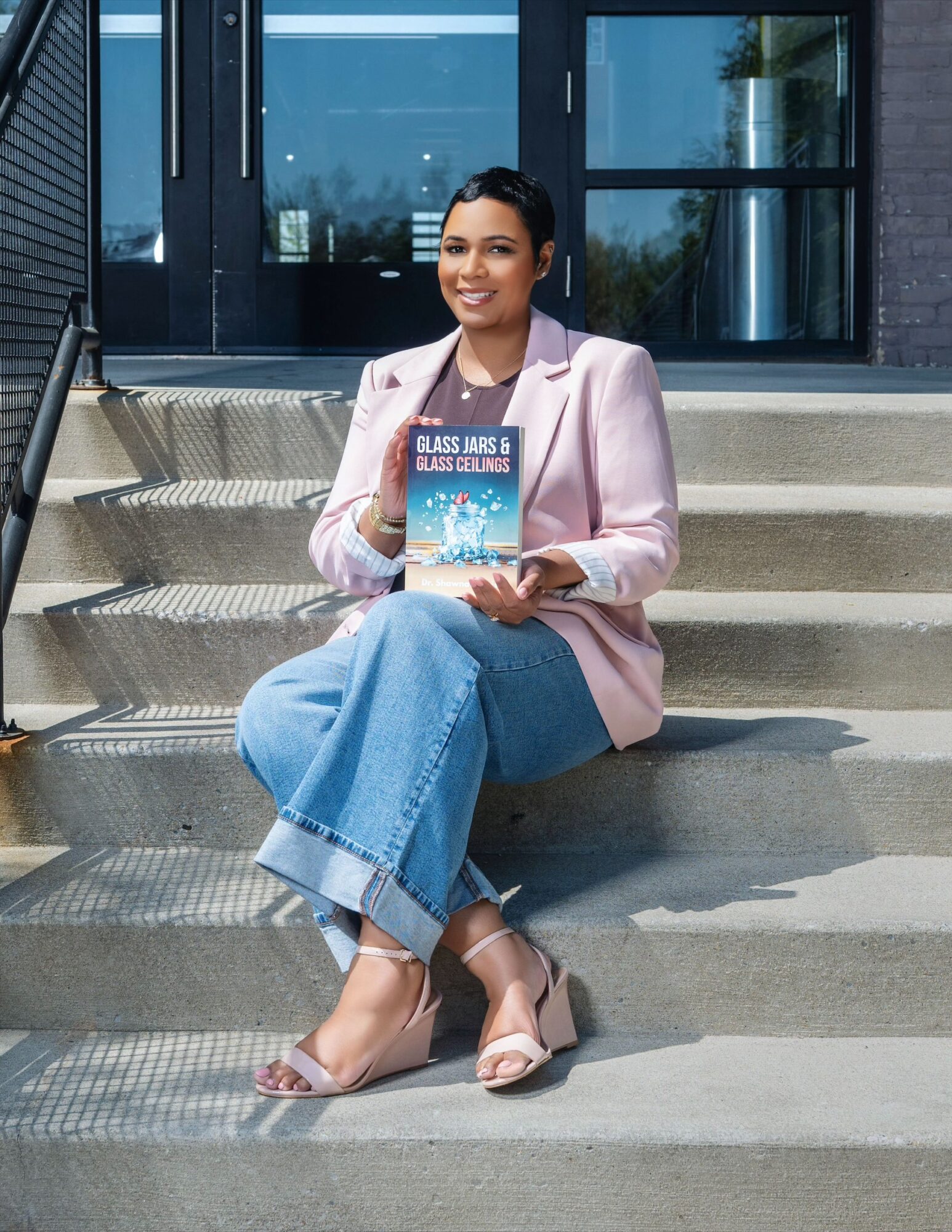





Today we’d like to introduce you to Dr. Shawna Norris.
Hi Dr. Shawna , can you start by introducing yourself? We’d love to learn more about how you got to where you are today?
I grew up in Queens, NY, and have always been drawn to understanding people and helping them find their way forward. That interest eventually shaped my work in leadership and, later, as an author. My faith also guides how I approach that work because I believe my gifts come with a responsibility to use them in service to others.
Morgan State University brought me to Maryland and helped shape the woman I became. I went on to build a career of more than 20 years in human capital and eventually executive leadership. I cared about helping people develop and making workplaces better. Along the way, I continued my education because I wanted to understand more about how people grow and what gets in their way.
But my own career also brought me face to face with the experiences I now write about. I experienced harassment and sexism, and I ultimately left a long-time six-figure role while pursuing a complaint. It affected my health and changed the future I had imagined for myself. Leaving a career I had worked so hard to build was painful, but I had to figure out who I was without that position and what I wanted to do next.
Executive coaching became an important part of that next chapter. Through 2TWENTY Coaching & Consulting, the business my husband, Dr. Neil Norris, and I built together, I work with leaders navigating change and professional growth. In those conversations, I kept hearing something familiar, especially from women. They were capable and accomplished, but they were spending tremendous energy managing how other people perceived them. They softened their ideas and made themselves smaller to stay accepted. That same pattern often followed them home, and sometimes into their friendships.
Those observations shaped a framework I created and am now testing through research, called Glass Containment Theory™. Most people recognize the glass ceiling as an external barrier to advancement. I use the glass jar to describe the limits we learn to place around ourselves after experiencing consequences for speaking up or showing up fully. Those adaptations may begin as protection, but over time, they can become rules we no longer question.
I wanted to explore that experience through a story people could feel. Over three years, I wrote my debut novel, Glass Jars & Glass Ceilings. It follows Olivia and the women she meets at a fictional HBCU inspired by Morgan State as they build careers and complicated relationships. There is romance and betrayal, and there are choices readers may disagree with. That is what I wanted. It was important to me that Olivia be human enough that people could recognize themselves in her, even when they wished she would choose differently.
I recently returned to Morgan for an author conversation and signing, with my daughter, now a Morgan student herself, in the audience. It was a meaningful moment: returning to a place that helped shape me, with something to offer the next generation.
Today, everything I do, from coaching to writing, shares one purpose. I want to help people recognize the patterns shaping their lives and see where they still have choices. I am continuing to build that work, and I am grateful that a story I once struggled to finish is opening conversations people want to have.
Can you talk to us a bit about the challenges and lessons you’ve learned along the way. Looking back would you say it’s been easy or smooth in retrospect?
No, it has not been a smooth road, and that is part of why this work matters to me.
The complaint process I mentioned added an emotional and financial burden. Ultimately, I chose not to pursue the case in court because I could not afford the cost, in money or in what it was taking from me. That was a painful decision, but I still had a life to live beyond the case.
I began recognizing my own glass jar in the way I presented ideas. I knew I had something valuable to contribute, but I would carefully package it to make other people comfortable. After enough years, I no longer needed someone to tell me to soften my voice. I had learned to do it before I entered the room.
Writing the novel was its own struggle. It took three years, and there were times when I had to put it down. Olivia is her own character, but some of her experiences were close enough to mine that writing those scenes was emotionally difficult. My faith and my family helped me keep going. My husband supported the late nights and understood why I needed to finish.
Then came learning how to get the book into readers’ hands. As a self-published author, I have discovered that writing a story and helping people find it require very different skills. Still, hearing a reader say she recognized herself in Olivia reminds me why I wanted to tell this story.
I am still learning. What has changed is that I no longer see continuing at any cost as the only form of strength. Sometimes moving forward means deciding what you are no longer willing to sacrifice.
Thanks for sharing that. So, maybe next you can tell us a bit more about your business?
I am an executive coach and researcher. I am also the author of Glass Jars & Glass Ceilings. My husband, Dr. Neil Norris, and I founded 2TWENTY Coaching & Consulting to help leaders develop and navigate change. Through Designer Discipline, my publishing business, I explore some of those same questions through fiction.
My coaching focuses on leadership effectiveness, grounded in emotional intelligence and a person’s readiness to grow. I work with accomplished people who are stepping into greater responsibility or deciding what comes next, sometimes while navigating a difficult workplace. My background in federal executive leadership helps me understand the organizational pressures they face. I also know how personal those professional decisions can become.
What distinguishes my approach is the connection between experience and research. My doctoral dissertation, which the International Coaching Federation published, examined executive coaching effectiveness among 188 senior executives. That work deepened my interest in what makes development possible, and in what can prevent someone from fully benefiting from the support available to them. In coaching, I want to understand the person’s circumstances before assuming what they need to change.
My novel brings another dimension to that work. Glass Jars & Glass Ceilings follows Olivia from her HBCU years into a life that looks successful from the outside but becomes increasingly difficult to sustain. It explores marriage and ambition, along with the friendships we expect to carry us through life. Readers can enjoy the drama while also recognizing choices and pressures they may have experienced themselves.
The book introduces ideas from Glass Containment Theory™, a framework I created and am now testing through research. The glass jar describes how people learn to make themselves smaller to stay accepted or safe. I am particularly interested in how those patterns follow women across different parts of their lives, and how relationships can reinforce or help loosen them.
Brand-wise, I am proudest when someone tells me the book helped her put words to an experience she had struggled to explain. That recognition can open a meaningful conversation. I want the same care to be present whether someone meets my work on the page or in the room.
Readers can connect with me for executive coaching and speaking engagements, including book club and organizational conversations. My hope is that they leave with a clearer understanding of their circumstances and a greater sense of what they can do next. Learn more at 2TwentyCoaching.com and DesignerDiscipline.com.
Are there any books, apps, podcasts or blogs that help you do your best?
Reading helps me do my best work. Academic research informs my coaching and writing, but fiction gives me something different. I enjoy character-driven stories that let me understand why people make complicated choices. That curiosity carries into my work as a coach, where understanding someone matters more than assuming I already know the answer.
One researcher whose work has been especially meaningful to me is Dr. Cheryl Woods-Giscombé of the University of North Carolina at Chapel Hill. Her Superwoman Schema research helped me think more deeply about the expectations placed on Black women to remain strong and suppress emotion while caring for others, sometimes at their own expense. It has informed questions I am exploring in Glass Containment Theory™, the framework I created.
Contact Info:
- Website: https://designerdiscipline.com
- Instagram: https://www.instagram.com/designerdiscipline/
- LinkedIn: https://www.linkedin.com/in/shawna-norris
- Youtube: https://www.youtube.com/@designerdiscipline8371
- Other: https://2twentycoaching.com