



Today we’d like to introduce you to Katie Speert.
Alright, so thank you so much for sharing your story and insight with our readers. To kick things off, can you tell us a bit about how you got started?
I grew up in Westminster, but the story really starts a few hours away, at Salisbury University. I was studying psychology and sociology and volunteering at an afterschool program, the kind of place that does homework help, runs a food pantry, keeps a soup kitchen going. That’s where I met an eight-year-old girl who changed the direction of my life. Her dad was incarcerated. Her brother had just been sentenced to prison at 18. Her mom was doing everything she could to hold it all together, and our program was a big part of what kept that little girl fed and supported. Then her family was evicted and moved outside our district, and just like that, she couldn’t come anymore.
I couldn’t picture her getting through elementary school without that support, so I asked her mom a simple question: what if I just kept showing up? No program, no requirements. I picked her up from the bus, did homework with her at the library, made sure she ate. Then it was her cousins, her friends, a basketball team, my roommates pitching in. By the time I graduated, we were supporting around 30 kids, and I’d filed for our 501(c)(3), not because I had some five-year plan, but because the need was already there and it kept growing.
After graduation I brought that same model home to Carroll County, and in 2018 we opened a youth center for kids who’d been labeled “behavioral,” “court-ordered,” “at-risk.” I wanted to serve kids because they didn’t ask for any of it. They didn’t ask for the hand they were dealt or the hardship they were born into. We tried to give them what those labels never did: mentorship, structure, and the chance to be seen as more than their file.
But we kept running into the same wall. We’d help a kid survive high school, the court system, everything happening at home, and then they’d turn 18 and end up homeless anyway, because home had never been safe to begin with. We literally kept a closet stocked with tents and sleeping bags for that reason. Eventually we had to ask a harder question: were we treating the behavior, or the root cause? The root cause was never the kid. And the more I got to know their families, the clearer it became that it wasn’t really the parents either. It was trauma, poverty, and pain handed down from one generation to the next, with no one ever stopping long enough to help anyone heal from it.
Participating as an adult living at home with my parents who had become Carroll County foster parents for a time, sharpened that for me. Every training we went through taught us, as foster parents, how to raise kids through trauma, and I kept thinking, what if the biological parents working toward reunification got that same training? Not a shifting list of benchmarks to hit, but real skills and real support. So in 2023 we rebuilt the organization from the ground up around whole families. We became licensed in parent coaching curriculum like Parenting Inside Out and certified as a Parent Coach through the Jai Institute for Parenting. We built our own eight-week connection coaching model to help people understand why they show up in the world the way they do.
My first coaching work in 2024 was inside a jail, and I recognized it almost immediately: The adults sitting across from me weren’t so different from the teenagers I’d spent years with. They were those kids, just a decade or two further down the same road. At the youth center I used to think, “I wish their parents would show up for them”. Sitting with those parents, I found myself thinking, “I wish someone had shown up for you”. Of course it’s hard to give your children safe, secure connection when no one ever gave it to you. They weren’t trying to fail their kids; they were passing down exactly what had been passed down to them. It felt like closing a loop, because what those adults needed was exactly what my kids had needed: safe, secure connection.
That’s really what the work has always been, in every form it’s taken, serving more than 4,000 people since 2015. The Hive wasn’t built from theory. It was built by people who’ve walked alongside families in their hardest chapters and believed connection – not compliance – was the missing piece. Too many systems run on policy and protocol that end up deepening disconnection instead of healing it. We built something simpler. People need people. Since 2024, I’ve formally coached over 200 justice-impacted individuals and I don’t think of it as second-chance work, because a second chance assumes you got a fair first one, and most of the people we serve never did. We’re trying to give people a fair first chance, finally.
Alright, so let’s dig a little deeper into the story – has it been an easy path overall and if not, what were the challenges you’ve had to overcome?
Not even a little bit. I didn’t set out to run a business at 19 years old. I set out because I was passionate about the work, because a little girl needed someone to keep showing up for her, and I couldn’t imagine not doing it. I started in college with no business plan and no funding, and a lot of those early years were spent learning on the fly, trying to turn something deeply relational into something that could actually last.
That’s been the heart of the struggle ever since. Everything we do comes back to relationship. We’ve always believed that what hurting people need most isn’t another program or another system, but safe, consistent people who show up for them. It really is that simple, but simple is hard to sometimes hard to fund. Early on, it never felt like there was a clear lane for what we did. We weren’t therapy, we weren’t just case management, we weren’t an after school program, and so much of the world we operate in is built around compliance, benchmarks, and graduation dates. Over and over, we were asked to fit into boxes that were never built for this kind of work.
Most systems and organizations draw their boundaries in permanent marker. Rules are fixed, lanes are rigid, and the people they serve have usually already been charged, labeled, diagnosed, and filed by the time they walk through the door. Because our work is relational, we chose to draw our boundaries in chalk. Not because we didn’t understand policy, and not because we were reckless, but because chalk can be erased and redrawn. Chalk assumes growth. It says you are more than this moment, more than your worst decision, more than what the system stamped on you. Working in chalk lets us respond to the human in front of us and not just the category. It lets us say “call me” when the rulebook says “refer out.” And sometimes that chalk line has saved lives.
We live in a society that so often meets disconnection with more disconnection. We call it punishment, consequence, and we call it justice. But the people who are the most disconnected are exactly the ones who need connection the most if they’re going to heal and move forward in a different way. Knowing these people exist in our communities, and knowing what could actually help them, while also having to fight for support for that work, is its own kind of exhausting. Not everybody wants to admit these problems exist in their own backyard, and part of this work is saying the hard things out loud, even when not everyone wants to look.
Then there’s the part people don’t always see. This work is heavy. There have been weeks where I’ve coached 34 unique individuals, carrying their individual feelings and needs and stories, and needed to sit in my office for a while before I could go home and be present for my own family. Many of the families we serve are in crisis, just trying to get basic needs met like safe housing, food, and financial stability, and those resources aren’t always there. Learning to care for my own nervous system the same way we teach others to care for theirs has been one of the biggest lessons of all.
Alright, so let’s switch gears a bit and talk business. What should we know?
The Hive MD is a nonprofit that walks alongside individuals and families impacted by generational trauma, incarceration, addiction, and child welfare involvement across Maryland. We’re called The Hive because we are a village. There’s no line between me as the director, our staff, and the people we serve. We’re all navigating life and its hard chapters together, and you can feel that in the community we’ve built. People with lived experience inform everything we do, and we work to make sure the voices of the people we serve shape the future of the organization. Our programs matter, but it’s the people who make up this community, who show up for themselves and for each other, who make The Hive what it is. We’re simply the facilitators. That’s what I’m most proud of.
A lot of organizations offer coaching. A lot offer parent support or reentry programming. What sets The Hive apart is the depth of what we bring into the spaces that need it most. As far as we know, we’re the only organization in Maryland, and maybe beyond, doing this level of connection coaching, grounded in attachment theory, nervous system science, and emotional regulation, with a highly trauma-impacted population inside prisons and county jails, alongside people navigating addiction and recovery, and those navigating other systems like child welfare. That approach comes from my own education and years of studying trauma and its impact on the brain. What I’ve learned is that if our brains can be wired by trauma, danger, stress, and threat, they can also be rewired for healing.
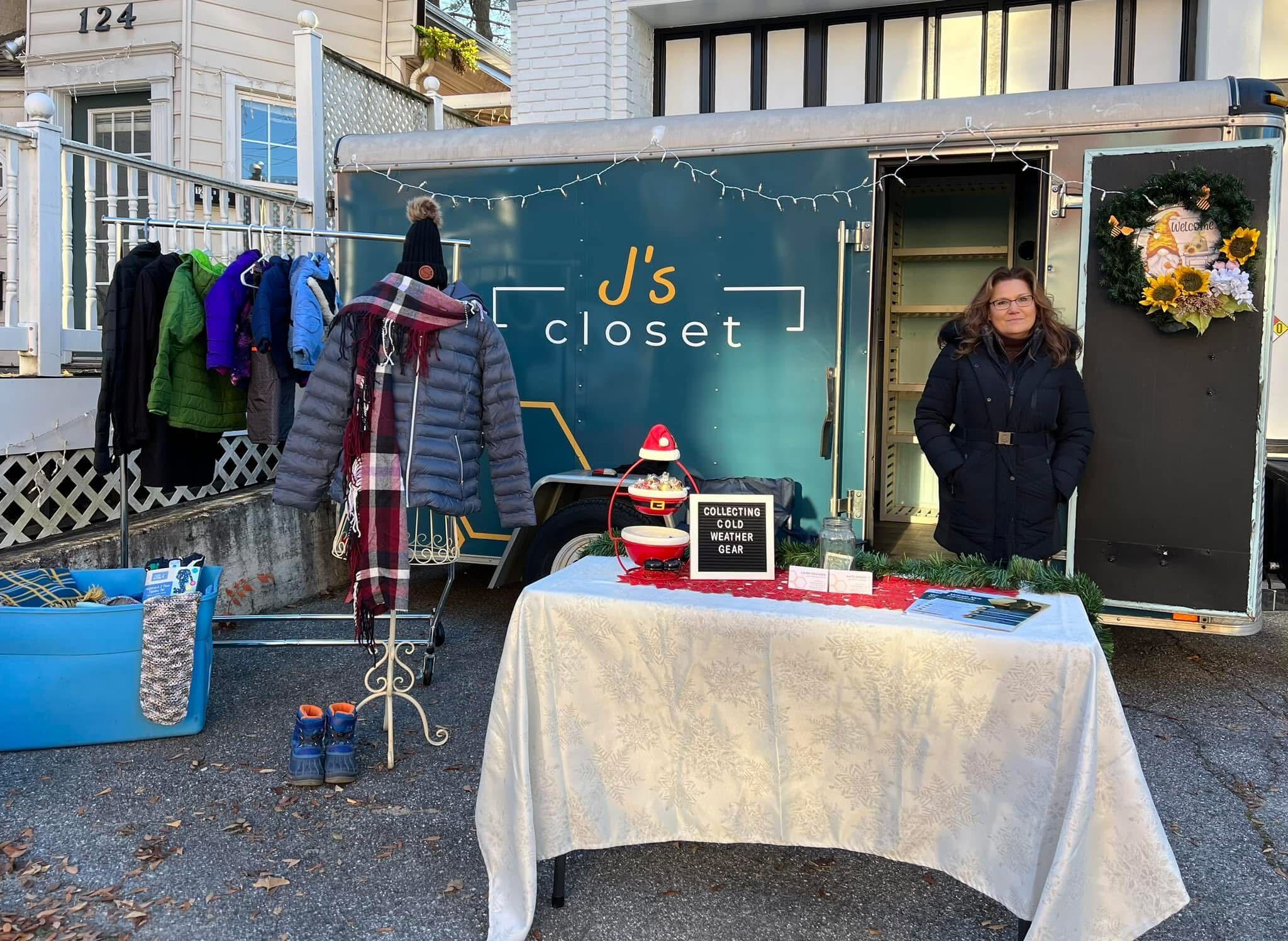
That belief shapes everything we offer. Our core program, Roots & Wings, starts with eight-week connection coaching cohorts that help people understand why they show up in the world the way they do, and firm up the internal resources that allow outside support to actually stick. From there, we connect people to the external resources they need, like housing, employment, and behavioral health care, and surround them with peer support and community. When people finish coaching, they become Phoenix Members, where they have access to weekly groups, events, activities, and ongoing support. And through J’s Closet, we help families meet their most basic needs. We serve families in person across Carroll, Baltimore, Howard, and Montgomery Counties and Baltimore City, inside correctional facilities, and virtually wherever they are.
We also know that the collateral consequences of generational trauma, addiction, and incarceration are lifelong so we built something where the support doesn’t expire either. There’s no graduation date at The Hive. Once you’re part of the community, you’re part of the village.
If you ask people what we’re known for, they’ll usually say we fill in the gaps, and that we’re the organization that does what we say we’re going to do. It’s the part that’s hardest to capture in a grant report. It’s the new mom with no one else to support her, whom we picked up from the hospital at discharge and drove home with her newborn. It’s the grandmother raising her granddaughter while her daughter serves a long prison sentence, and the afternoon we spent decorating her Christmas tree together, just to share a moment of joy. It’s the mom experiencing homelessness with three toddlers who was offered a tent and a sleeping bag, so we bought a camper so she and her kids could sleep somewhere safe for at least 30 days instead of on the street. And it’s the people who feel like no one understands what they’ve been through, who meet with us every Tuesday morning for virtual coffee and peer support. None of that fits neatly into a program description. It happens because there’s connection and community, and our participants tell us it matters.
One thing I want readers to know is that connection coaching is for everyone. We all have patterns that come from somewhere, and ways of showing up we’d like to change. I’m a people pleaser, and for a long time I carried a deep-rooted belief that I’m not enough. Through this work, even as the coach, I’ve started to discover where that comes from and to rewrite my inner narrative so it’s in my own voice instead of someone else’s. That kind of growth is good for all of us. Alongside our grant-funded seats, we offer connection coaching on a fee-for-service basis to anyone who wants it, and businesses and community members can sponsor an entire coaching cohort to bring this work to the people who need it most.
People who’ve experienced disconnection don’t need more systems. They need people. That’s what The Hive is. You can learn more at www.thehivemd.org.
What sort of changes are you expecting over the next 5-10 years?
It’s hard to see ourselves as part of a single industry. We sit somewhere between the nonprofit world, the reentry space, and human services, and across all of them, the honest answer is that the problems probably won’t look very different in five or ten years. We’re up against much larger systems, and systems don’t change quickly. In our time as an organization, we’ve seen real progress, including legislation and policy shifts that have made a difference for the people we serve. But we’re still a long way from the kind of systems change that would truly change outcomes for families caught in cycles of trauma, addiction, and incarceration.
The truth is, people who do this work are trying to work ourselves out of a job. The Hive was never about building a business. Sustaining it matters now, of course, but the bigger goal has always been a society where people experience more love and belonging and less disconnection. Until we get there, our job is to keep showing up and to reach as many people as we can.
That’s where we’re headed next. We’re digitizing our connection coaching so it can reach people inside correctional facilities across the country, with a new partnership that will place our work in more than 1,500 facilities nationwide by early 2027. For an organization that started with one kid in Salisbury, that’s a big leap, but the heart of it is the same. Every person deserves access to the kind of connection and self-understanding that can change the direction of their life, no matter where they are.
What gives me the most hope is the shift I see happening in how we talk about mental health, trauma, and connection. Conversations that used to happen quietly, if at all, are happening out loud now. I see a newer generation of parents thinking differently about how they show up for their kids, talking about attachment and emotional regulation, and trying to break patterns they inherited. That’s generational healing in real time. Systems may take decades to change, but people are changing now, and if this next generation grows up feeling more seen and more secure, that’s the kind of shift that changes everything that comes after it.
Contact Info:
- Website: https://www.thehivemd.org
- Instagram: https://www.instagram.com/thehivemd/
- Facebook: https://www.facebook.com/profile.php?id=100094071264041
- LinkedIn: https://www.linkedin.com/in/katespeert/
- Youtube: https://youtube.com/@thehivemd?si=5WVVYLsJdDy9p-uY