




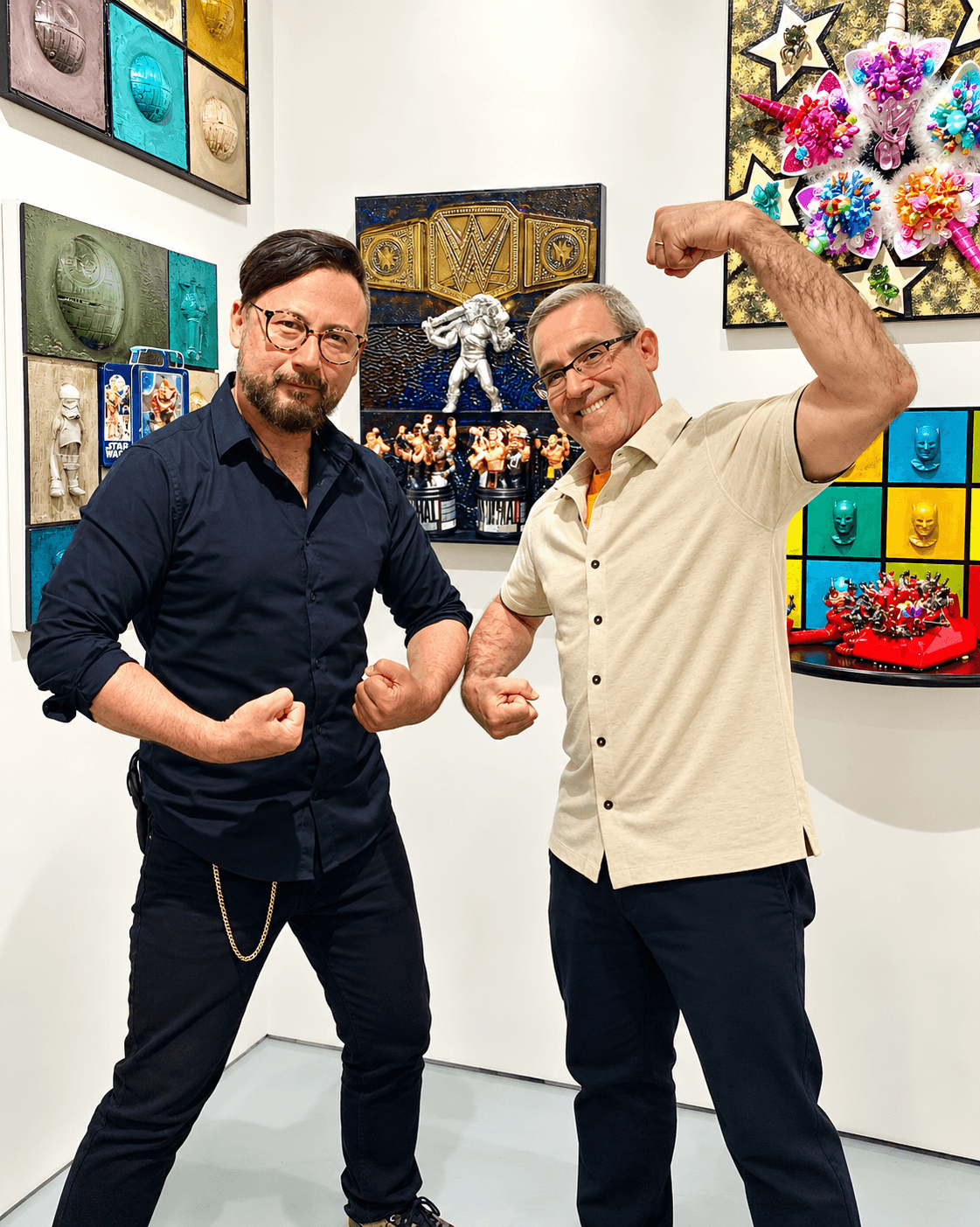
Today we’d like to introduce you to Michael Janis & Tony Porto Janis + Porto.
Alright, so thank you so much for sharing your story and insight with our readers. To kick things off, can you tell us a bit about how you got started?
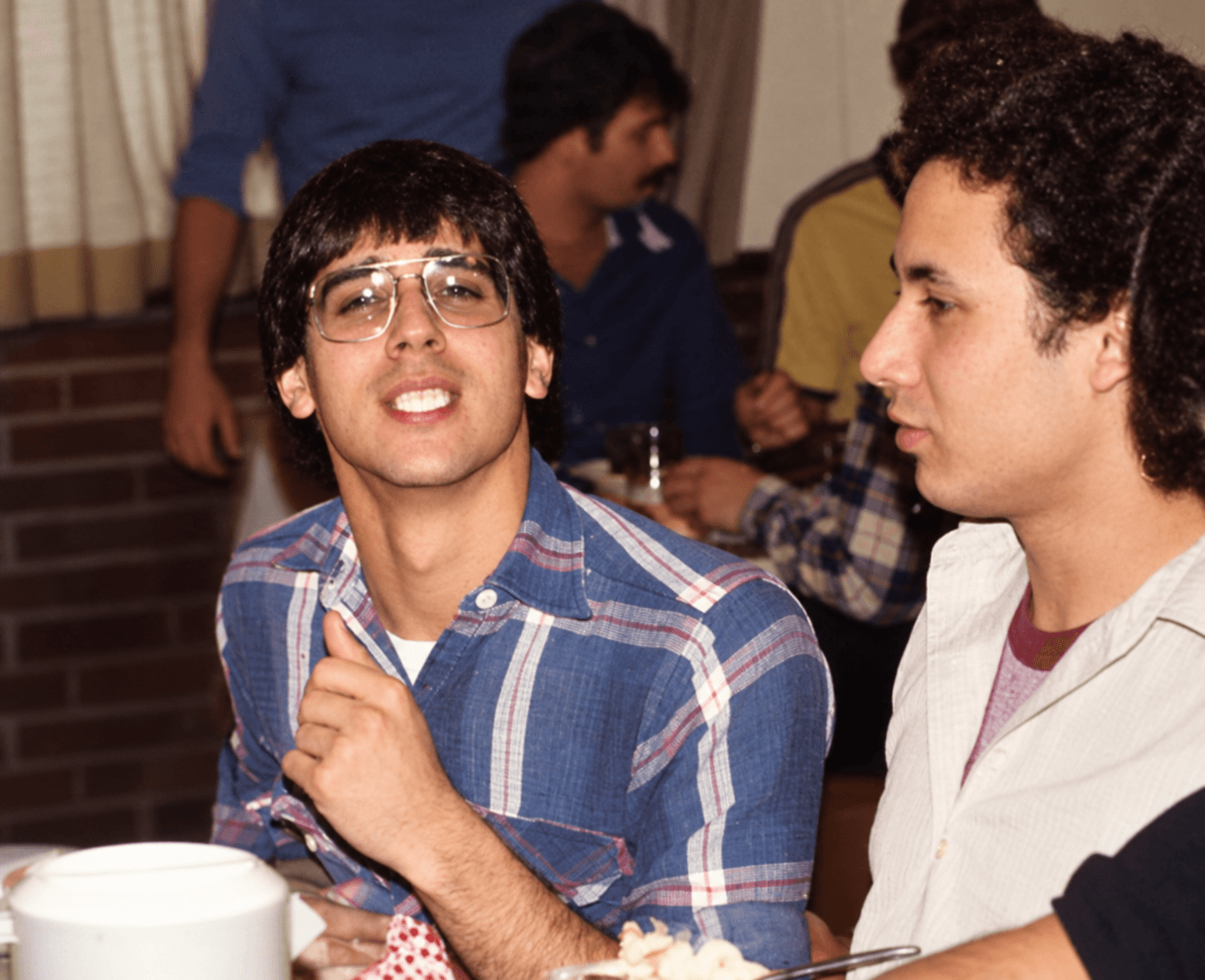
Tony Porto and I have actually been collaborating, arguing about design, and making each other laugh for more than 40 years.
We met at the Illinois Institute of Technology in Chicago in the late 1970s. I was studying architecture, Tony was studying graphic design, and we were in the same fraternity—a very blue-collar, working-class sort of fraternity at a tech and engineering school. Think nerds. I was a year ahead of Tony and, somewhat ominously, his pledge father. Like Darth Vader. Wearing glasses.
We connected because we were both obsessed with the visual world and shared a dark, twisted, irreverent sense of humor. We could have an intensely serious conversation about architecture or art and immediately puncture it with a really stupid joke. We still do that.
One of our first collaborations was for the Chicago Architectural Club’s 1983 TOPS competition, which asked designers to imagine new tops for existing Chicago buildings. We tackled Tribune Tower, taking Raymond Hood’s famous 1922 Gothic skyscraper and colliding it with the theatrical Postmodernism happening in architecture in the early 1980s. Our proposal won, and later that year the Art Institute of Chicago acquired it for its permanent collection.
I was a young architect at a large Chicago firm and astonishingly naïve about what any of that meant. I basically thought of the Art Institute as our local art museum. In retrospect, that early project established a pattern Tony and I are still following: take something culturally familiar, respect it, mess with it, and see what else it can become.
Our lives eventually went in different directions. I moved to Australia for a decade, later returned to the U.S., became a glass artist and helped establish the Washington Glass School in the DC area. Tony built a career in Chicago as a graphic designer and creative director. But the friendship continued, and whenever we got together, the rhythm was still there.
Around 2019, Tony and I began talking seriously about collaborating again. He was making wildly layered assemblages from toys, action figures and found objects, and we wondered what would happen if his visual language collided with mine in glass. The original plan was simple: Tony would come to Washington and work with me in the glass studio.
We finally worked out the schedules—and then COVID hit. So we improvised.
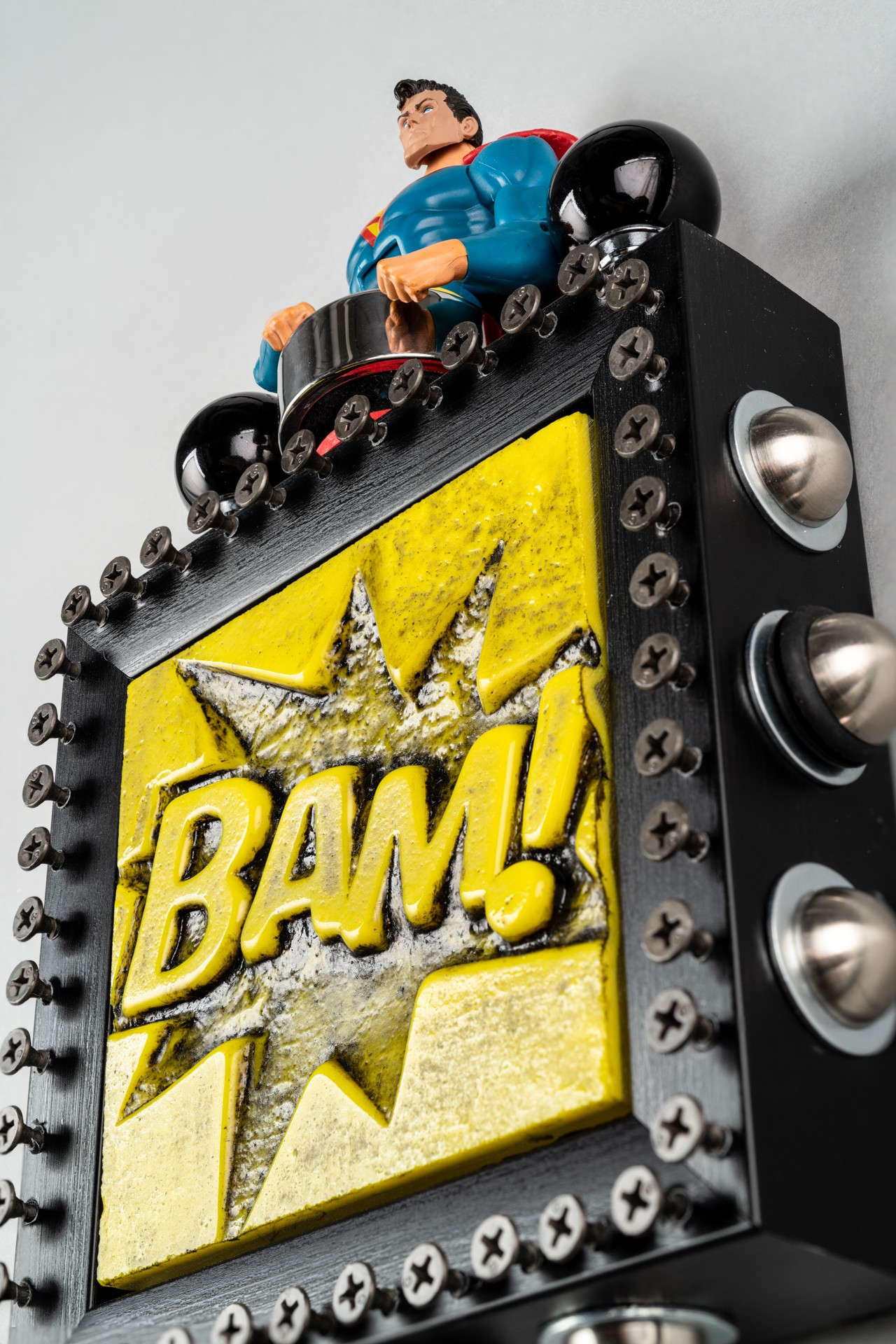
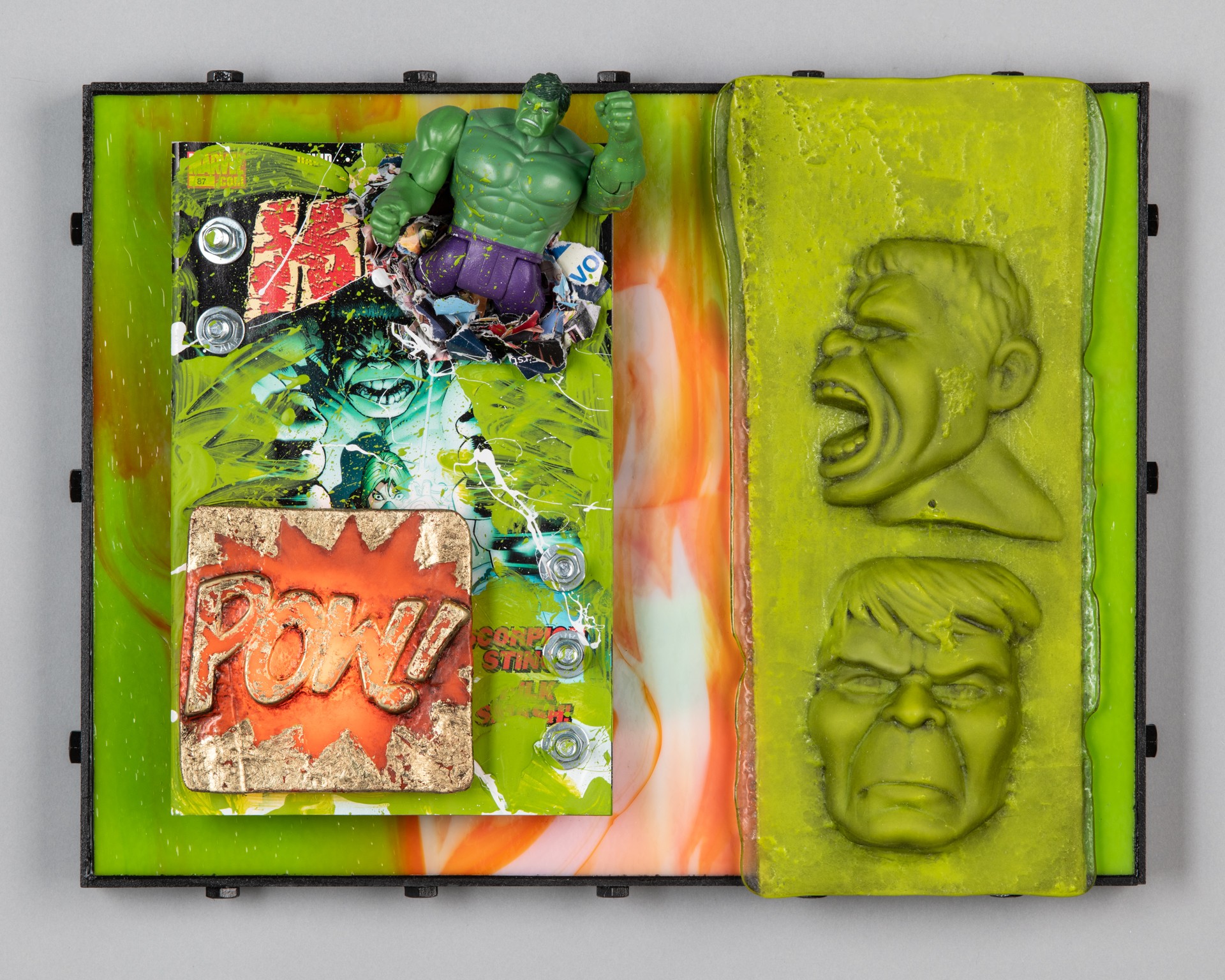
Tony began mailing things to me from Chicago. We were interested in translating the visual vocabulary of comic books into dimensional glass, so he created 3D versions of comic-book speech balloons—POW!, BAM! and the like. I used them to make dry-plaster bas-relief molds and cast them in glass, photographed the results and sent images back to him.
Then we needed an action-hero fist punching through the center. Then shattered glass. Then something else.
Very quickly our conversations became: “Yeah! And then we could…”
We discovered that we trusted one another enough to leave parts unresolved and let the other person figure them out. The collaboration began to resemble a long-distance version of the Surrealists’ Exquisite Corpse: Tony would push something toward chaos, I would try to impose structure, and then we’d deliberately mess it up again.
Those experiments became Janis + Porto.
What began with boxes traveling between Chicago and Washington grew into exhibitions and art fairs, and eventually into something neither of us anticipated: a museum exhibition.
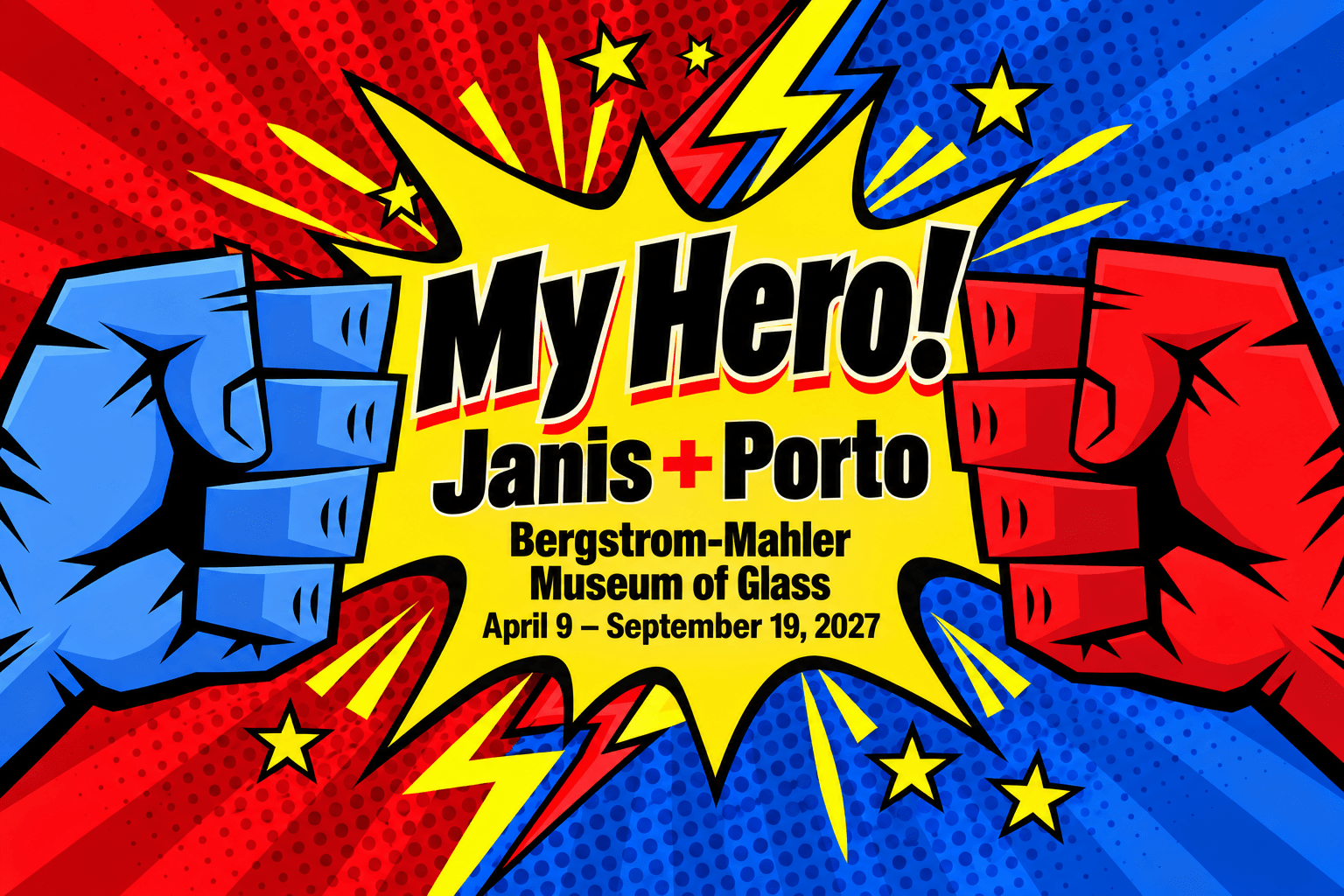
My Hero! – The Multiverse in Glass opens April 9, 2027, at the Bergstrom-Mahler Museum of Glass in Neenah, Wisconsin. The exhibition brings together the strange universe Tony and I have been building from cast and fused glass, toys, superheroes, wrestlers, sci-fi characters, cartoons, graphic imagery and integrated media.
In some ways it feels completely different from what those two college kids were doing in Chicago more than four decades ago. In other ways, I’m not sure we’ve changed very much.
Alright, so let’s dig a little deeper into the story – has it been an easy path overall and if not, what were the challenges you’ve had to overcome?
I don’t think any long creative career is a smooth road. Mine certainly hasn’t been, but I’ve come to think that the interesting part is often figuring out what to do when the thing you planned isn’t possible.
Janis + Porto is a good example. Tony and I had talked for years about working together again. We finally had schedules arranged so he could come from Chicago to Washington and learn how to work with glass—and COVID stopped everything.
The obvious answer would have been to wait. Instead, we started mailing things back and forth.
That limitation actually helped define the collaboration because neither of us could completely control the finished work. Tony had to trust what I would do with something he sent me, and I had to leave openings for what he might do next.
That tension still drives the work.
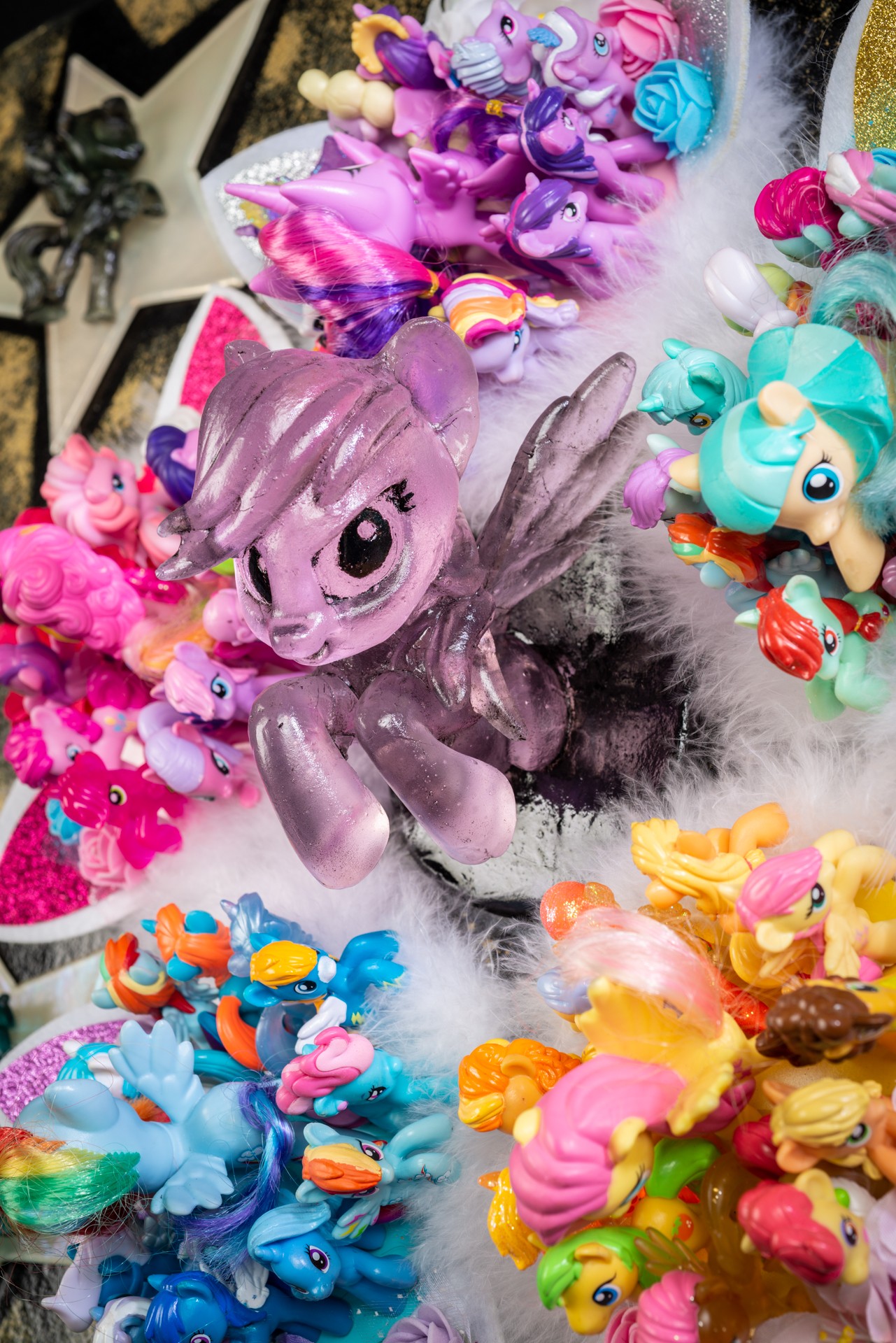
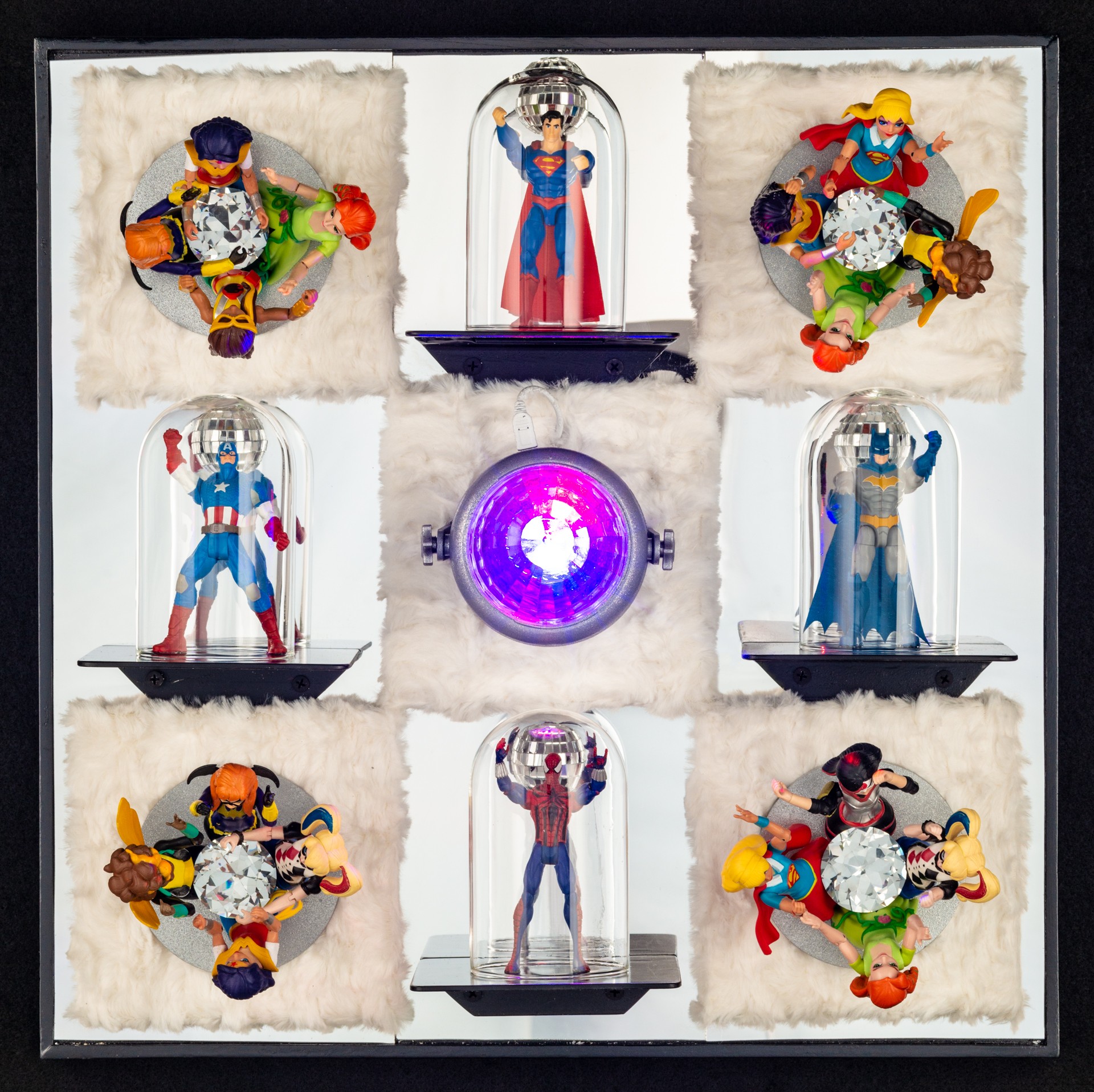
Tony’s instinct is accumulation. His sculptures can consume space with toys, lights, mirrors, magnifying glasses, toothpick flags and thingamajigs. Details have details. There is a hungry energy to them—keep adding, keep pushing, keep making connections. It’s absurd. Sometimes it’s trying too hard. But it commits completely to its own ridiculousness, and I love that.
I’m almost the opposite. My architecture training is still in there somewhere. I want the composition tight. I want the scale relationships to work. I think about craftsmanship, light, surface, materiality and how an object occupies space. I want clarity.
So one of our recurring questions is: how much tension can the composition hold?
Just when I think something is resolved, Tony might essentially ask, “Why does it need to be so structured? Can’t we…?”
My first internal response is often: “No!” Then I look again.
Sometimes I need to unclench.
The goal has become not to eliminate the chaos, but to make a composition capable of containing it. And when something begins making its point a little too neatly, we know it’s probably time to make it weirder.
Thanks – so what else should our readers know about your work and what you’re currently focused on?
My personal artwork tends to be serious. I work with figurative imagery and narratives about memory, loss, missed connections and the strange nostalgia we can feel for a place or time that we know was never quite as perfect as we remember it. It’s like remembering a dream after waking and then having to deal with reality.
Janis + Porto lets me operate in a completely different mindset.
It lets me unclench.
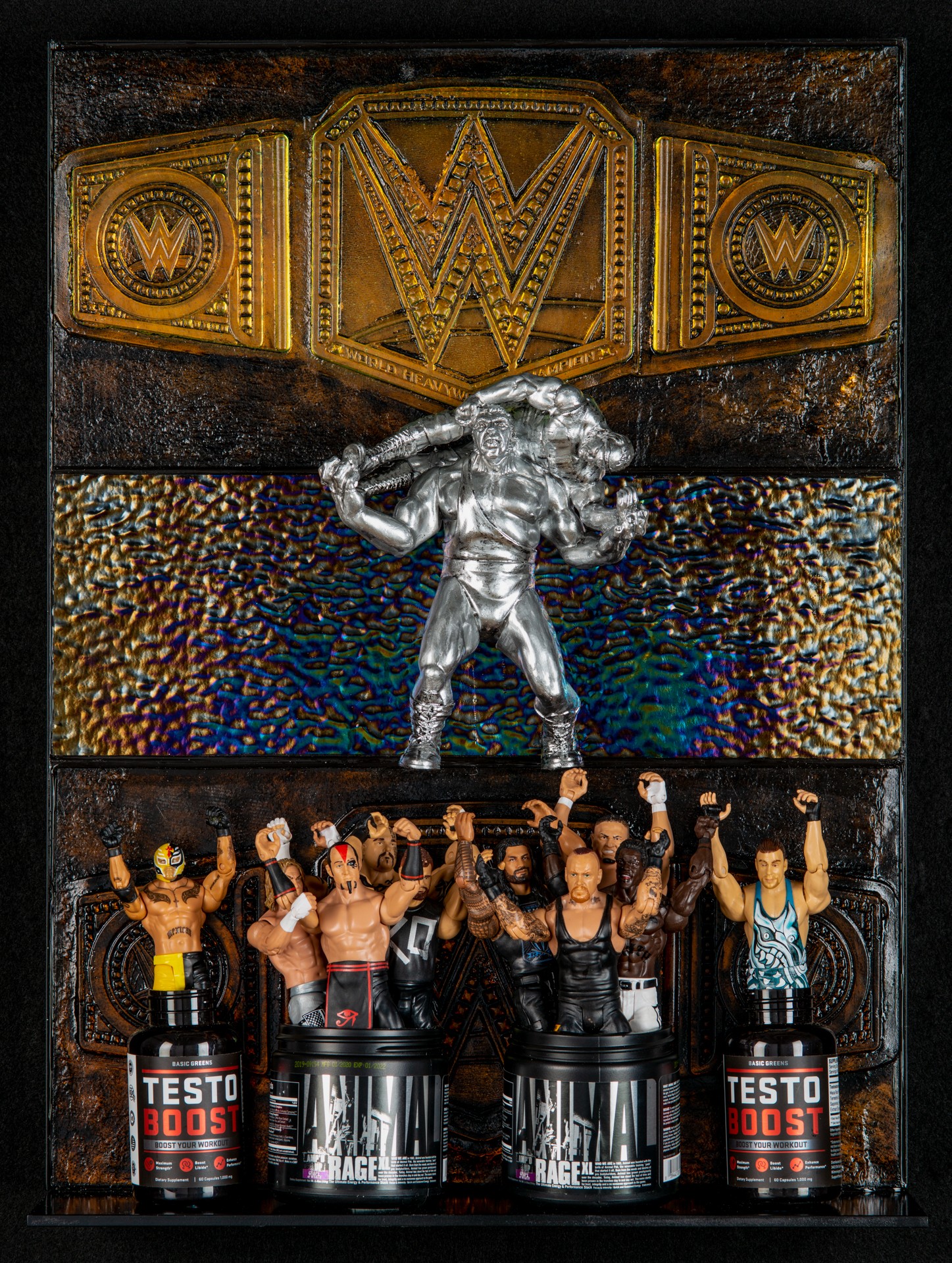
My Hero! – The Multiverse in Glass, our upcoming exhibition at the Bergstrom-Mahler Museum of Glass, dives headfirst into the visual culture Tony and I grew up with: superheroes, Star Wars, professional wrestling, GI Joe, cartoons, old television, graphic novels, video games, toys and action figures.
We both genuinely love this stuff. We’re also willing to laugh at it.
That’s important.
These characters promised us worlds in which a magic cape, a lasso, a radioactive spider bite or some unexplained superhuman power could change everything. As children, action figures became little alternative versions of ourselves. They could do things we couldn’t do and enter worlds we couldn’t enter. The desire for something can become even stronger when you know you can never actually have it.
As adults, Tony and I can look at all of that with affection, irony and a little darkness. We’re playing with Pop Art’s repetition, color and appropriation, but our pantheon of mass-produced gods comes from the toy box, television and comic-book store.
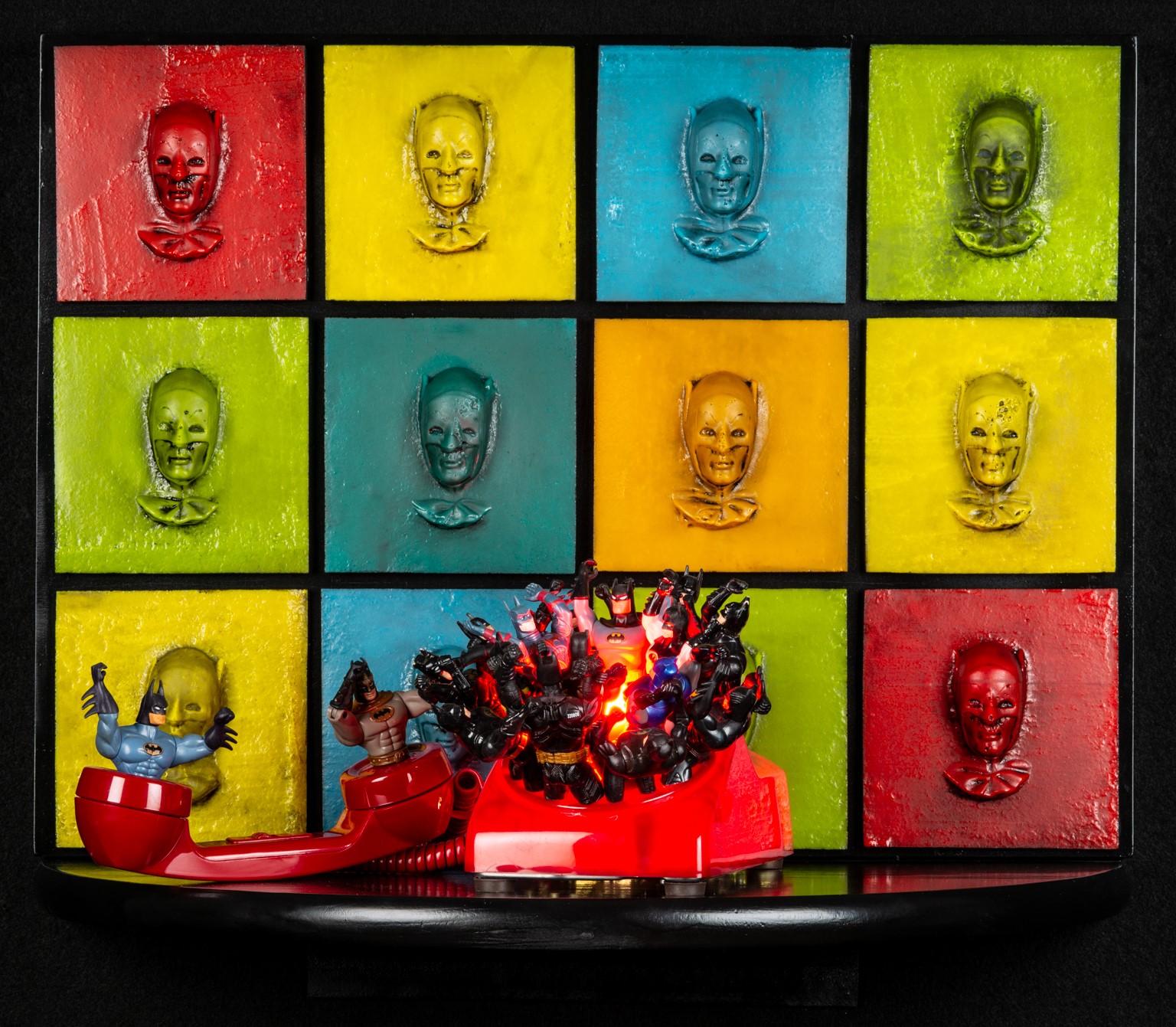
One work in the exhibition, Call for Bruce Wayne, probably captures the whole attitude. It includes twelve cast-glass Batman cowls based on the wonderfully campy Adam West television-era Batman. They’re repeated in intense colors, almost like Batman has passed through a Warhol multiplication machine and emerged in twelve different dimensions.
Then there is the red Commissioner Gordon Batphone, from which an absurd accumulation of Batman toys erupts. The piece incorporates a motion sensor, so the Batphone reacts when someone approaches.
Suddenly you’re not simply looking at an artwork about Batman. You’ve entered the situation.
That’s the territory Tony and I enjoy: handmade versus mass-produced, precious versus ridiculous, museum object versus toy aisle.
There’s also something mischievous about taking these plastic characters and translating them into glass, a material carrying its own histories of beauty, preciousness and craftsmanship. When these objects move into a museum, they can begin to resemble contemporary devotional objects.
Tony and I joke that we’re building a kind of theology of plastic and gold leaf.
But underneath all the jokes, I think we are sincere about it. These characters and objects really did help form people’s imaginations. They became part of how generations understood good and evil, strength and weakness, possibility and transformation. They are ridiculous—and they matter.
Perhaps that’s what I’m proudest of with this work. It has reminded me that art doesn’t always have to confound you or ask you to stand reverently in front of it.
Art can surprise you. Art can make you smile. Art can be silly and goofy and let you enjoy a moment.
I like being serious. I can’t help it.
Janis + Porto has taught me to be serious about being not serious.
We all have a different way of looking at and defining success. How do you define success?
I’ve had the experience I want from this work happen at art fairs.
Someone is walking past, not particularly looking for us, and suddenly stops.
There’s a second of confusion: “Is that…?” Then recognition.
“No. Wait. It is!”
They gesture for whoever they’re with to come over. They start looking at all the details, finding things, pointing things out, laughing. Something completely unexpected has connected with them.
That’s success to me.
It’s also why I’m excited to see My Hero! installed at the Bergstrom-Mahler Museum of Glass. An art fair is fast and temporary. A museum gives the work space and time. Scale matters. Intimacy matters. I want to see what happens when this slightly insane universe we’ve built gets to inhabit an entire gallery.
What I would especially love to see is a parent recognizing something from their own childhood and picking up their child to show it to them.
For the parent, maybe it’s nostalgia. They remember the character, the television show, the toy they had—or desperately wanted.
The child doesn’t care about any of that.
They’re responding to what’s directly in front of them right now: the color, the absurdity, the character, the excitement.
Yet for a moment they’re both experiencing the same thing.
They laugh. They point. Maybe they discover something together.
The artwork has made a connection between two people who came to it from completely different places.
And it made them happy.
At least for now.
That’s enough.
Contact Info:
- Website: https://www.janis-porto.com/
- Instagram: https://www.instagram.com/janis.porto/ and https://www.instagram.com/michael_janis/
- Other: Bergstrom-Mahler Museum of GlassCurrent & Coming Exhibits | Bergstrom-Mahler Museum of Glass
Suggest a Story: VoyageMaryland is built on recommendations from the community; it’s how we uncover hidden gems, so if you or someone you know deserves recognition please let us know here.