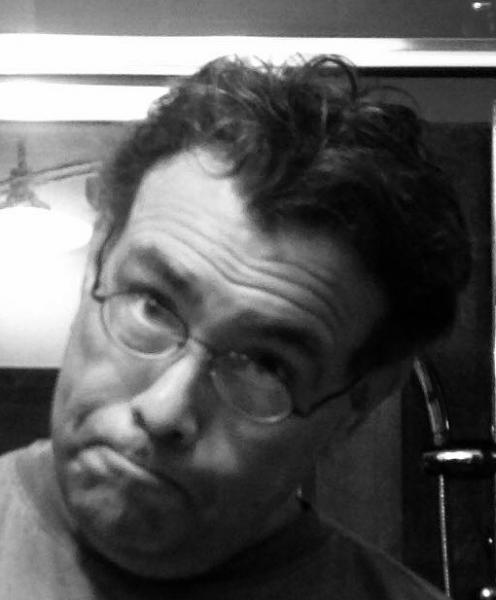



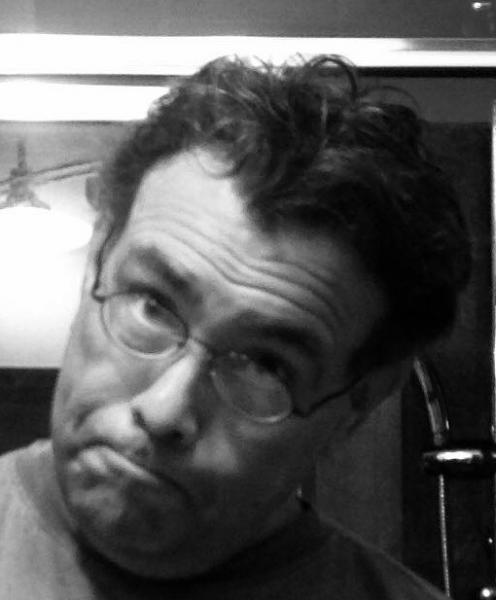
Today we’d like to introduce you to Florencio Lennox Campello.
Hi Florencio Lennox, please kick things off for us with an introduction to yourself and your story.
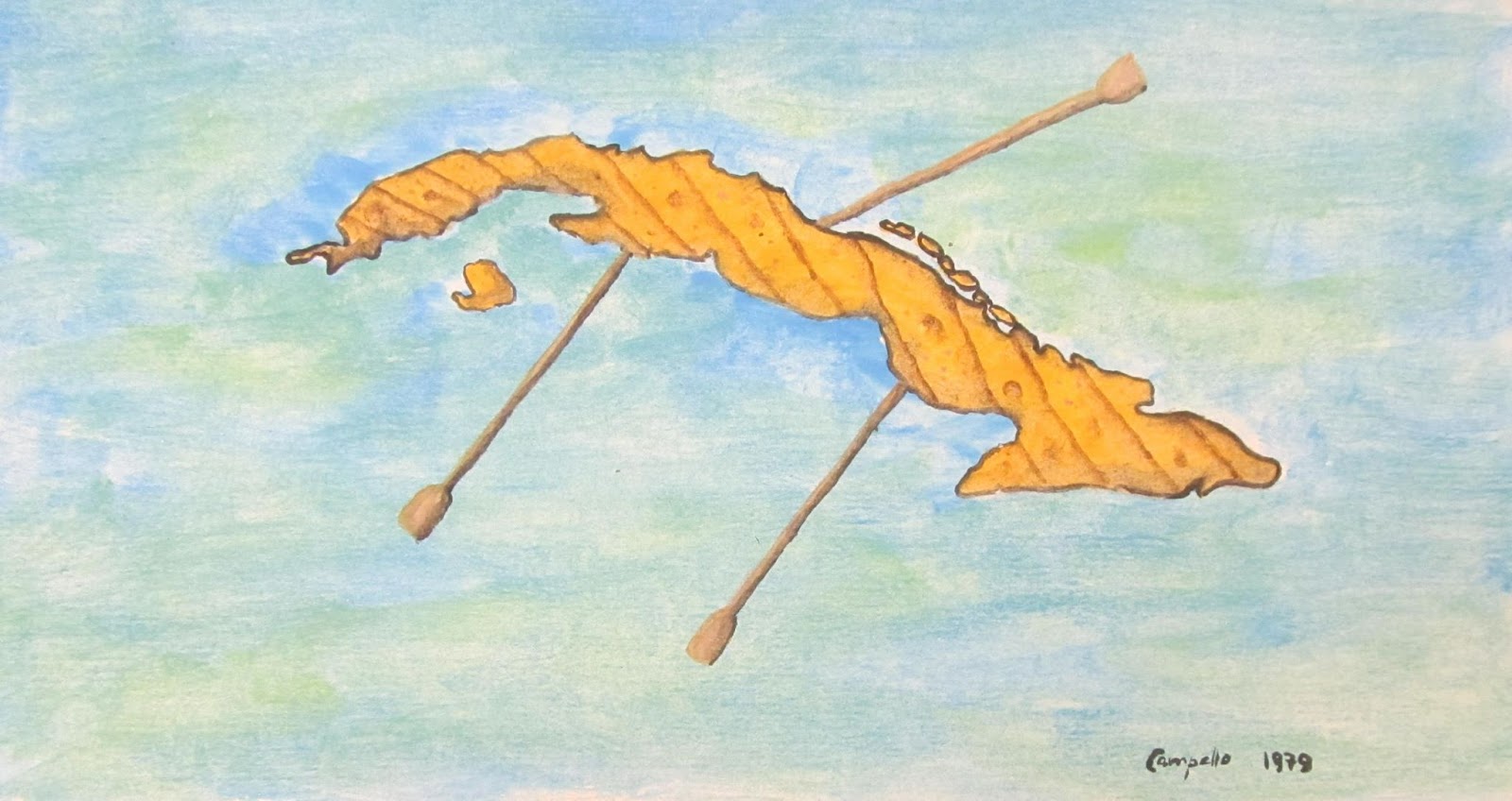
A leading contemporary art personality for many years (in 2016 the Washington City Paper called him “one of the most interesting people of Washington, DC…”, Florencio Lennox Campello was born in Santiago de Cuba, raised in Guantanamo, and exiled as a child to Brooklyn, New York as part of the 1960s Cuban Diaspora. He studied art at the University of Washington School of Art in Seattle, under Professors Norman Lundin, Alden Mason, Jacob Lawrence, Everet DuPen and others. Although he graduated from Washington in 1981, the artist started to sell his work professionally in 1977, when he became one of the regular exhibiting artists at Seattle’s world-famous Pike Place Market, where he sold his art school assignments until 1981. Many of those assignments, especially his “Cuba Series” are now in several museums and in private collections.
In that same year that he graduated from Washington, he won the William Whipple National Art Competition First Prize for Printmaking, as well as the Silver Medal at the Ligoa Duncan International Art Competition in Paris and the French “Prix de Peinture de Raymond Duncan,” also in Paris.
Commissioned as an Ensign in the US Navy in 1981, the artist was transferred to Spain, where he worked on a series of landscapes of Andalusia which now hang in many private collections in Spain, Portugal and the United States. In 1985 he returned to the United States, living in Monterey, California (while earning a Masters Degree) and later to Bowie, Maryland. During this period he returned to figurative drawings, as well as delivering illustrations for magazines and periodicals. In 1989 Campello moved to Scotland, where he lived in a 307-year-old farmhouse at the foothills of the Highlands near the ancient Pictish village of Brechin. The rugged character of the Scottish land and his discovery of the mezzotints of David Waterson, a mid-century Scottish printmaker, revived his previous interest in landscape, and for the next three years he produced over three hundred watercolors of Scotland. This work earned him the First Prize in watercolors at the 42nd Annual International North Wynd River Art Competition in the United States.
In 1992 the artist returned to America, and lived for a year in Sonoma, California, where he produced over 400 commissioned drawings for the Sonoma Ballet Conservatory. Upon completion of this project, he relocated to the Greater Washington, DC area. In 1996 he opened the Fraser Gallery in Washington, DC and then in Bethesda, Maryland. He was the co-owner of the gallery until 2006, at which time he re-located to Media, Pennsylvania. He returned to the DC area in 2009, where he currently resides.
In addition to numerous galleries, his work has been exhibited at the McManus Museum in Scotland, the Brusque Museum in Brazil, the San Bernardino County Art Museum in California, the Musee des Duncan in France, the Frick Museum in Ohio, the Meadows Museum of Art in Shreveport, Louisiana, the Hunter Museum in Tennessee, the Sacramento Fine Arts Center in California, the Popov Museum in Russia, the Rufino Tamayo Museum in Mexico City, the Rock Springs Art Center in Wyoming, the Museum of Contemporary Art in Washington, DC, the Museum of Contemporary Art in Boulder, Colorado, the Boise Museum of Art in Idaho, the Greenville Museum of Art in North Carolina, and the American Museum of the Cuban Diaspora in Miami, Florida.
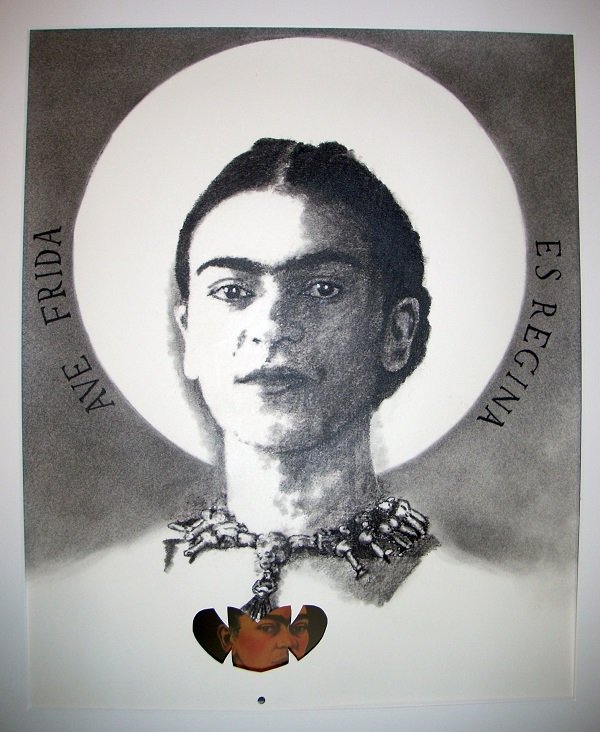
As an experienced curator, has also curated several important shows in the capital area, most recently the massive “Women Artists of the DMV” survey show in the Greater Washington, DC area in 2025-2026. This important exhibition showcased over 800 women artists in 20 different galleries, museums, and art venues across the capital region and has been called “the largest ever curated art show staged in the USA.” Also the epic “Survey of Washington Realists” at the Athenaeum in Alexandria, a huge salon-style show that for the first time catalogued together the artists working in the realist tradition in the area, and subsequently “Seven” for the Washington Project for the Arts/Corcoran, where seven galleries were filled by selected DC area artists. In 2006 he also curated the worldwide “Homage to Frida Kahlo” exhibition for Art.com and the Cultural Institute of Mexico. Also starting that year, he spent a significant amount of time in Miami, where his family had relocated in the late 1970s, and began exhibiting his work at various art fairs during the Art Basel week of Miami art fairs. Campello is also a regularly published art critic of regional prominence. His art reviews have appeared in dozens of magazines and newspapers, as well as “Daily Campello Art News,” an online BLOG with over seven million visitors that he edits and publishes. He is also often heard on NPR discussing art issues as well as on the television program ArtsMedia News. He is the author of “100 Artists of Washington, DC” published in 2011 by Schiffer Press.
Would you say it’s been a smooth road, and if not what are some of the biggest challenges you’ve faced along the way?
It has generally been a road made smooth by hard work and dedication, and not expecting success to just appear at your art studio one day – the real lessons learned while a young art student and selling my artwork at the Pike Place Market in Seattle were probably the best foundation for the rest of my art career.
In summary, between 1977-1981 I got myself a ten foot spot at the Pike Place Market, and once my school assignments were graded, they were up for sale and through those years I sold hundreds, if not thousands, of art school assignments.
And so I became a Pike Place Market “regular.” One in the odd family of artists, craftspeople, hippies, farmers and oddfolk who made up the amazing tapestry of the market people. My prices for my student artwork were super affordable… most pieces went from around $20 and some were as cheap as $5. I think that the most expensive thing that I sold back in those years was probably around a couple of hundred bucks for a huge watercolor. I used to sell at the market two days during the week in order to qualify for a space on Saturdays, which was the best selling day for everyone.
The spaces were open, so in the winter it was cold and damp, and we used to get warmed by coffee from the original Starbucks, back when there was only one, or hot chocolate from the chocolate factory there.
But the best thing that I received from my time as a Pike Place Market regular was the education in dealing with the public, presenting the work, and talking it up; that was priceless, and in a good way accounts for where I am today… I know this now — and it was precisely that “working” knowledge that helped to “smooth the road” in the future years as I developed as an artist.
The struggles faced by artists are usually common: the general apathy of the media towards the visual fine arts, the immensely difficult and expensive process to create and present your artwork, etc. In our area, this is compounded by the curious lack of attention that our “local” museums show towards their own area artists. Because we are in the capital region, with one or two exceptions, most museums in our area consider themselves as “national” or even “international” museums and thus completely ignore our area artists.
This is the biggest and most formidable challenge faced by all DMV area artists — while fine artists all over the world have a small but nonetheless viable chance to come to be noticed by one of their area museum curators, and perhaps given the immense career/visibility attention that a museum show gives an artist, that is essentially non-existent in our area.
As you know, we’re big fans of you and your work. For our readers who might not be as familiar what can you tell them about what you do?
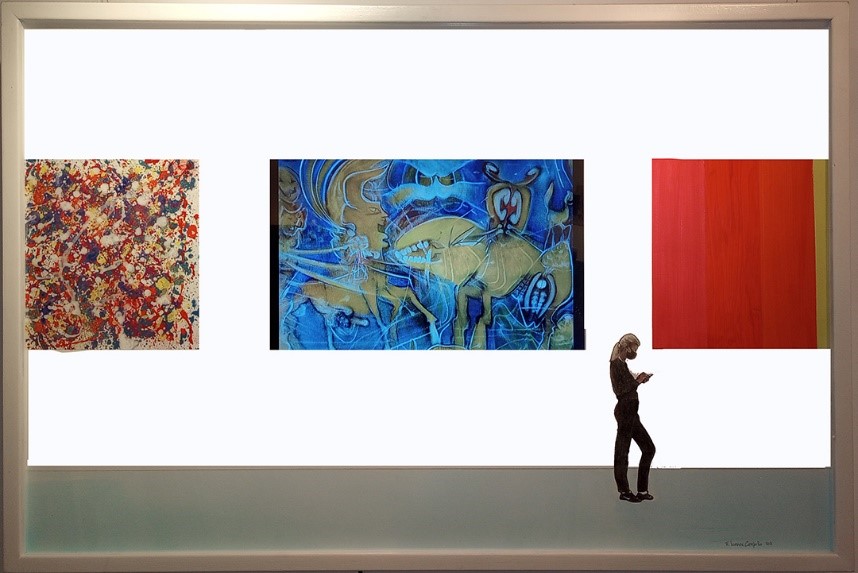
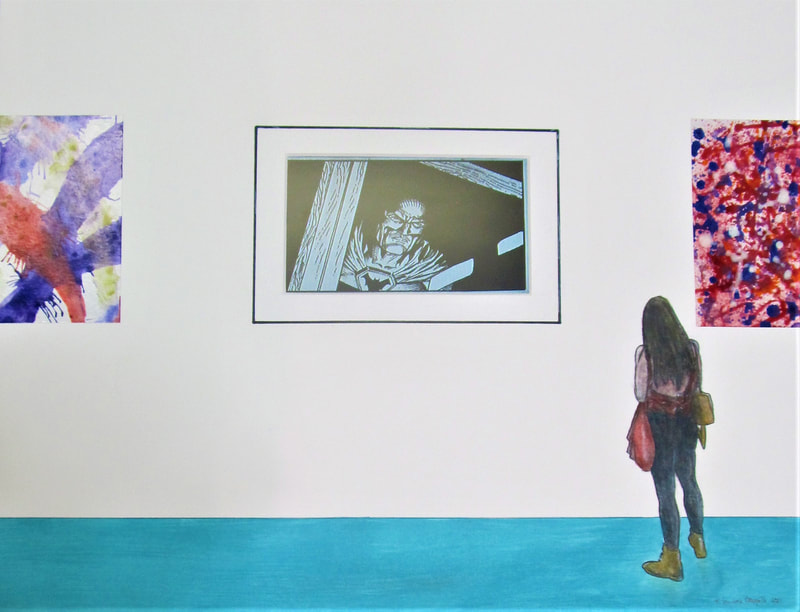
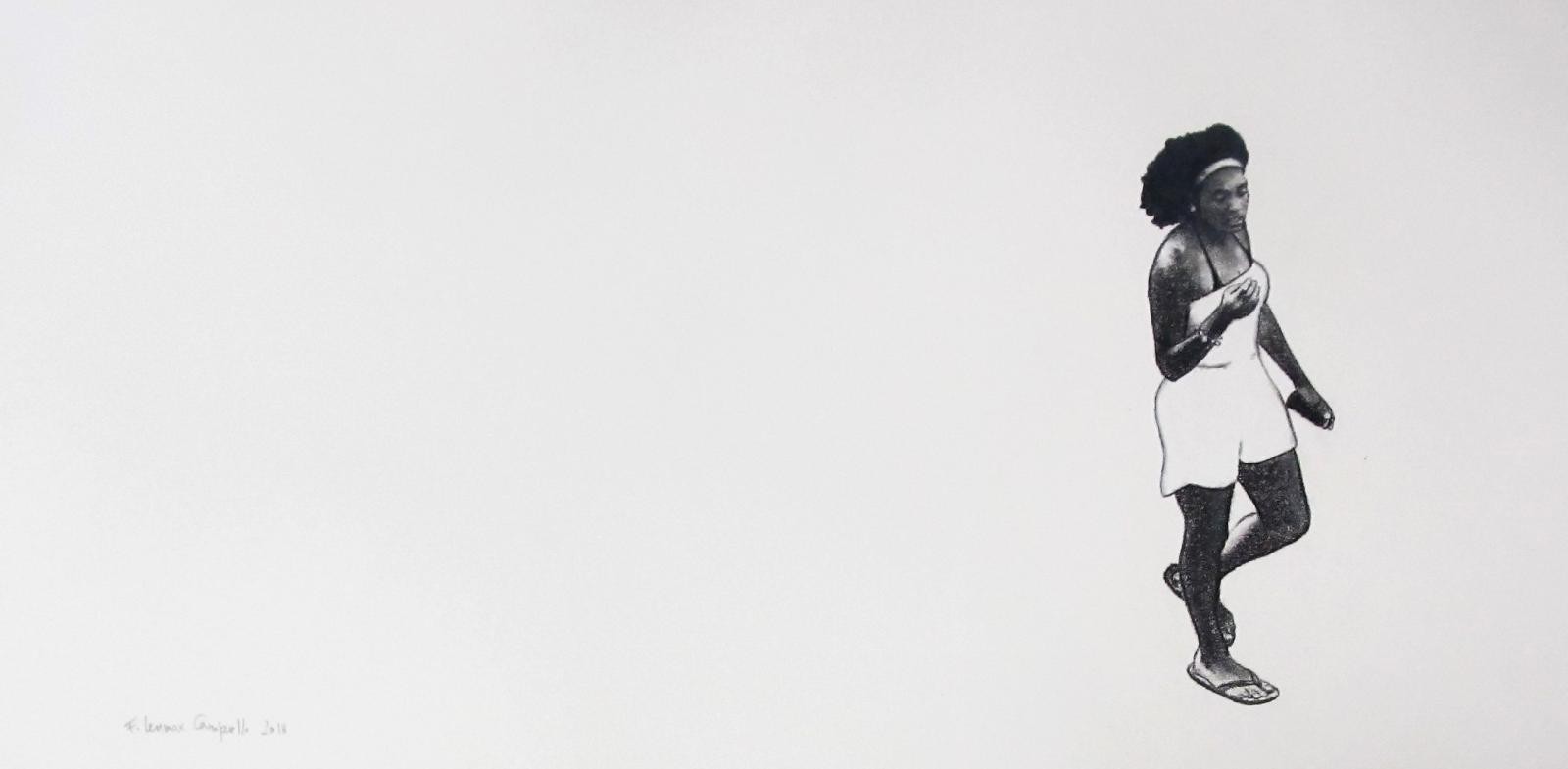
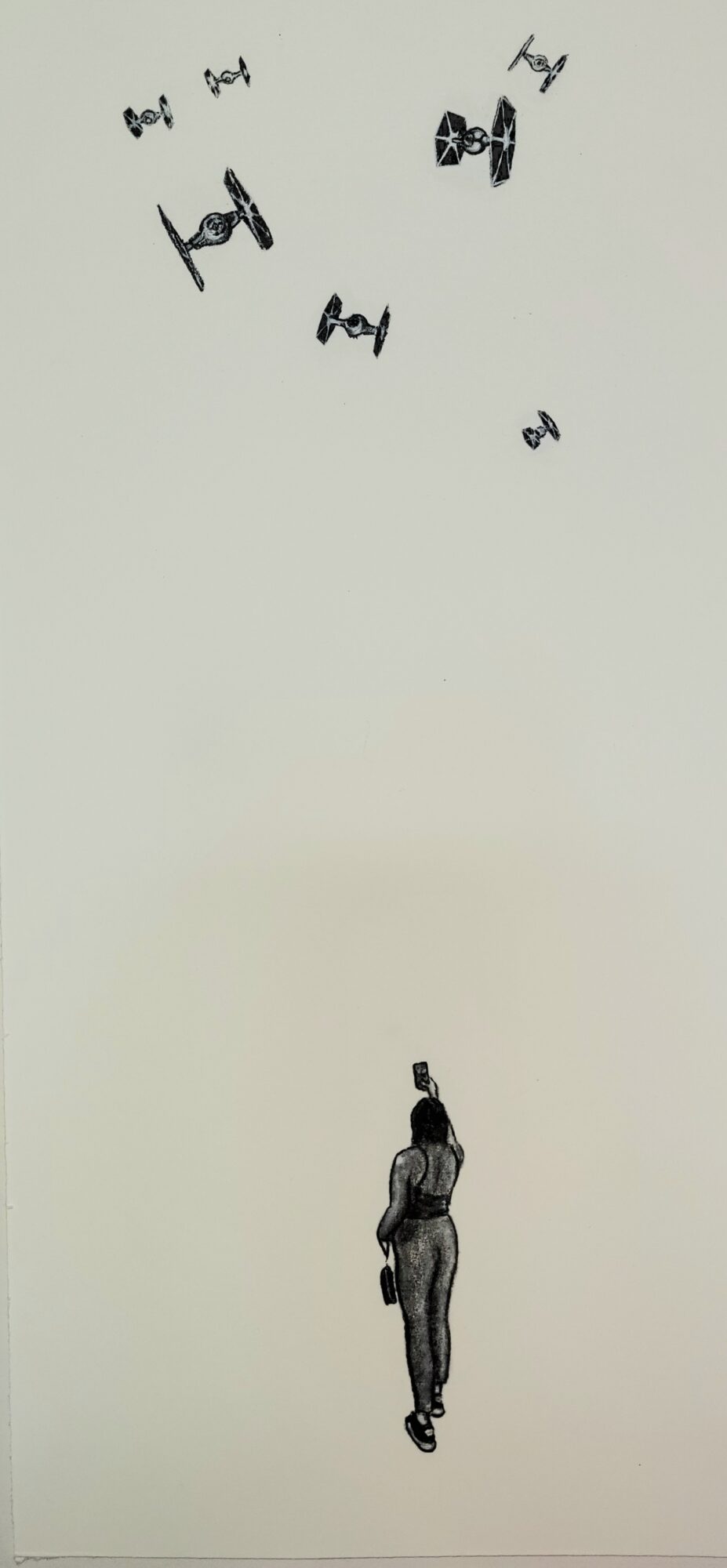
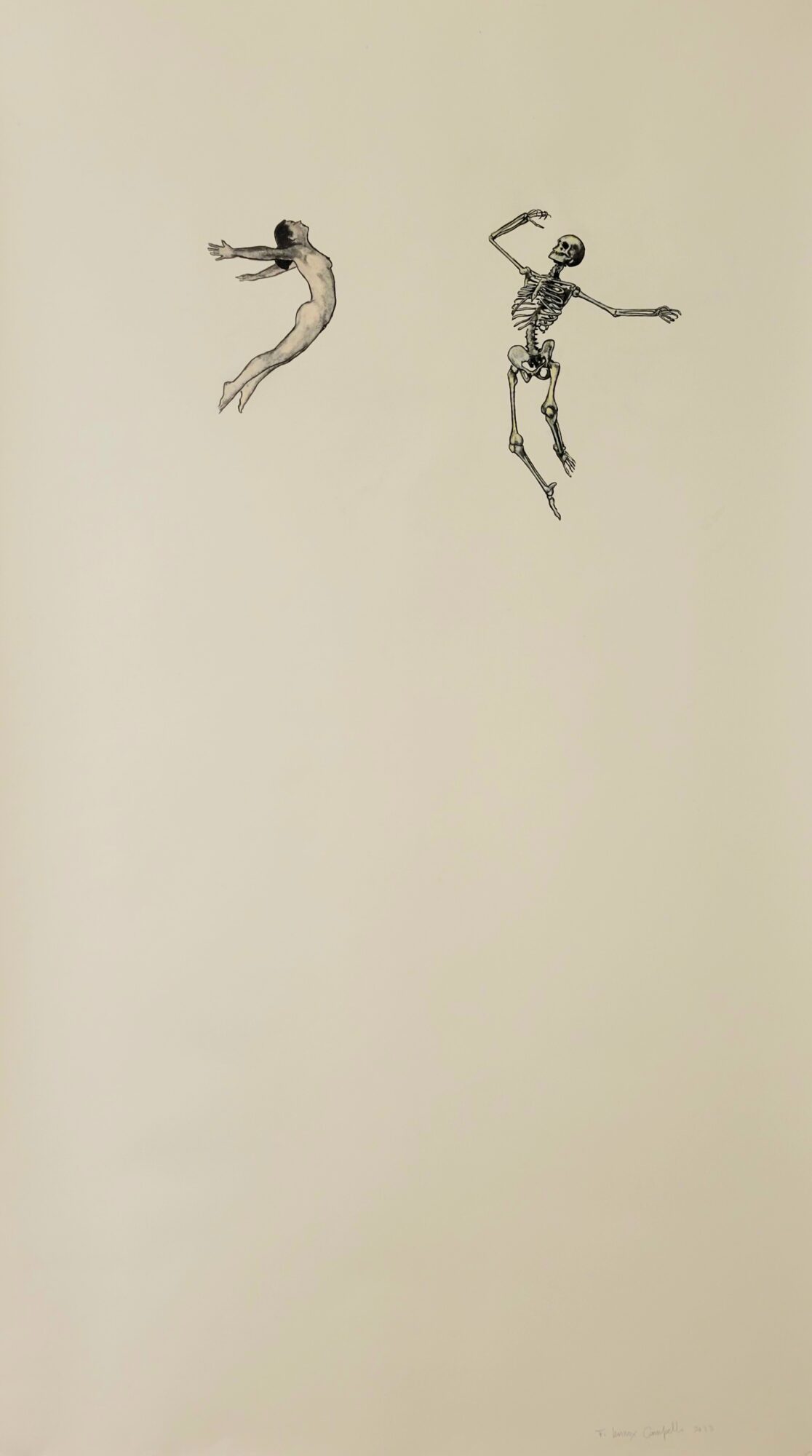
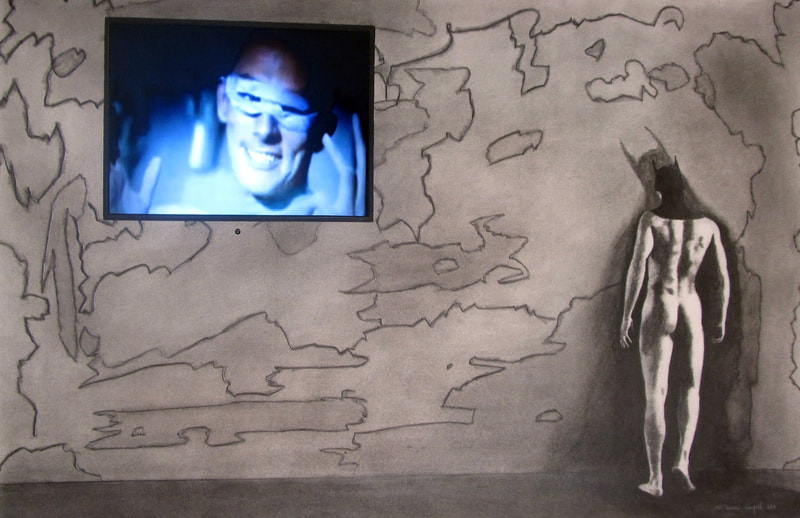
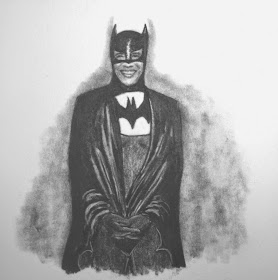
I am a natural story-teller, and that has manifested into my artwork, which over the decades has evolved into a vehicle for stories, fascinations, obsessions, notes, and narratives – my artwork can be best and should be described as contemporary visual narratives.
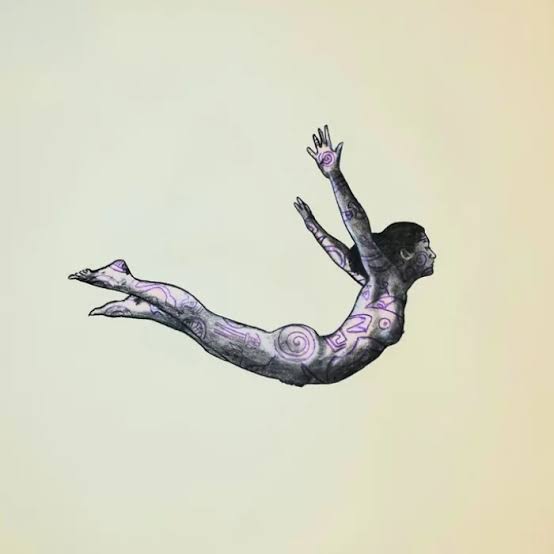
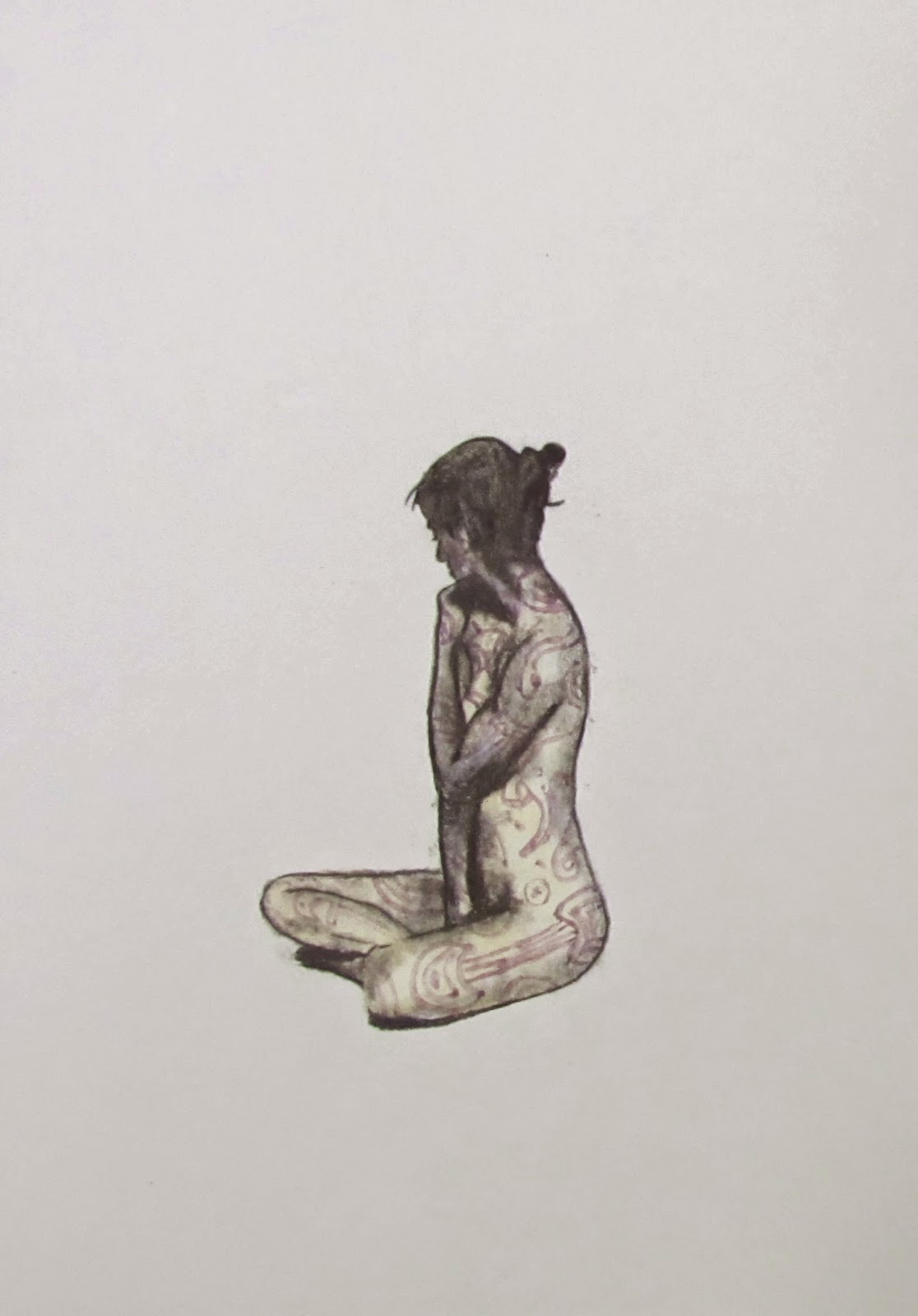
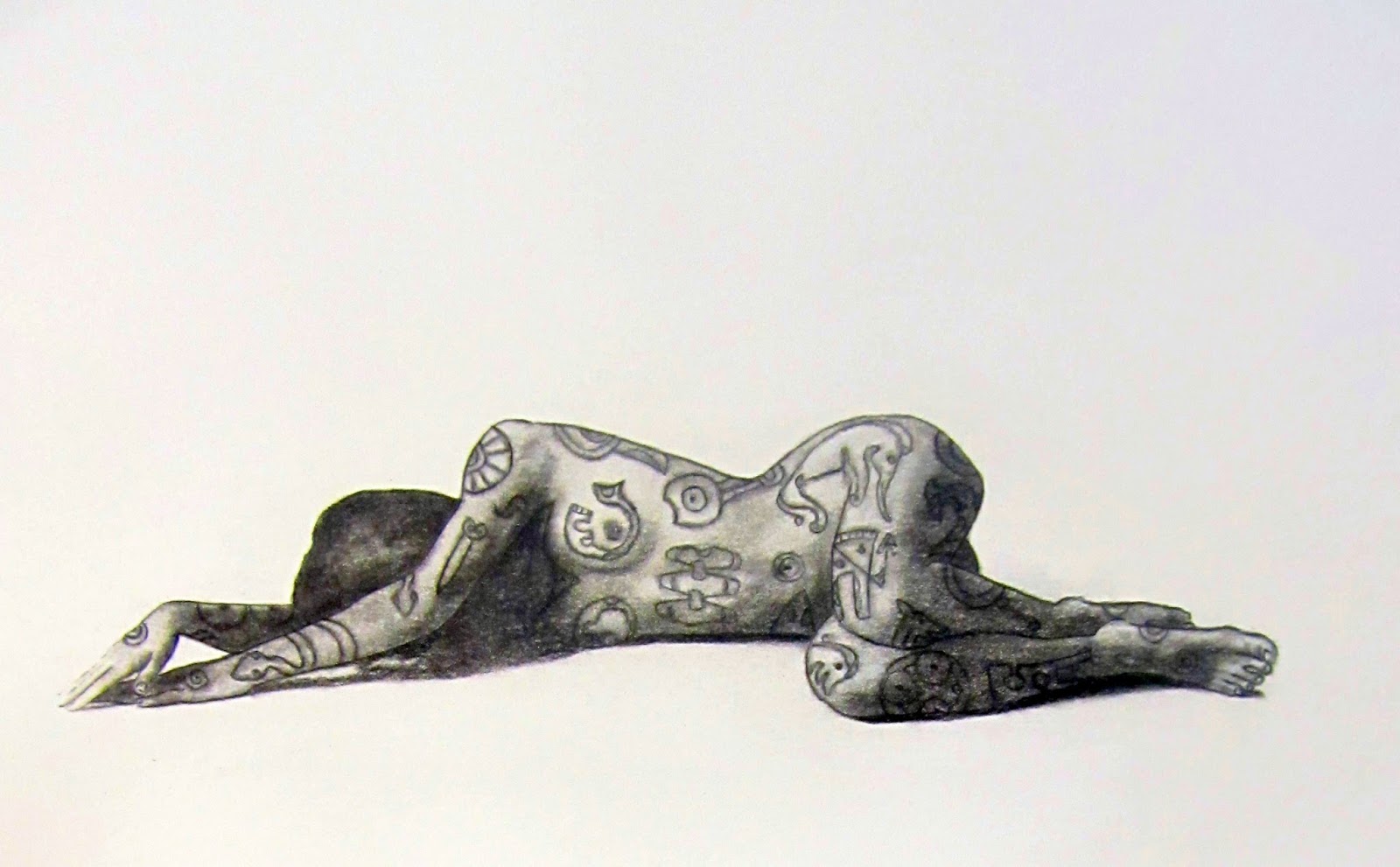
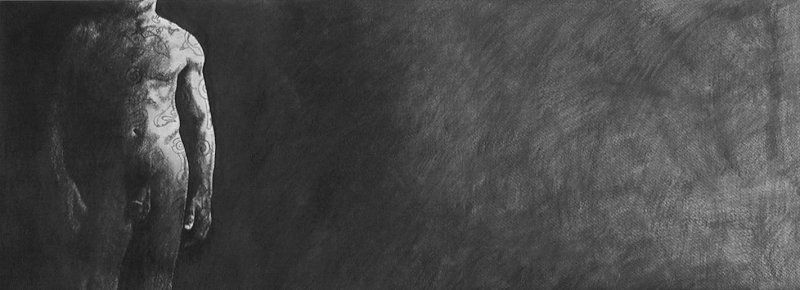
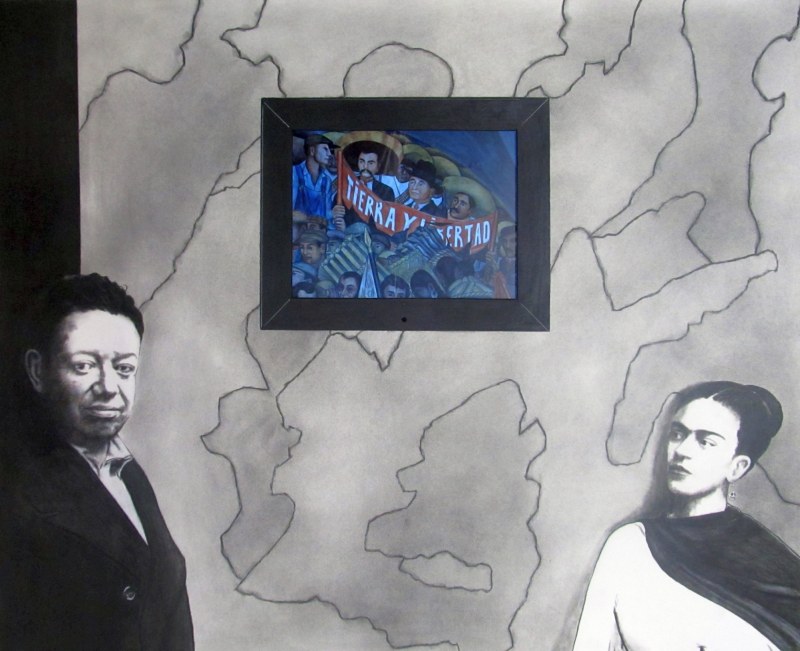
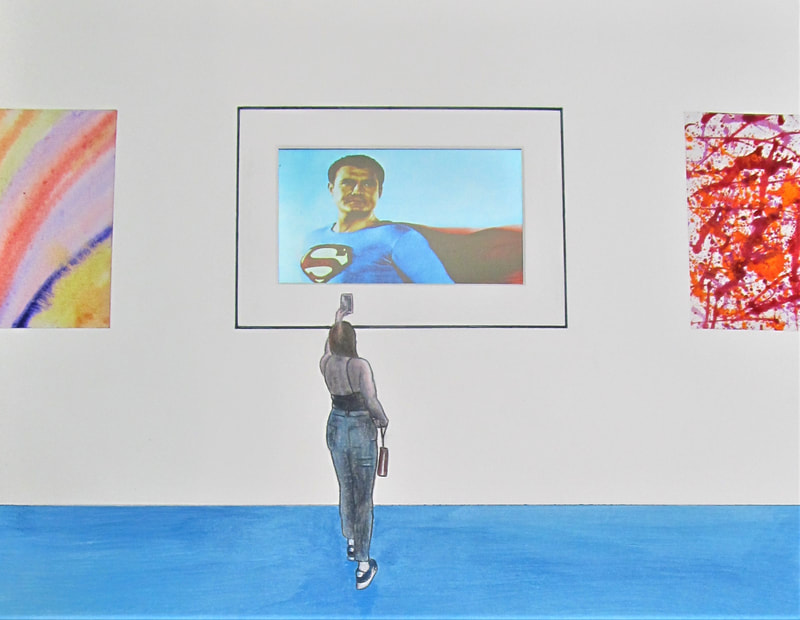
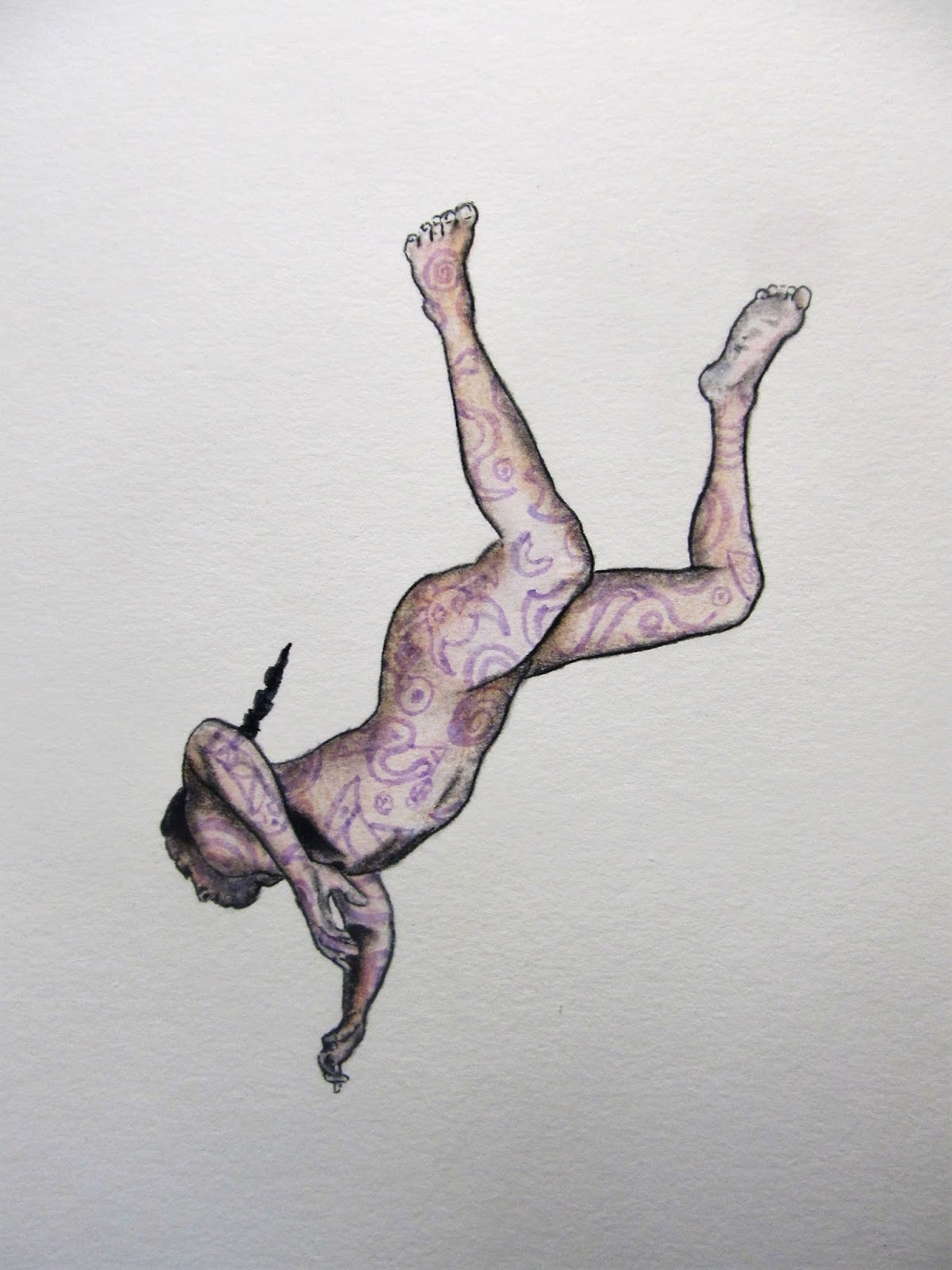
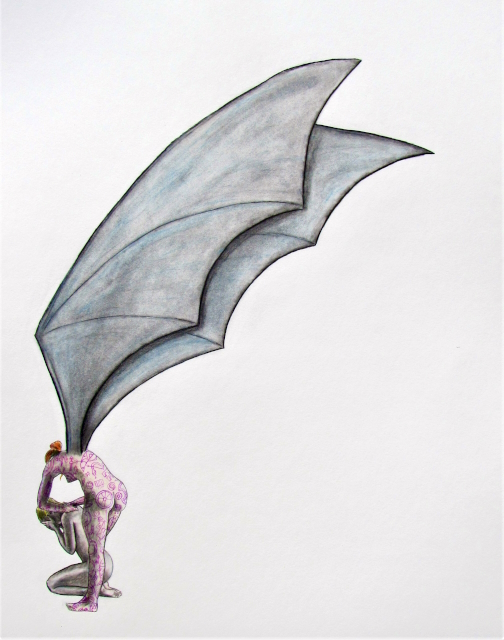
I believe that I am best known for a series of artistic obsessions which appear and re-appear in my work over the years – the shape of the island of Cuba, the Picts of ancient pre-Celtic Scotland (where I lived for several years), the Argentine revolutionary mass murderer Ché Guevara, the Biblical Eve, and the Kabbalah’s Lilith, Saint Sebastian, Saint John the Baptist, many superheroes, tattoed bodies, and my own secret messages cleverly disguised, hidden and delivered in a secret written code that I invented.
One thing that sets me apart was a happy discovery brought about by my unusual training and background.
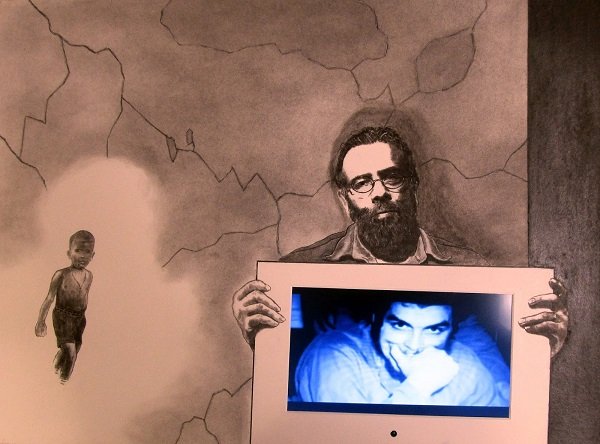
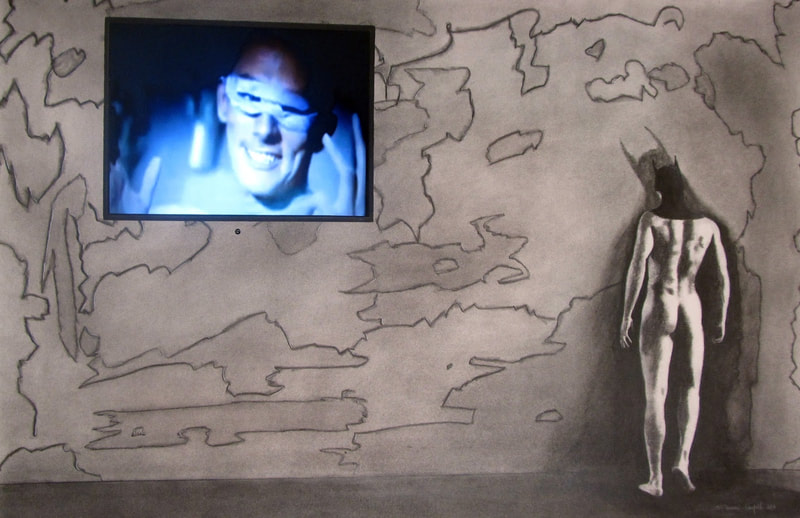
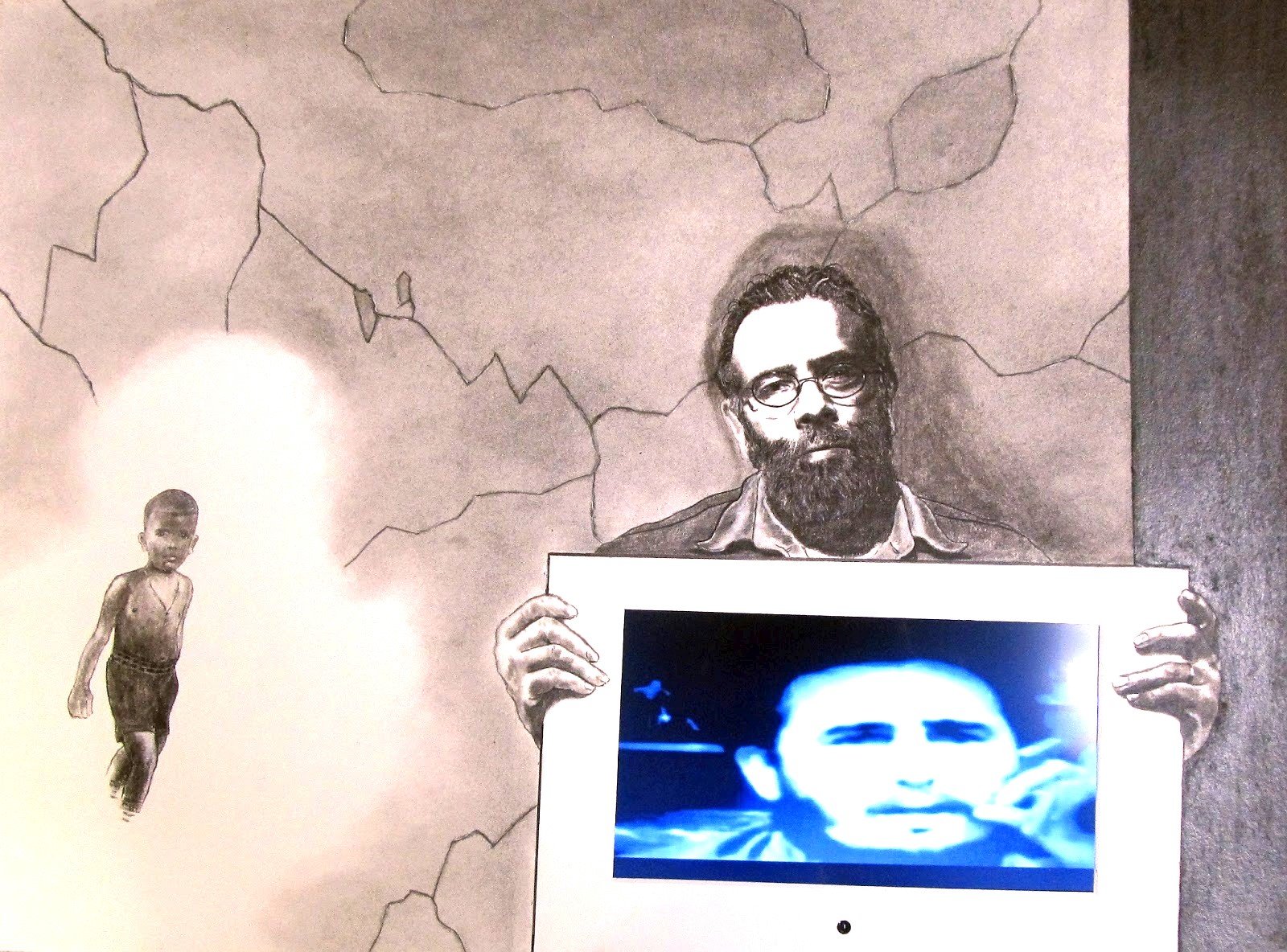
I was a US Navy cryptologic officer for over two decades, and in those years I added some of that “flavor” to my artwork and essentially invented a secret visual double-encrypted written language which is a marriage of ancient Celtic Ogham (the secret writing code of the ancient Druids) with the more modern and somewhat disrespectful US Navy Falcon Codes, a series of phrases with double meanings. The “writing” appears as “cracks” in the background of the art or often hidden in the shadows of bodies and objects throughout some of the drawings.
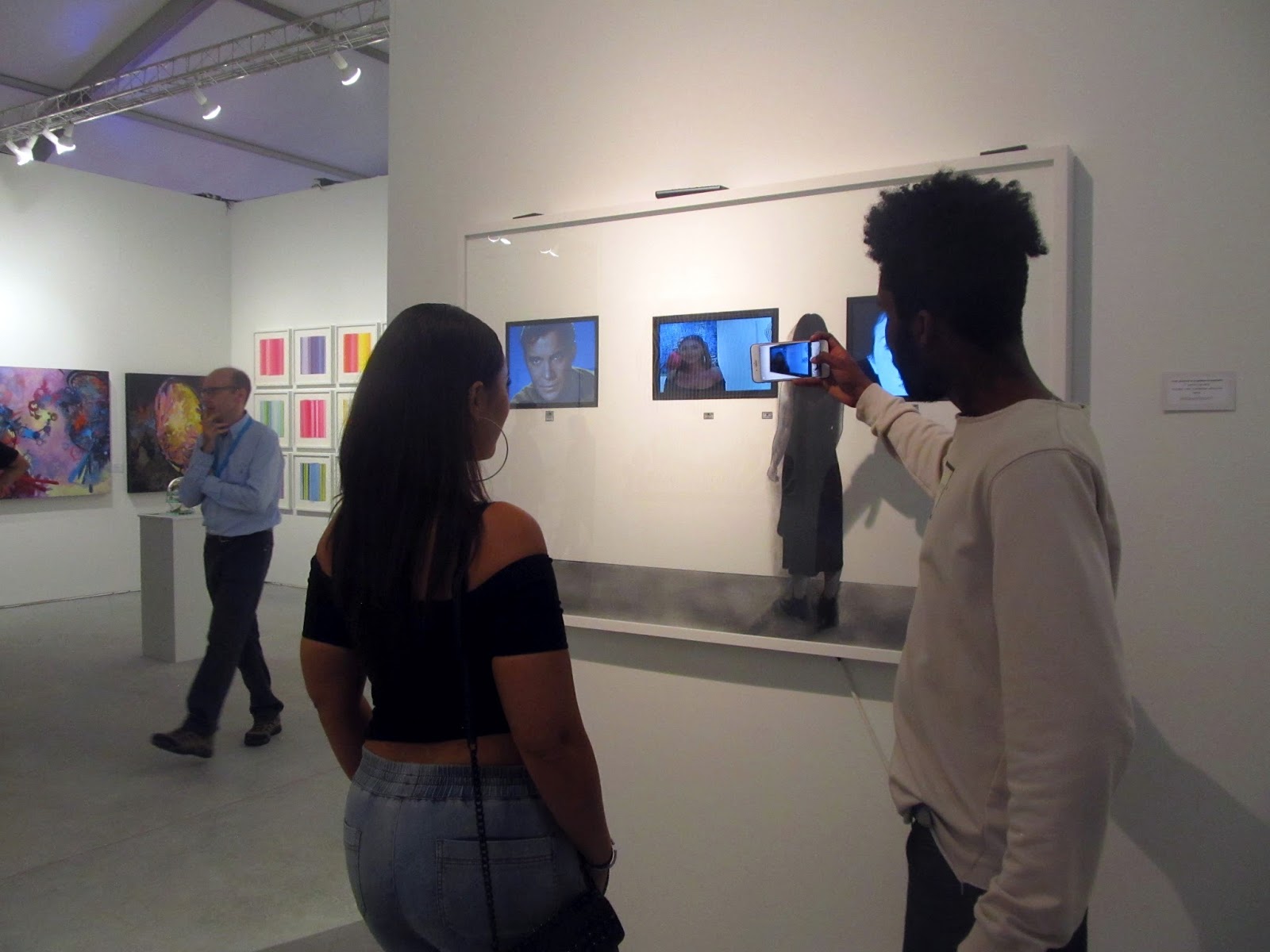
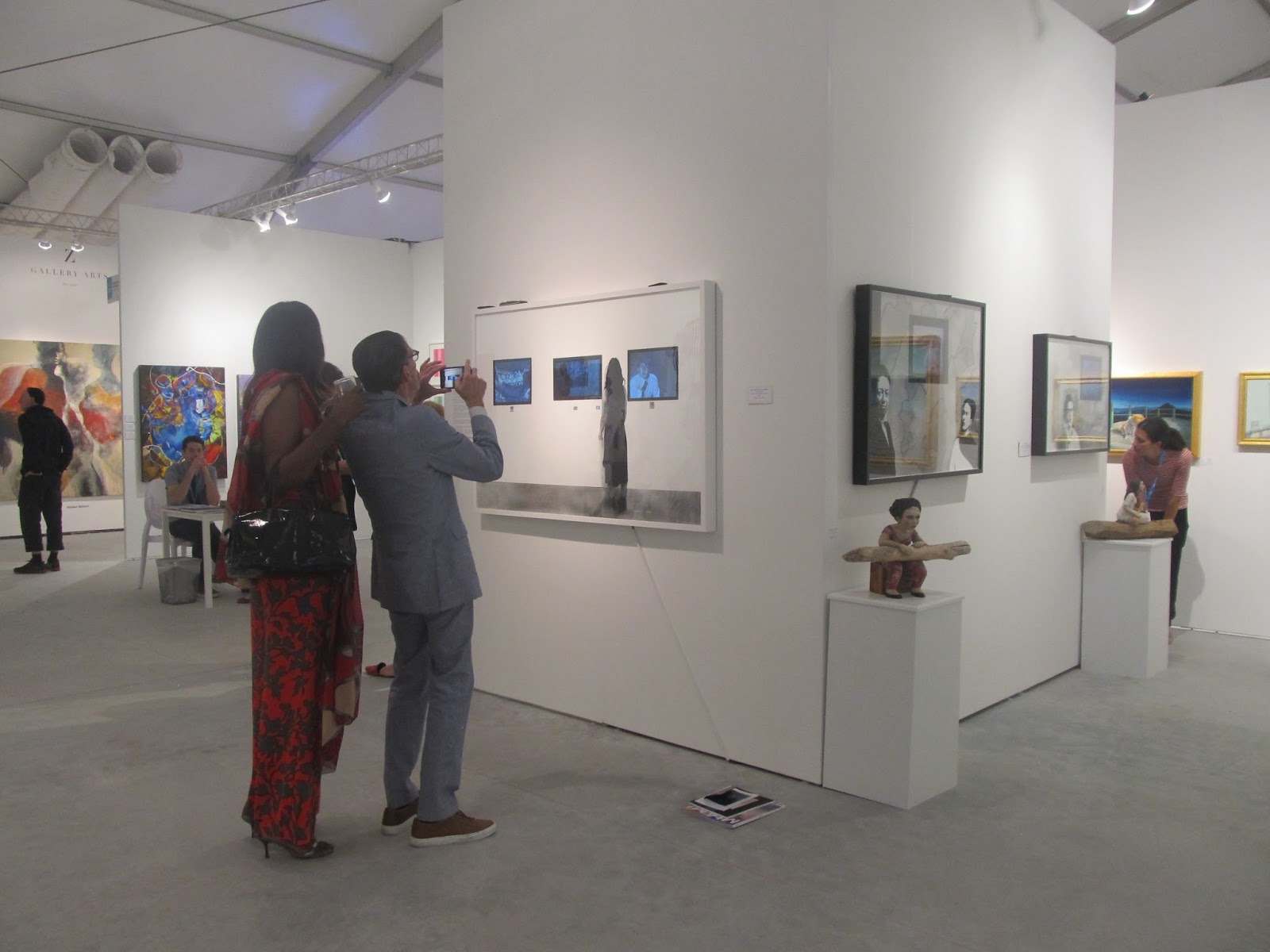
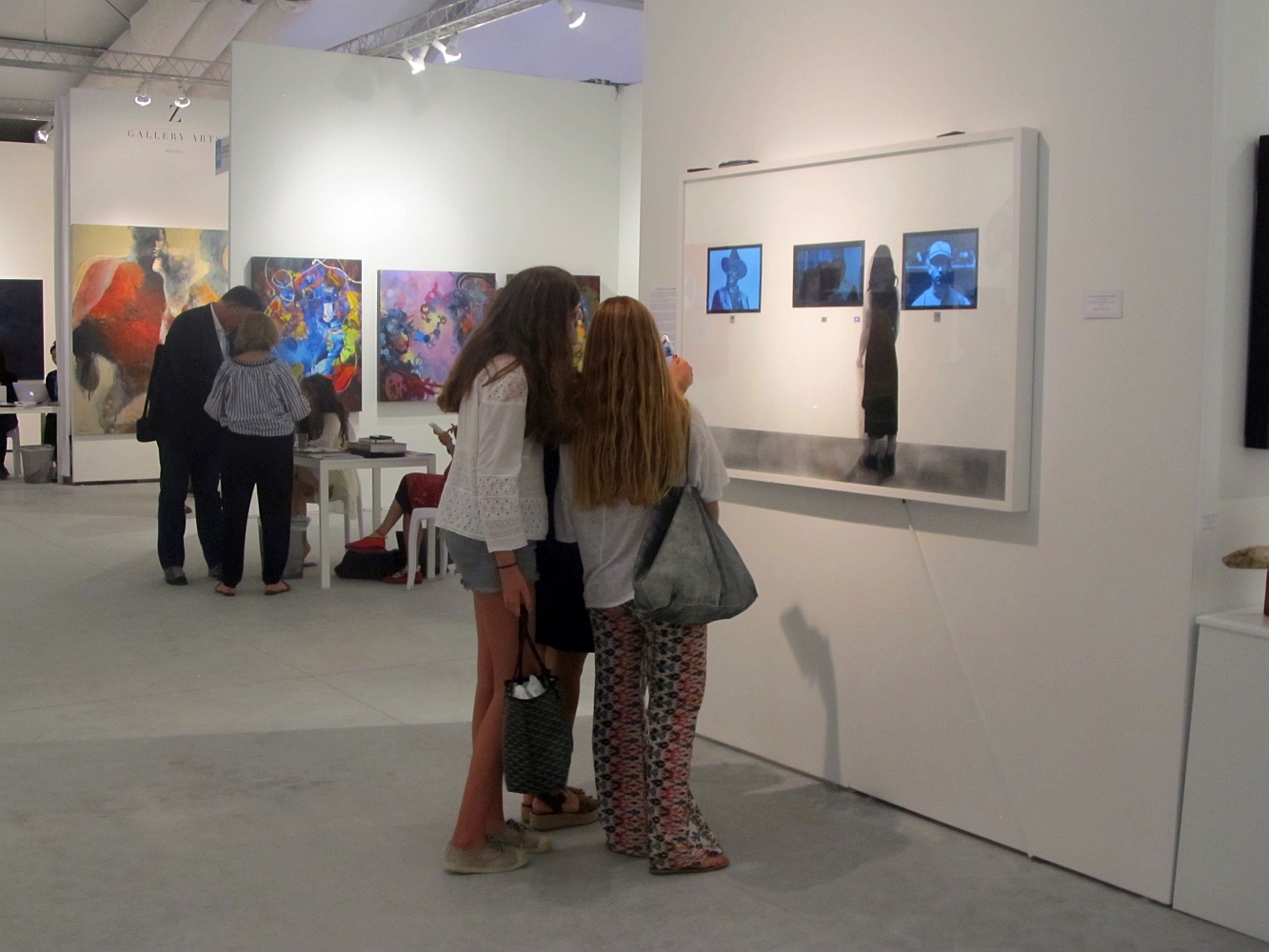
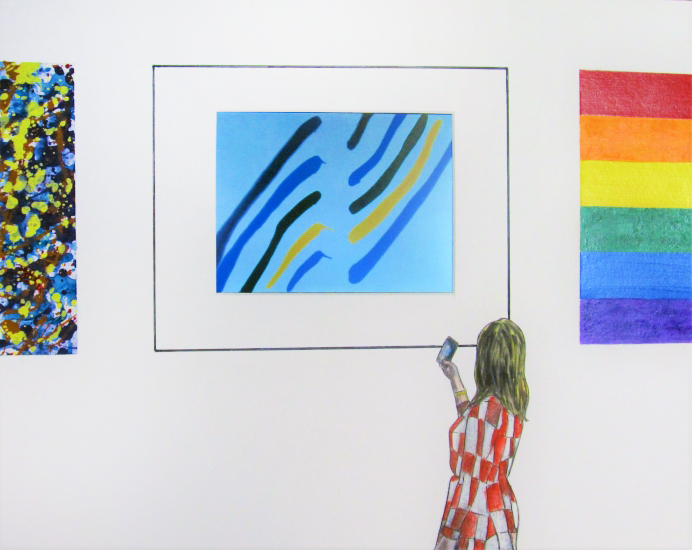
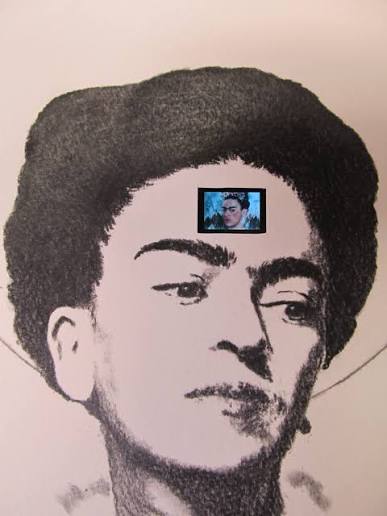
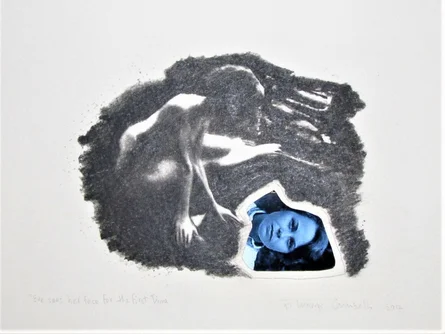
For a few decades now, i have also become known for incorporating technology into my artwork to help the visual narrative succeed. Video and sound embedded into the paper or canvas become powerful narrative additions to almost classical drawings and paintings.
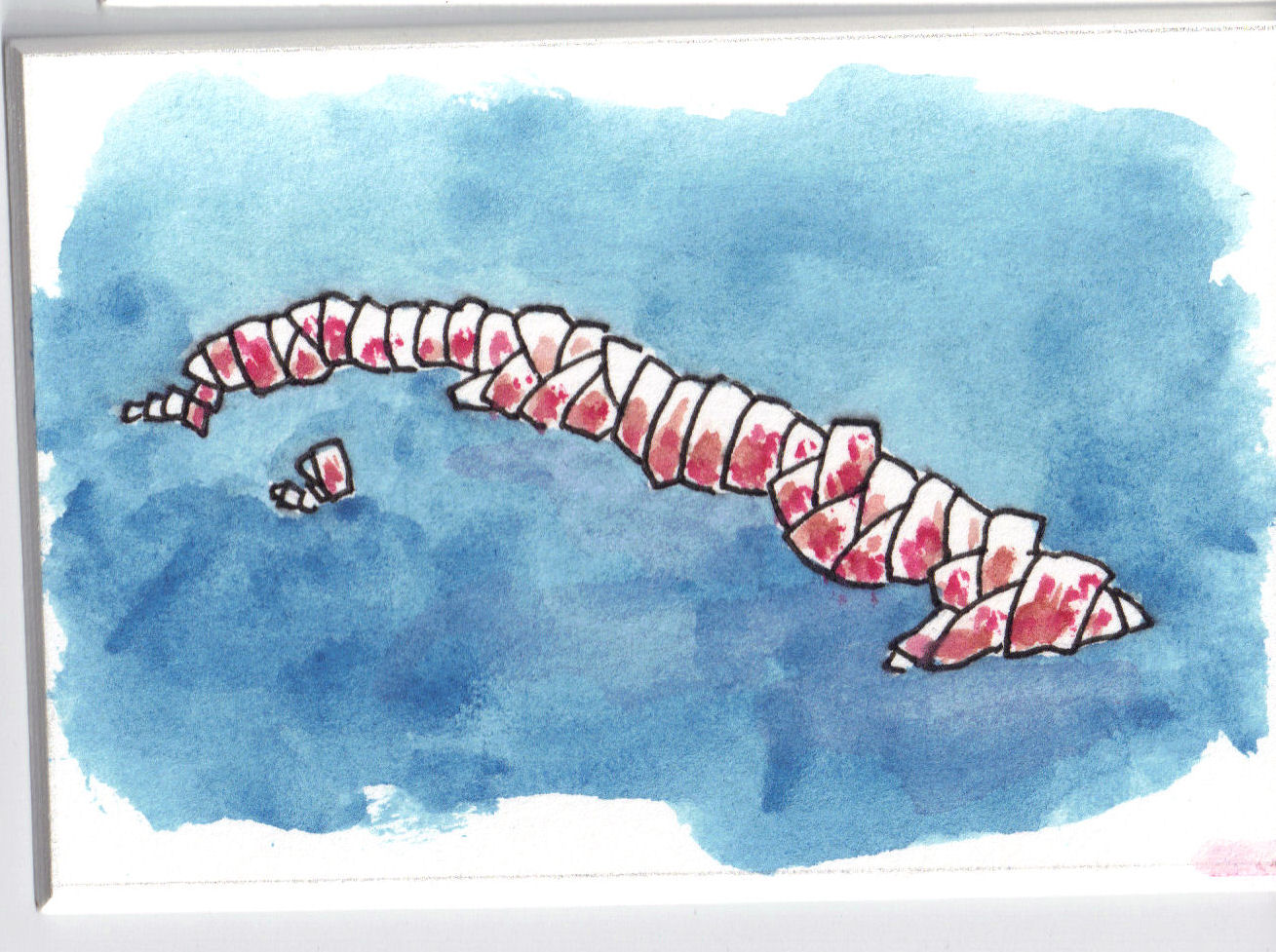
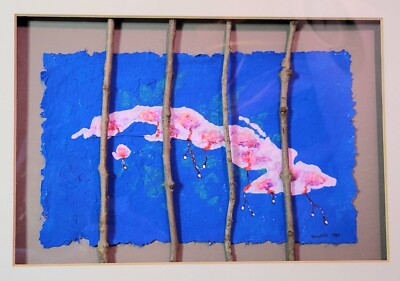
It can be thus said that I work in “series.” I am most proud of the “Cuba” series, which focuses on the shape of the island of Cuba as the center point to deliver poems, stories and visual reminders of how that poor island has been brutalized, raped and enslaved by the boot of a Communist dictatorship for over 60 years.
Can you share something surprising about yourself?
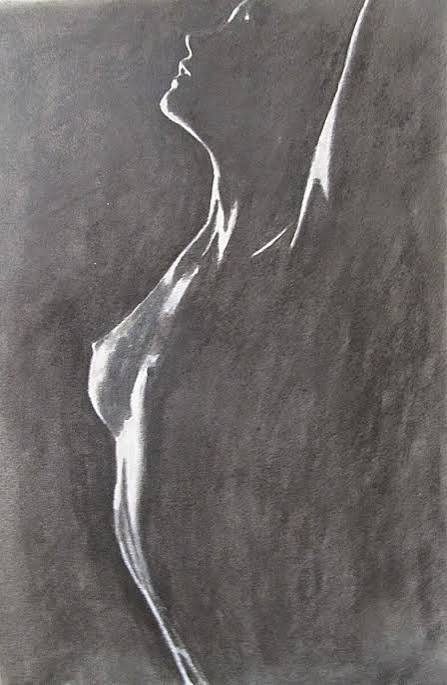
For many years now, I have embedded a unique, “double-encrypted” language that I invented directly into my figurative charcoal drawings and multimedia artworks.
What look like random cracks, shadows, or textures in the background of his pieces or on the bodies of the figures – most often the backbone or the “Ogham line” are actually secret text scripts written in a hybrid alphabet that I invented.
The origins of this “language” — a secret language — stems directly from my diverse personal US Navy background, where I spent two decades working as a cryptologist for the U.S. Navy.
Te language itself comes from a marriage of ancient Ogham Writing — An early medieval Celtic alphabet (often seen as rune-like slashes or notches) that fascinated with while I was living in Scotland during the 1990s and the U.S. Navy Falcon Codes — The highly structured tactical and often funny verbal codes used by Navy officers.
Unlike artists who meticulously plan every element, I rely heavily on chance and accident. When working with charcoal, the natural smudging and blurring of the medium creates unexpected shapes, shadows, or lines on the surface. If I notice a crack or shadow beginning to resemble the flow of a phrase or word, I deliberately shapes it using my encrypted alphabet to “leave” a message behind.
In the context of cryptography and communication, physical or visual messages hidden right in plain sight are called steganography. Derived from the Greek words for “hidden writing,” steganography is the practice of concealing a secret message inside an ordinary object or image so that an unsuspecting viewer doesn’t even realize a message exists.
Many of my works – especially those in the figurative genre, have messages on them — also many of the works where there’s a “cracked” wall as a background — there is a message there!
Pricing:
- Original contemporary drawings from $500 – $2500
- Original graphite drawings on broken Bisque from $75 -$400
- Original works with embedded technology from $1000 – $3000
- Vintage works from the 1970s-80s from the “Cuba Series” from $500 – $3500
- Original watercolor landscapes from Scotland 1989-1992 from $1,000 – $5,000 at auctions
Contact Info:
- Website: https://lennycampello.com/
- Instagram: https://instagram.com/lenny.campello/
- Facebook: https://facebook.com/lennycampello/
- Twitter: https://x.com/LennyCampello/
- Youtube: https://www.youtube.com/user/LennyCampello
- Other: https://dcartnews.blogspot.com/