


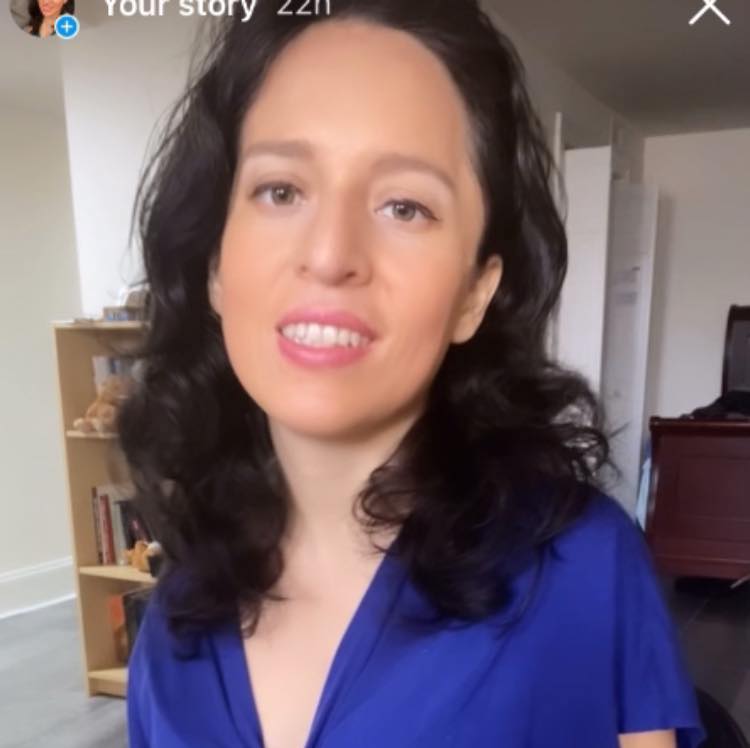
Today we’d like to introduce you to Daniela Godoy.
Hi Daniela, thanks for sharing your story with us. To start, maybe you can tell our readers some of your backstory.
My love of painting came very early on in my life. My mom says it happened when I was three and I had begged her to take me to one of her teachers’ workshops. She reluctantly took me. But once I got there, she says that she has never seen a kid that small sit so still for so long, watching a painting demo. Afterwards, I had declared to her that I was going to be a painter when I grew up. And I have followed through with that dream. Thirty years ago, my mom, my siblings and I immigrated from Ecuador to the United States when I was seven. My dad followed us a few years later. When we moved to Maryland in 1995, we lived with my mom’s sister and brother in a small basement for our first seven years here. Things were tough in the sense that we were getting use to a new country, culture, and language and leaving behind family. Although we didn’t grow up with much our home was always filled with books and music. I grew up in a parallel world of my Ecuadorian Latino culture at home and the Anglo English-speaking culture at school. Back then I struggled to find my place between those worlds. Often feeling out of place in both. As I’ve grown into an adult, I learned that I can be a bridge between both cultures. Through my art and being able to communicate in both languages to share my perspective with both communities.
While I grew up feeling very ungrounded and rootless primarily from virtually not really seeing any reference to any Latin American history in school. With exception of when people lumped us together with Mexicans or Mexican Americans. And while we share similarities, we differ like all the other 20 Latin American countries. For instance, just in our colloquial expressions, foods, music etc. However, I’m grateful I grew up in an incredibly diverse community in Montgomery County.
It wasn’t until I graduated from the Maryland Institute College of Art with a BFA in Painting 2012, and I was hired by the Institute of Cultural Patrimony of Ecuador as a photographer to be a part of a research team that I reconnected with my roots. The research project sought to document and preserve the Jahuay a Harvest ritual song that dates to at least 500 years of the Puruhá people of the Province of Ecuador. Incidentally my maternal grandmother was of this indigenous community and was forced to worked (for over forty years) in Galtes hacienda, which was one of Ecuador’s largest haciendas back in the day. That experience and paintings that followed shaped my career as an artist and painter, even today.
Alright, so let’s dig a little deeper into the story – has it been an easy path overall and if not, what were the challenges you’ve had to overcome?
For me learning English as a second language made those first two years the hardest. I almost failed first grade because I was too shy to mispronounce things when I was told to read aloud. Once my mom told me that my lack of reading was why I was in danger of having to repeat first grade, I showed her I could read fluently. I think that event tested, me because after that I was less scared of asking questions, of mispronouncing things, and of trying things until I got them right. Recently I remembered how my friends and I were often told to “speak English,” when they caught us speaking Spanish at lunch. The thing I didn’t understand is why they would expect that from me, when my first language isn’t English, and I didn’t have enough English at the time to begin with. As an adult now I know that those little two words, spread erasure of our language, because most of my classmates stopped speaking Spanish altogether after those first two years.
None the less I didn’t comply completely because we still only speak Spanish at home. My counselor at school at the time told my mom to continue to read to me in Spanish so that I had a reference language at home and that that would make it easier for me to learn English. Long story short, that counselor was correct. I was lucky that both my parents had been teachers in Ecuador. I actually asked my mom to teach me to read and write in Spanish because I wanted to be able to write back letters to my cousins in Ecuador. She recently told me that she remembers me telling her that it was because I wanted to learn to read big books like my sister. I’m glad I did because in regular school Latino culture was completely bypassed. I say that because I distinctly remember that in the beginning of seventh grade our social studies teacher told us to learn and memorize the names and capitals of all of the Central and South American & Caribbean countries. It was the very first time Latin America was even mentioned in the curriculum. I got a 100 percent. My teachers had been so surprised it was then that they started to recommend me to honors classes. When before then I was in regular or below average classes. I remember that test was the first time I felt excited and represented at school. It wouldn’t be until my last two years in high school where I would feel a semblance of representation again and only because I was invited to be part of the International Baccalaureate Program ( similar to AP but taught with a world view curriculum) which taught books written by Latin American writers. To my surprise I was told by my tenth-grade Spanish teacher I had college level Spanish. After college that inspired me to earn an interpreting certificate in Spanish and English. Today translating has on occasion served as my second job.
And although the representation of Latino cultures much less Ecuadorian culture was virtually nonexistent in school, I have my parents to thank for not letting us lose our Spanish. My dad regularly took us to the Smithsonian’s to learn about history , music, cultures and art of countries around the world. I didn’t know it back then but that time in my life humbled me in learning how beautifully diverse other people think, feel and approach life. And how none of it is wrong, because I believe it is our diversity that enriches our world and makes us stronger. He would constantly correct our Spanglish, because to him as a writer, musician, composer, musicologist and ex history teacher, the idea of hearing us speak Spanish incorrectly annoyed him. As a teenager his constant correcting also annoyed me, but it was worth it in the end. I didn’t know it at the time but those trips to the Smithsonian, combined with that feeling of being invisible or rootless nurtured my curiosity for learning about other cultures. It also called on me to fill that void in my search and desire to learn about my own roots and identity through art.
Over my lifetime I have faced the critiques of many, to the point where I almost quit my dreams of becoming a painter a few times. My senior year art teacher told me once to not bother following art that I wasn’t good at it. My classmates and I went to our IB counselor and told on that teacher because she wasn’t only being rude, she wanted us to do work from two advanced art classes AP &IB art, when we were only enrolled in one. These were both college level classes and we were receiving threats from that teacher for not completing the extra work she wanted. Our counselor stepped in and told that lady she had no right to treat us that way. Toward the end of my first year at MICA, which was my junior year in college another professor gave me a demoralizing and offensive, critique where he too told me I should just give up and study something other than art. That time I almost quit arts not only for that incredibly harsh critique but because financially my family was struggling. Thankfully I didn’t quit, and I got a student aid job at the Decker Library at MICA my senior year to work to pay what my half academic scholarship and loans didn’t cover.
Both times I don’t know what it was that kept me going. If it was my incredible passion for artmaking or this inner calling, I had had since I was three years old to be a painter. Either way I’m glad I didn’t listen to those teachers and the countless naysayers in my life and art career. This career path has taught me that not everyone is going to like what I make and that’s ok. Those harsh critics often provided me with the fuel I needed to try harder and keep going. Because for every person that doesn’t like what I do, I have met people who tell me they see themselves represented in it, and countless more who want to learn about cultures different to their own.
Appreciate you sharing that. What else should we know about what you do?
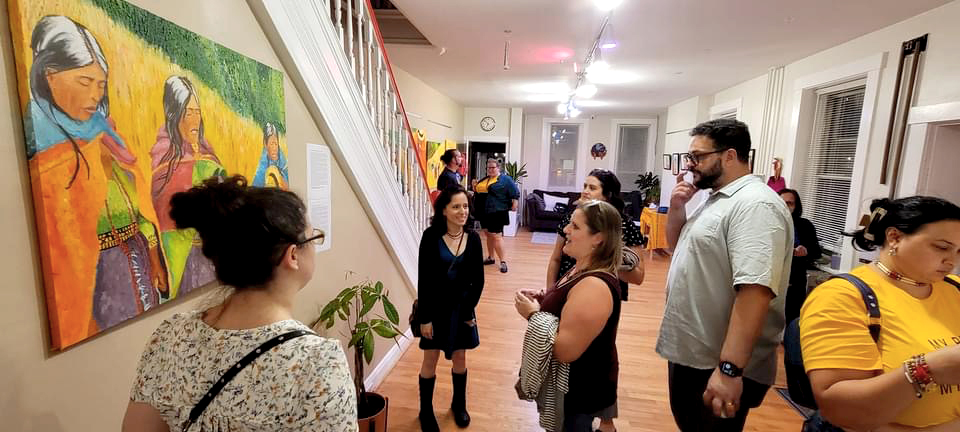
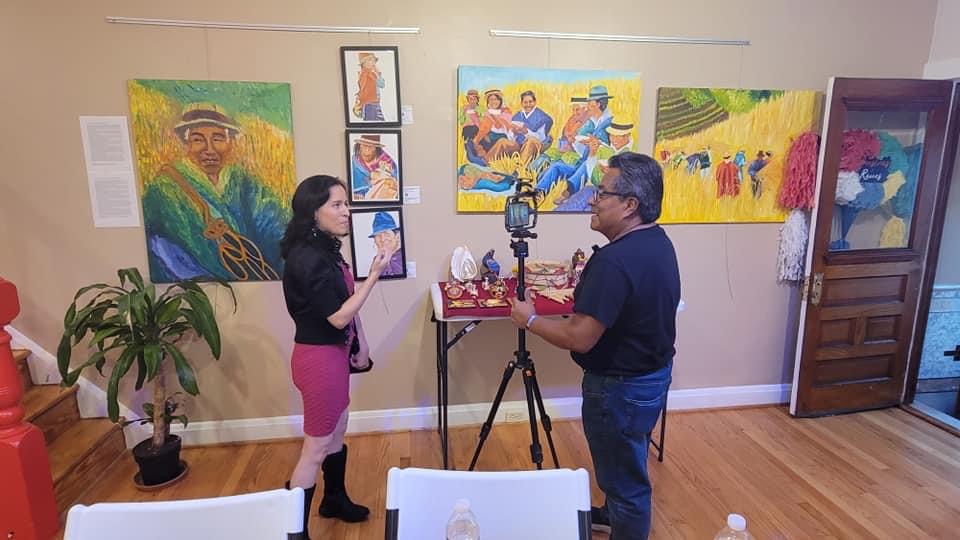
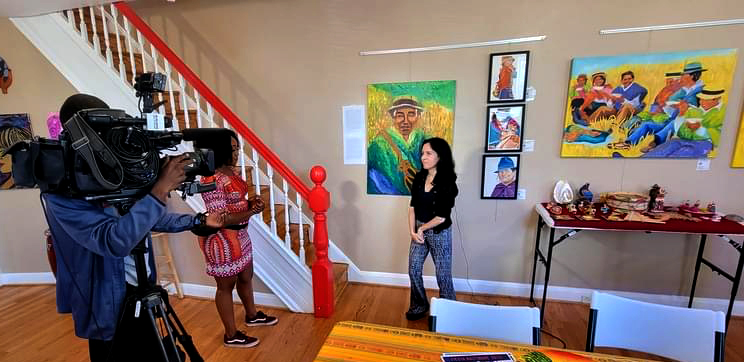
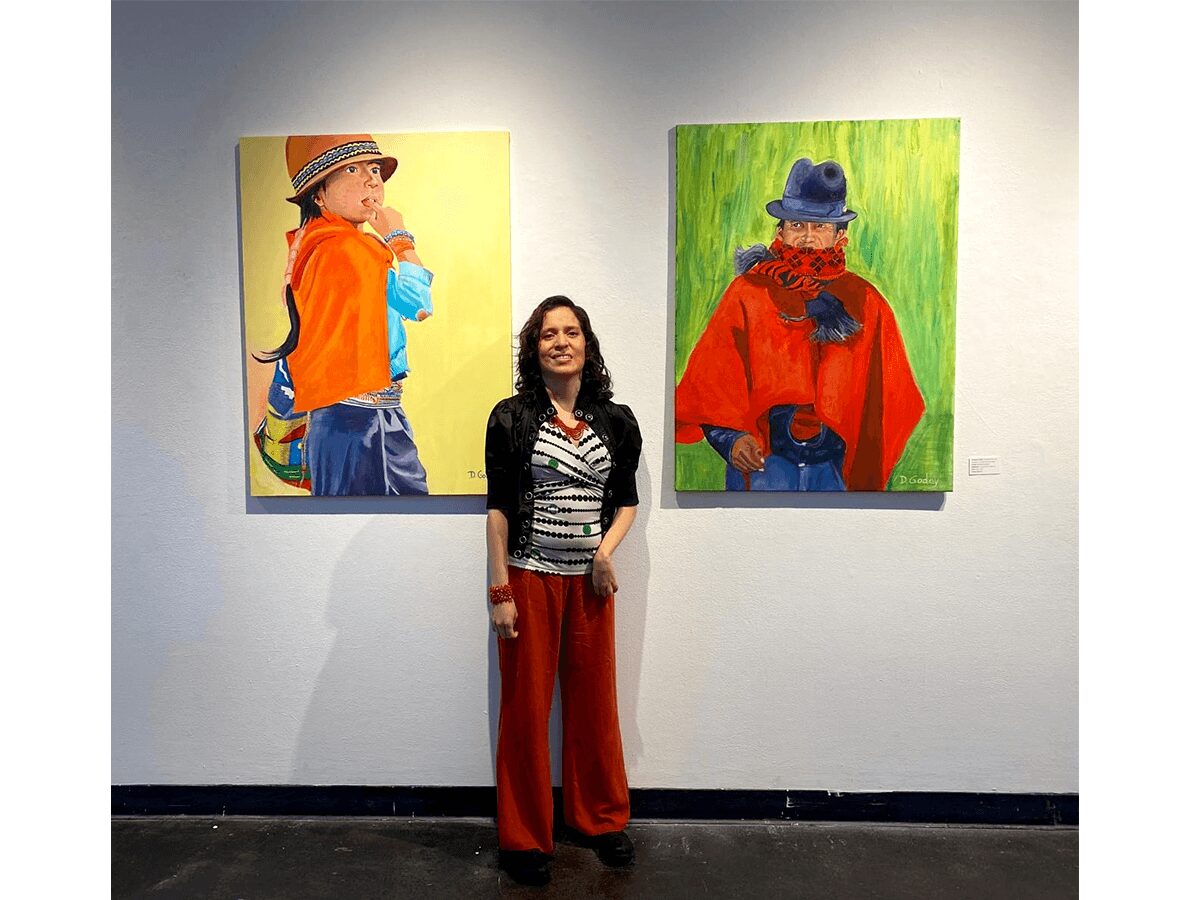
I am a visual artist, a painter. My art can be categorized as ethnographic art because it centers around depicting and preserving my grandmothers’ indigenous roots. My maternal grandmother passed away when I was 12 and since I left Ecuador at the age of seven, I didn’t get to know her as much as I would have wanted. As a result, I primarily create portraits of these Puruhá Indigenous community to learn about her, and her roots. It’s also thanks to her talents for the visual arts that I inherited my aptitude for the arts. The research project I participated in to document the Jahuay harvest ritual song of the Indigenous people of Chimborazo changed my life and career, because it gave me insight into my indigenous heritage. That project led me to create a twenty-painting series of acrylic paintings that traveled through 6 solo shows in Ecuador, one in Hungary, and recently one here in Baltimore City (at La Casa de La Cultura, at Nuestras Raices) in 2023. I have been known for the bright colors of my paintings and portraits, since as early as my last year in college. My exploration into my indigenous heritage has fueled my art for the past twelve years and continues to do so. The bright colors of the clothing of the people I portray are an integral part of the Puruhá people of Chimborazo. Their bright colors are a testament to their history and mine. Throughout the years I have explored traditional celebrations, themes, and indigenous / mestizo characters of this region. The subjects, the places, and the stories they tell in the paintings become a part of me as an artist and the viewer who perceives them because they are no longer invisible. Our bonds to other humans remain broken when we ignore the common humanity and beauty that exist in those “different” from ourselves.
When people as an adult have asked me why I don’t make art that is more” American”. I get frustrated because that would mean erasure of my culture that would mean hiding my true colors to make my art more palatable, or to appease people who feel uncomfortable when they see my art. What is more American than portraying the art and culture of the indigenous people of these stolen lands? Because all North, South America & Central America, and the Caribbean originally belonged to the indigenous people. I adhere to the principle that Mexican poet and academic Cesar A. Cruz said,” art should comfort the disturbed and disturb the comfortable.”
I create the “Ecuadorian art I didn’t grow up seeing so that others don’t grow up feeling as invisible as so many of us have felt either because we immigrated from our native country as kids or grew up to be second generation Latinos who didn’t feel seen in school either. I’m mostly proud of the fact that one of my Jahuay photographs was a part of The Exposure Award Collection and was exhibited at the Louvre Museum in Paris in 2015. Also, that as of last year two of my watercolor paintings are in Harvard University’s Office for the Arts. In addition to the two paintings, I sold who are in the permanent collection of the Museo del Pasillo in Quito, Ecuador.
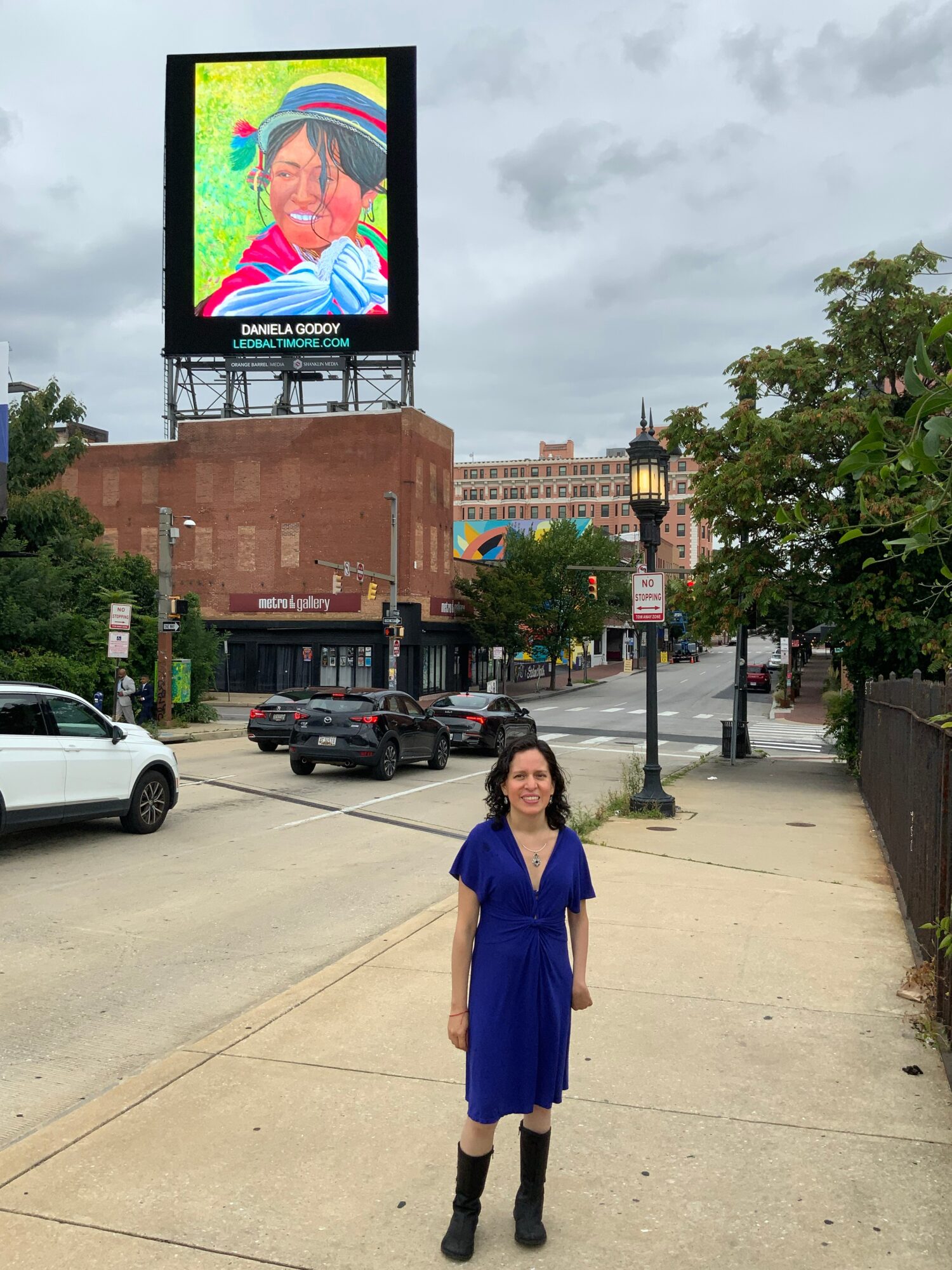
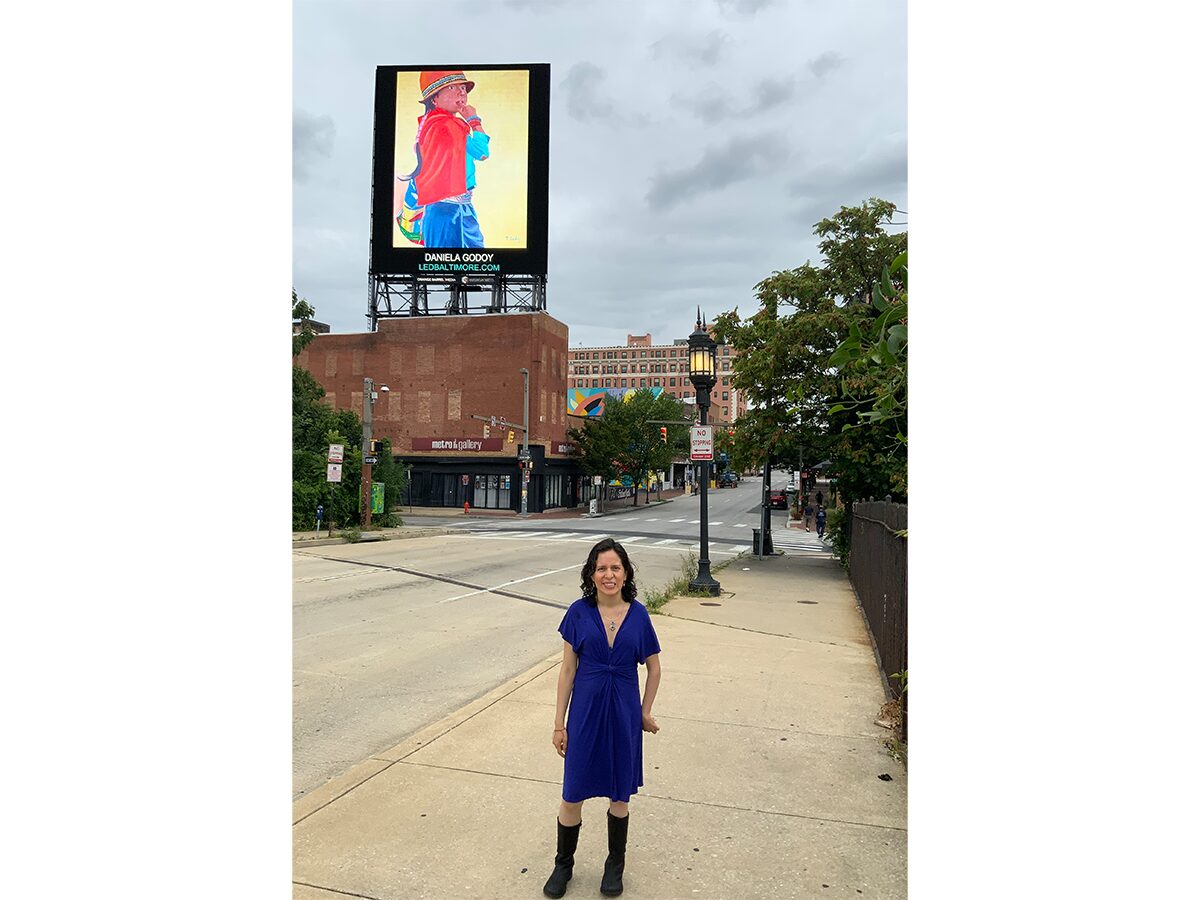
Recently I’m excited because four of my paintings were shown on the LED Baltimore Billboard at 1700 N. Charles Street for the week of August 19-25, 2025.Currently two of my paintings are a part of the group show (Unidos En El Arte) at Creative Alliance. The exhibition opened September 20th and ran until October 25, 2025. Getting into the show at Creative Alliance, fulfills one of my goals and dreams to one day exhibit there, that I’ve had since the first time I visited that gallery in 2011.
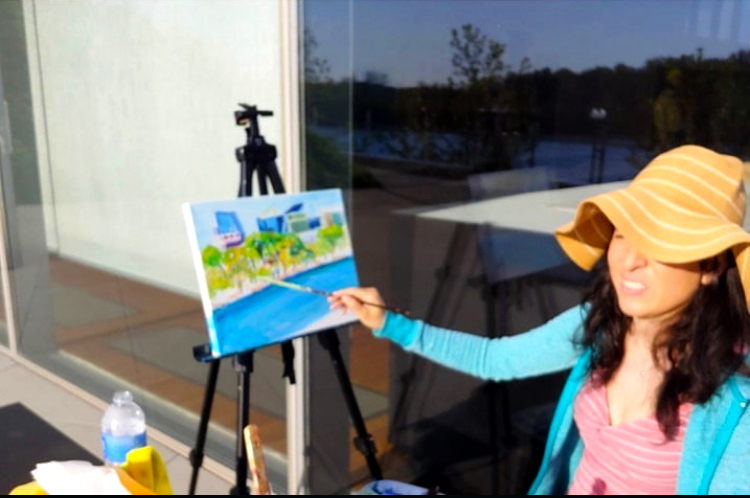
Seeing people energized about my paintings, when they have encountered them at art shows, art markets, etc., it makes me very happy to see my art come full circle in its purpose of bringing people joy while it teaches them about my cultural history in the process. In April 2023 I was invited to participate as a plein air painter at the Kennedy Centers, “River Run Festival.” Even though I was painting the Potomac landscape overseeing the Kennedy Center, I took my little booklet with my series of Jahuay paintings to show people, and several people asked me if I had a show inside or where they could see more. I didn’t have any art in any show there at the time, except the one I was creating. Two of those paintings are now on display at the EYA Alumni Display in The Eisenhower Theater Case, at the Kennedy Center, in Washington DC.
In that same festival an usher told me that she was Puerto Rican and was happy to see that I was opening doors for other Latinos. Which was enlightening to me because I had been unaware till that point that I had been opening any doors. I mean I always hope that my foot in the door makes it easier for other Latino artists but up until then, I hadn’t really shown in many places in the United States. Although I had traveled with my Jahuay series throughout 6 cities in Ecuador and one in Hungary. Having other Latinos tell me they are happy I’m representing them, through my art makes me hyper aware of the responsibility I hold with my art and although that makes me nervous, it also makes me very happy.
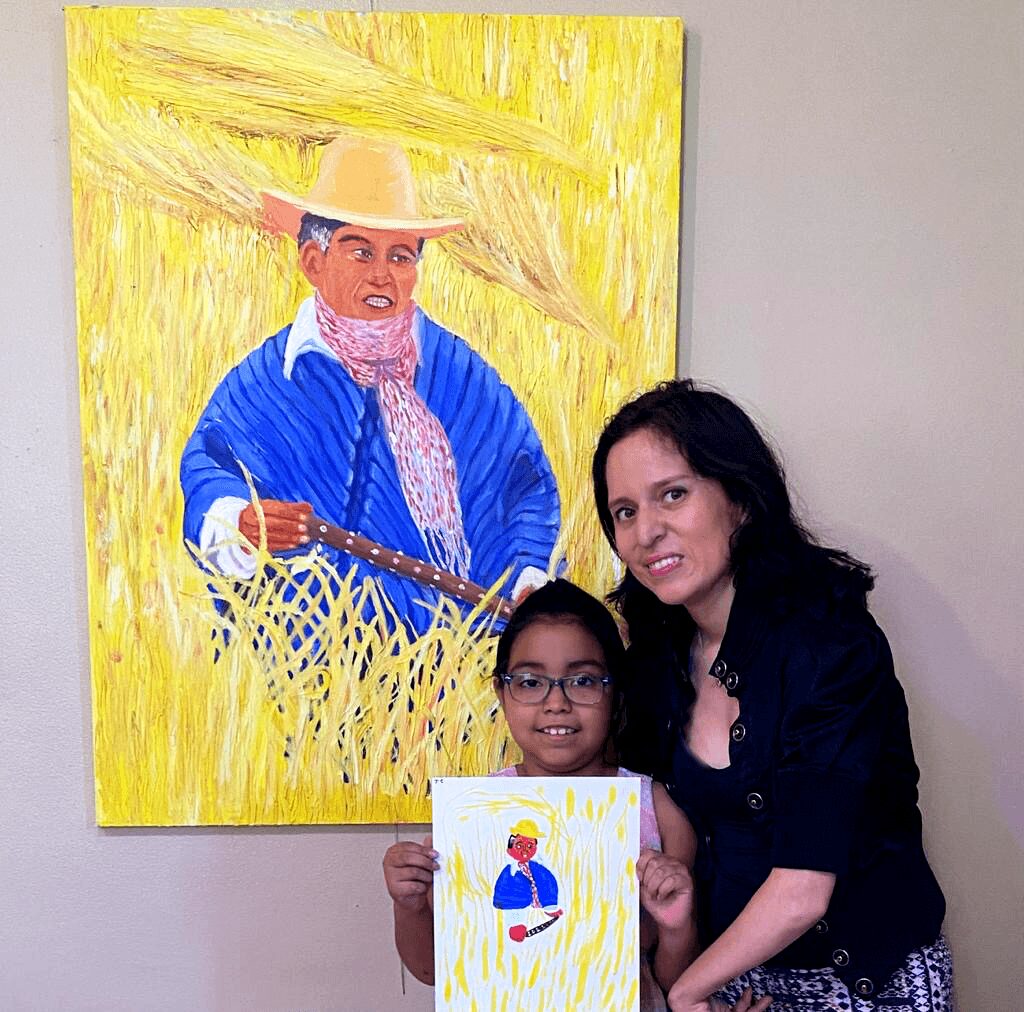
At the art workshop I led the day after my solo show opened at La Casa de La Cultura in Baltimore Sep 2, 2023, it was overwhelming to see the reaction of one girl. This one little girl, decided to paint a replica of one of my paintings even though the instructions for everyone was to paint whatever they wanted. Her mother told me that she loved art and that she wanted her to continue to maybe even become a muralist someday.
This past year I was asked to make a list of places where art currently resides as part of my professional CV, and I discovered that people have my art in Ireland, Romania, Hungary, Tbilisi, Georgia, Ecuador and the United States. Knowing that my art has made it to many countries around the world made me feel very blessed. These past two years 2023, 2024, I was honored to have been commissioned by the radio show” En Vivo con Maricarmen to create the Peace Awards for Connecticut. Getting the opportunity to do so meant depicting and honoring Latinos leaders for their contributions in their communities in the arts, social work, Medicine, Education, etc. I have enjoyed this most recently because these are actively changing the narrative about Latinos and Latino Immigrants and that is a pillar of what I want to achieve through my art.
Finally, in 2024 I was entrusted to be a part of the translation team to translate my grandfather’s biography, Gonzalo Godoy “His Legacy The story of a popular Ecuadorian Musician.” I also painted the portrait on the cover. The reason this makes me so happy is because it has brought my now 94-year-old grandfather incredible joy, because we were able to record his story and contribution not only to my personal family’s legacy but to the cultural history of Ecuador and share that with the English-speaking world too.
Ultimately, what I love about what I do is that art forges connections. It documents our history, it honors leaders and forges role models for our communities. In a nation where Latinos make up 20 percent of the population in the United States and yet we only account for 2.8 % representation of male Latino artists in museums according to the article “American Museums Get $5M for Latinx Curatorial Positions, in the Hyperallergic online magazine article by Rhea Nayyar, February 15, 2023”. That article doesn’t even account for Latina artist being represented, because I’m assuming the number is lower. But for me, witnessing people’s reaction and interaction with my work in these recent two years are in my mind’s eye proof of concept. Meaning they have created visible proof that the world needs this thing. Now more than ever continuing to create my cultural art is my personal commitment to positively represent the Latino community and the beauty that lies within us. Especially if the art I create contributes to flipping the narrative of how immigrates are viewed and how they see themselves, Thus, proving that we need an art world that is visibly more diverse, equitable and inclusive.
Can you talk to us a bit about the role of luck?
I don’t believe in good luck. Everything fortuitous that has come into my life is a result of my hard work or tied to my perseverance. I have been working toward building a career in the arts since I was a little kid, the hundreds of thousands of hours I spent practicing, researching, learning, were crucial. As was the decision to choose painting as a career path despite the financial instability inherit to it. Luck wasn’t a part of the equation in my eyes because the “circumstances “of becoming and artist because of my grandmother’s natural talent for the visual arts that I inherited would have been nothing if I hadn’t chosen to put in the work. I don’t believe in “bad luck” either, only systemic, exclusion of diverse voices. My art has faced plenty of rejection from the moment I decided to create art based on my Ecuadorian culture. A circumstance which yes often caused me to not try , to pass up on certain opportunities because my spirit couldn’t take any more rejection that year, etc. When those moments come up, I give myself space to breath and to find new ways to tell my stories. Instead of becoming a defeatist I worked on fine tuning my aesthetic style and searched for audiences that would listen and wanted to show my art. Being turned away for shows and grants pushed me to create my online store, do commission artwork and apply abroad. It also propelled me to take the leap to share my art on social media which was very new to me up until 5 years ago.
What people often call bad luck to me is people blaming circumstances, instead of working through them. The people who succeed did it because they stuck to their passion and vision and didn’t fold to pressure. They didn’t water themselves down to appease the system here instead they showed up proud of who they are and where they came from.
Contact Info:
- Website: www.danielagodoy.com
- Instagram: www.instagram.com/daniela_godoys_art
- Facebook: www.facebook.com/com/DanielaGodoyB
- Other: https://www.artworkarchive.com/profile/daniela-7aa83c0d-7419-44f2-9ed0-123d0fcaffe4