




Today we’d like to introduce you to Leslee Bry.
Hi Leslee, so excited to have you on the platform. So before we get into questions about your work-life, maybe you can bring our readers up to speed on your story and how you got to where you are today?
Looking back, no one in my family or friend group was surprised when I decided to pursue psychology. From a very young age, I was always trying to understand people and bring them together. One of my family’s favorite stories is that when I was about four years old, my aunt and uncle were arguing, and I walked up to them and said, “Your love will break.” Even then, I wanted to help people repair their relationships and stay connected.
I didn’t grow up in a home filled with conflict, myself. Quite the opposite. My parents have been passionately in love for 40 years, and I was raised in an incredibly loving and supportive family. My instinct to mediate was not in response to my home life, it was simply who I was at my core. Over time, in response to that inner self and the experice of being bullied, moving, and growing older, I instinctively became the friend people confided in, the family member everyone came to for support, and someone who was endlessly curious about why people think, feel, and connect and disconnect the way they do. It just took me a little longer than everyone else to realize those qualities pointed toward the perfect career.
My interest in psychology really took shape during my senior year of high school when I took AP Psychology, thinking it would simply be a fun elective that could boost my college credits. Instead, it felt like something clicked. I couldn’t get enough of the material. For the first time, I could see a future where I could help people who felt the way I once did.
I grew up as a Navy brat with a Venezuelan father from Florida and a white mother from West Virginia, so I often felt like I existed somewhere in between different worlds. I was also bullied for my size growing up, and as someone who has always lived in a larger body, I’ve had to learn to separate my worth from society’s messages about appearance and instead focus on health, movement, and self-acceptance. Therapy wasn’t something my family viewed as a resource, so it wasn’t an avenue I experienced personally. But understanding that there were kids who felt isolated, misunderstood, or unloved, and realizing I could one day be a safe person for them stayed with me. That realization ultimately led me to switch my major from marine biology to psychology.
I attended the University of Maryland, where I thrived in its psychology program. I loved social psychology, but everything changed once again when I took an interpersonal relationships course. That’s where I discovered marriage and family therapy. I became fascinated by relationships; I loved investigating the ways in which people connect, why they disconnect, and how each person’s experiences, family, and culture shape the dynamics between them. I loved the idea that by helping one person or one relationship, you could create ripple effects throughout an entire system.
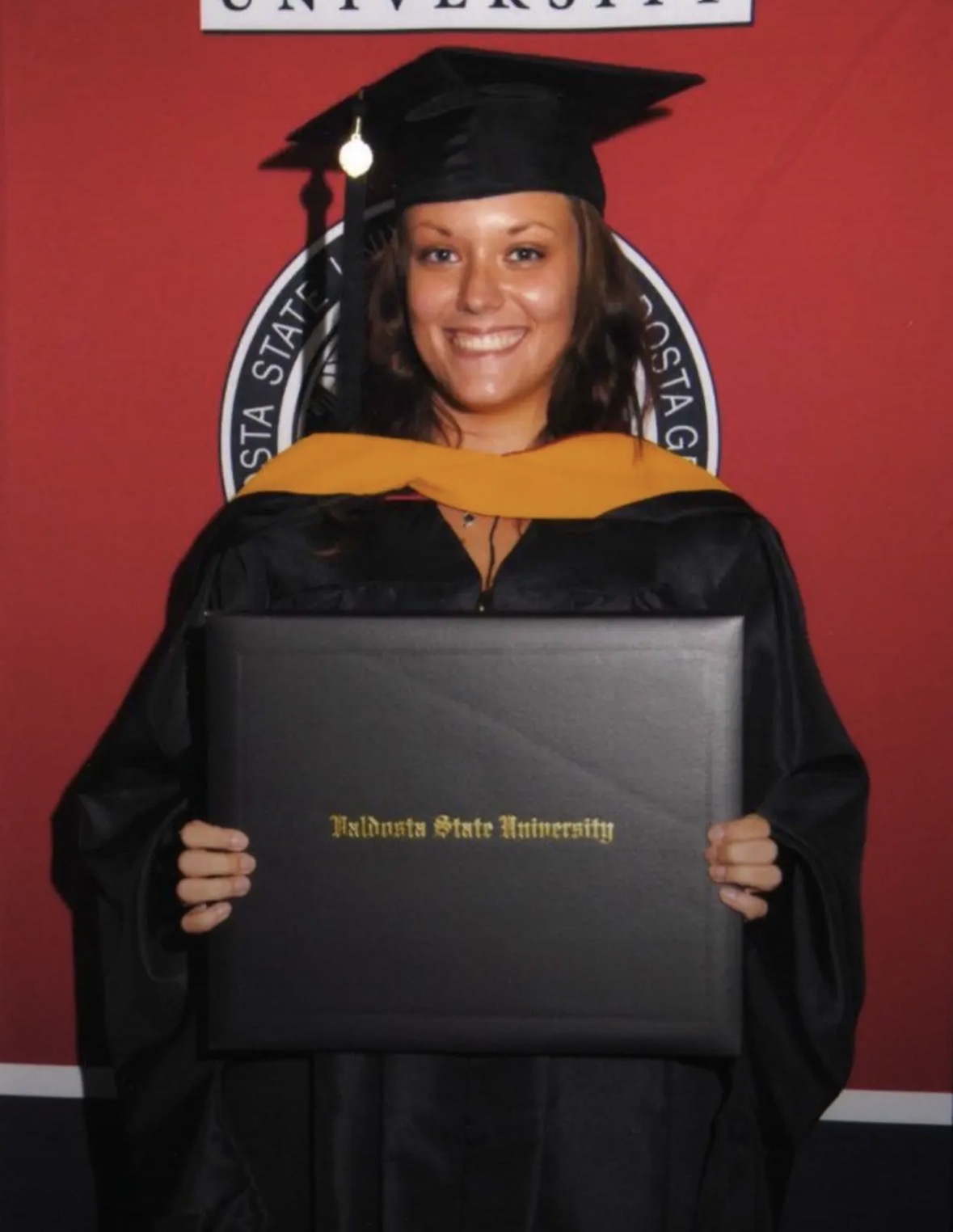
That passion led me to graduate school at Valdosta State University, where I earned my master’s degree in Marriage and Family Therapy. My training centered on systems and relational therapy, teaching me that no one exists in isolation and that we are all influenced by the many systems that shape our lives. I also had the opportunity to study mindfulness (hence the inspiration for my business name), hypnosis, relationship therapy, sex therapy, and affirming care for LGBTQ+ and polyamorous clients. It was an incredibly unique education that continues to shape the way I practice today.
When I returned to Maryland, I worked in private practice after becoming licensed, but unfortunately couldn’t find a practice whose values fully aligned with my own. They were incredible opportunities that taught me so much, but I wanted to build a space where therapists could thrive while providing deeply inclusive, culturally responsive, body-liberating, and affirming care for the community. That’s what inspired me to open Mindful Marriage and Family Therapy in 2018.
Originally, I imagined staying a solo practitioner. That changed when a Loyola University intern reached out looking for supervision. I discovered that I absolutely loved teaching and mentoring new therapists. Watching someone grow into a confident, compassionate clinician became one of the most rewarding parts of my career. That one internship led to supervising additional students, several of whom have since become licensed therapists and are now part of our practice. Seeing them flourish has been an unexpected joy.
As our practice evolved, we also transitioned from accepting insurance to a self-pay model. While it was a difficult decision, it ultimately allowed us to build a sustainable practice while continuing to serve our community through sliding-scale and pro bono services for those who need them most. It gave us the flexibility to provide care that aligns with our values while also ensuring that our clinicians could build fulfilling, sustainable careers.
Today, I’m incredibly proud of what we’ve built together. What started as a solo practice has grown into a team of thoughtful, talented therapists who genuinely embody the values that inspired me from the beginning: inclusivity, cultural competency, safety, curiosity, and authentic human connection. Every member of our team brings something unique, and together we’ve created a practice that feels deeply aligned with the kind of care I always hoped existed.
I’m proud that I took the leap to start something of my own, but I’m even more grateful for how it has evolved. My team, my supervisees, and my clients continue to teach me every day. Watching people heal, strengthen their relationships, and discover new ways of relating to themselves and others is still the greatest privilege of my work, and I’m excited to see where this journey continues to take us.
Can you talk to us a bit about the challenges and lessons you’ve learned along the way. Looking back would you say it’s been easy or smooth in retrospect?
It definitely hasn’t been a smooth road. One of the most meaningful and ongoing challenges in my journey has been learning how to balance providing accessible, values-driven care with building a financially sustainable practice that can support both our clinicians and the long-term health of the organization.
Early on, I held a lot of idealism about access to therapy. I wanted care to be available to everyone, and I also wanted to create a practice where clinicians felt supported, fairly compensated, and able to build sustainable careers. Over time, I realized those goals can sometimes be in tension with one another in a very real way.
One of the biggest turning points was making the decision to transition away from an insurance-based model. It was not a decision I took lightly. On one hand, insurance panels can increase access for clients, which aligns deeply with my values. On the other hand, they often come with limitations that impact clinical autonomy, therapist compensation, and the ability to sustain a healthy, ethical workload for clinicians. I found myself constantly weighing what was best for clients in the immediate sense against what would allow the practice, and the people within it, to remain stable and well supported over time.
Choosing a private-pay model meant confronting that tension directly. It required me to sit with the reality that we would not be able to serve everyone in the same way through insurance, while also committing to ensuring that access did not disappear. That is why we built out a strong sliding scale structure and continued offering pro bono work for clients who need it most. Still, navigating that balance has been one of the hardest ongoing responsibilities of running the practice.
What has made it worth it is seeing what becomes possible when that balance is more sustainable. Being able to support clinicians in building fulfilling careers, while also maintaining a practice rooted in ethical care, cultural responsiveness, and deep relational work, has reinforced that sustainability is not separate from care, rather, it is part of it.
Even so, I don’t think that tension ever fully goes away. I think part of being a practice owner in mental health is continuously wrestling with questions of access, equity, and sustainability, and trying to make the most responsible decisions in the context of real-world constraints. That ongoing reflection has been one of the biggest challenges of my career, but also one of the most formative. It will be an ever evolving work in progress like most worth while things.
Thanks – so what else should our readers know about Mindful Marriage and Family Therapy, LLC?
Mindful Marriage and Family Therapy was created because I couldn’t find a practice that fully reflected the kind of care I believed clients deserved. I wanted to build a place where people could show up exactly as they are and know they would be met with compassion, curiosity, and respect rather than judgment.
We work with individuals, couples, and families, with relationships being the heart of everything we do. We believe that no one exists in isolation. Whether someone is seeking therapy for anxiety, depression, grief, identity exploration, dating, family conflict, or relationship concerns, we always consider the broader systems that influence their life. Healing doesn’t happen in a vacuum, it happens in connection to everything else.
Today, our practice specializes in a variety of areas with emphasis on relationship therapy, including counseling for monogamous, polyamorous, and ethically non-monogamous relationships. We also specialize in family therapy and parenting support, therapy for adolescents, sex therapy, LGBTQIA+ affirming care, therapy for other therapists, women’s health, and support for child-free, childless, and non-parent communities. Every clinician on our team brings their own expertise and style while sharing the same commitment to evidence-based, relational, and deeply affirming care.
What sets us apart isn’t just what we treat, it’s how we treat people. We intentionally built a practice grounded in cultural competency, gender-affirming care, body liberation, anti-oppressive values, and genuine inclusivity. We recognize that every person’s identity, culture, family, and lived experiences shape how they move through the world, and we believe those parts of someone deserve to be honored rather than overlooked. We strive to create a space where clients don’t have to explain or defend who they are before beginning the work of healing.
One of the things I’m most proud of is that the culture we’ve created extends beyond our clients to our clinicians. We intentionally invest in mentoring and supervising new therapists because I believe great therapy begins with therapists who feel supported, challenged, and inspired themselves.
Watching our practice grow from a solo office into a collaborative team of exceptional clinicians has been one of the greatest joys of my career.
I’m also incredibly proud that we’ve found a way to balance sustainability with accessibility. Transitioning to a private-pay model allowed us to create careers that are sustainable for our clinicians while continuing to offer sliding-scale and pro bono services to members of our community who might not otherwise have access to care. That balance reflects one of our core beliefs: taking care of therapists allows therapists to take better care of others.
Above all, I want readers to know that therapy isn’t about “fixing” people. It’s about helping them better understand themselves, strengthen their relationships, and build lives that feel more authentic and connected. At Mindful Marriage and Family Therapy, our mission is simple: to provide a safe, affirming space where relationships can thrive and lives can flourish.
Where do you see things going in the next 5-10 years?
Over the next 5–10 years, I think the mental health field is going to undergo some significant shifts in three main areas: technology, accessibility, and professional structure.
One of the biggest changes will be the integration of AI into mental health care. It’s already happening in ways that many clinicians may not fully realize, and clients are often using it as a first line of support, whether for reflection, emotional regulation, or even decision-making. I think this creates both opportunity and real ethical tension. On one hand, AI has the potential to increase access to support in a way we’ve never seen before. On the other hand, we are still very early in understanding issues around privacy, HIPAA compliance, emotional safety, and the limits of what should never be automated in care.
Personally, I’m still very thoughtful and cautious about integrating AI into clinical workflow, especially around things like documentation, because I want to be sure that we are fully protecting client privacy and staying aligned with ethical standards that are still evolving. At the same time, I also recognize that avoiding it entirely is not realistic. Our clients are already using it, and as clinicians, we will need to understand how to engage with it responsibly rather than ignore it. I see that as one of the major ongoing ethical conversations of our field.
Another major shift is around license portability and interstate practice. We’re already seeing progress through compacts for psychologists and growing movement for licensed professional counselors and marriage and family therapists. I think this is one of the most important developments for increasing continuity of care. People move, relationships change locations, and care becomes fragmented when clinicians can’t move with clients. Greater reciprocity has the potential to meaningfully improve access and long-term outcomes.
Finally, I think we are in the middle of a very real and ongoing shift in the business model of therapy itself. More clinicians are moving out of network or private pay, and there is an active and sometimes divided conversation in the field about what ethical access to care looks like in that context. I don’t think that debate is going away anytime soon. Instead, I think we’re going to continue to see tension between sustainability for clinicians and accessibility for clients, and the field will have to keep evolving ways to hold both.
Overall, I see the next decade as a period of necessary reckoning and refinement, where we are being asked to rethink how care is delivered, protected, and sustained in a changing technological and economic landscape.
Pricing:
- Relationship Counseling: $225
- Individual Therapy: $200
- Family Therapy: $250
- Sliding Scale/Reduced Rates Available
Contact Info:
- Website: https://Mindfulmftmd.com