


Today we’d like to introduce you to Kris Faatz.
Hi Kris, thanks for sharing your story with us. To start, maybe you can tell our readers some of your backstory.
When I was little, the first thing I wanted to be was a writer.
I’ve loved to read for as long as I can remember. I don’t remember when I actually learned to do it, or any time before I could, but I do remember some of the first books I fell in love with: Stuart Little and The Trumpet of the Swan, and a little later, the Black Stallion series by Walter Farley. I wrote my first “book” when I was six (and drew the pictures for it). By the time I was nine, I said I was going to be an author.
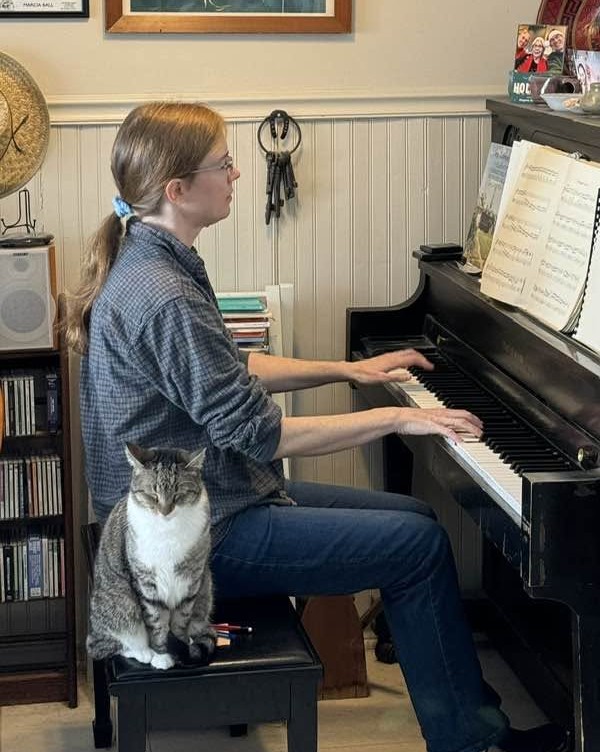
In spite of that determination, life went in other directions. In high school, I was good at math and science; between that and the fact that my father was an engineering professor, there was a lot of pull towards STEM fields. At the same time, I was a serious musician. I’d studied piano since I was six and had fallen in love with classical music. In college, I double-majored in engineering and music, and came to Baltimore to do a master’s degree in piano performance at the Peabody Conservatory. I still liked to write, but by then, it was mostly a reflective pastime with journal entries and the occasional poem. I planned to be a professional musician and focus on teaching and playing.
Life took another turn when I had the chance to experience the backstage world of the classical symphony. Being part of performances of works like Mozart’s Requiem and Beethoven’s Ninth Symphony was powerful and thrilling like nothing else. I decided I wanted to try writing about it, to capture some of that wonder in a place I could revisit.
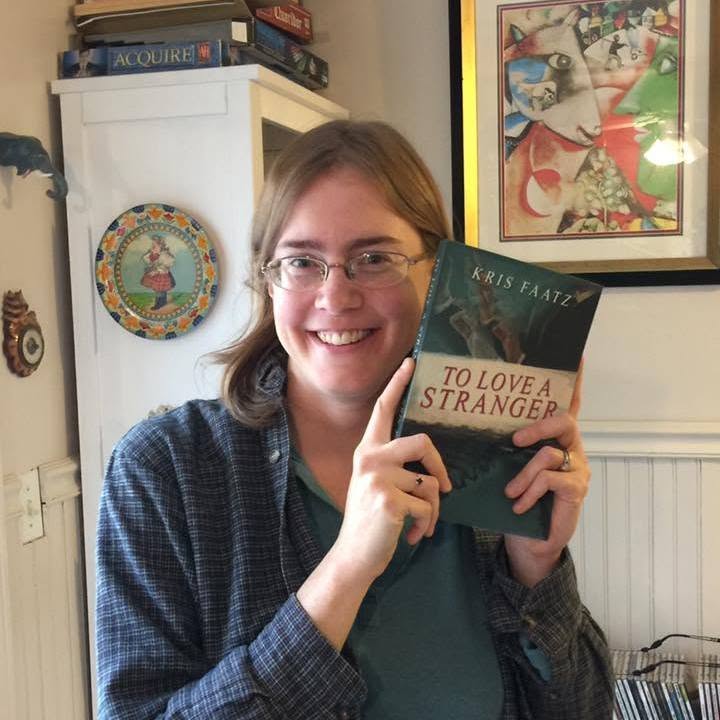
That idea turned into my first novel, To Love A Stranger, which I thought would be a one-off project. Somewhere during the ten years I spent working on it, the writing bug caught me again, this time for good. Nothing I’d ever studied was as fascinating as story-craft. Over the years, I had the great good luck to attend some amazing workshops with wonderful teachers, especially the Kenyon Review’s summer writing workshops at Kenyon College.
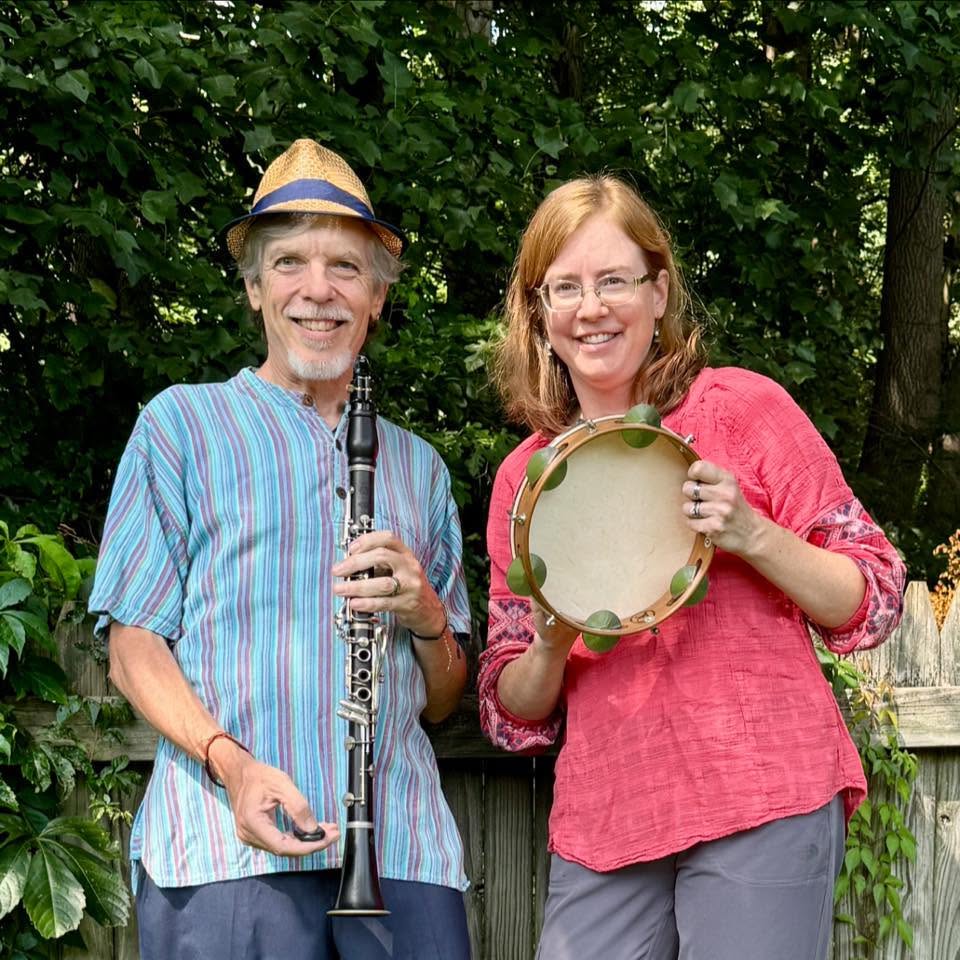
I’m now still a professional musician, working as a church staff pianist and venturing into the world of Brazilian choro music with my husband, who’s a clarinetist and saxophonist. Together, he and I perform as Duo Abacaxi. At the same time, I now have two more novels in print, fantasy Fourteen Stones and historical fantasy Line Magic, and I’ve published a few dozen short stories in various literary journals. Most recently, my short fiction collection A Small Priceless Thing and Other Stories was longlisted for the Santa Fe Writers Project’s 2025 literary awards. The collection is forthcoming in March 2027 from Baltimore’s own Highlander Press.
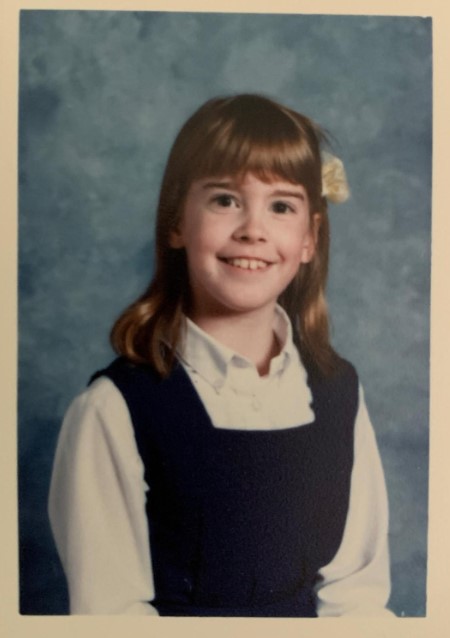
I sometimes say I came to writing “sideways,” edging back into it via the music world. It’s also been a return home to the goals that nine-year-old proudly announced. I like to think she’d be glad to know how everything’s turned out.
We all face challenges, but looking back would you describe it as a relatively smooth road?
In a lot of ways, I’ve been very lucky, but the road has definitely had its rough patches. Claiming an identity as an artist in two disciplines, first music and then writing, was extremely tough.
Growing up, I learned to be guarded with my passions. It was fine to play the piano and be good at it, but I had to be very careful: mistakes were not okay, especially in performance, because they would embarrass other people. Struggle and failure weren’t allowed.
My family could be supportive of the music up to a point, but not when I decided I wanted to do it professionally. I grew up in an unstable home, with parents who had their own challenges with mental health. Going to graduate school for piano finally happened at the end of a long, exhausting fight that even now, twenty-plus years later, I hate to remember. The rifts from that time never healed. I look back on the young woman I was then, who stood up so fiercely for herself while at the same time feeling deeply ashamed of doing what her family rejected, and I’m astonished by her strength and determination.
Writing-wise, when I was in high school, I was told that creative writing was basically a waste of time and doing it was (another) source of shame. Much later, when I began to reclaim it as something I loved, I struggled with the feeling that “writer” was itself a dirty word.
I’m glad to say that these days, I’m proud to call myself a writer. It can be hard to put my words out in the world, and I’m still scared of “wasting other people’s time” by asking for their attention, but over years of practice, it’s slowly gotten easier. I’ve been very lucky to have a loving and supportive husband who’s cheered me on every step of the way. Though I still struggle with all the normal downsides of the writing life – submission stress and rejection grief especially – I’m also proud to know I’ve put together a real body of work. I’m still learning, too, and hope I always will be. I’m excited to see where the creative path leads next.
Alright, so let’s switch gears a bit and talk business. What should we know about your work?
I write fiction: short stories and novels. In terms of my writing itself, I’m most proud of my second and third books. Fourteen Stones is the second book, released first in New Zealand in 2022 and re-released in the US in 2024 by Highlander Press. Line Magic is the third, released in 2025, also by Highlander Press.
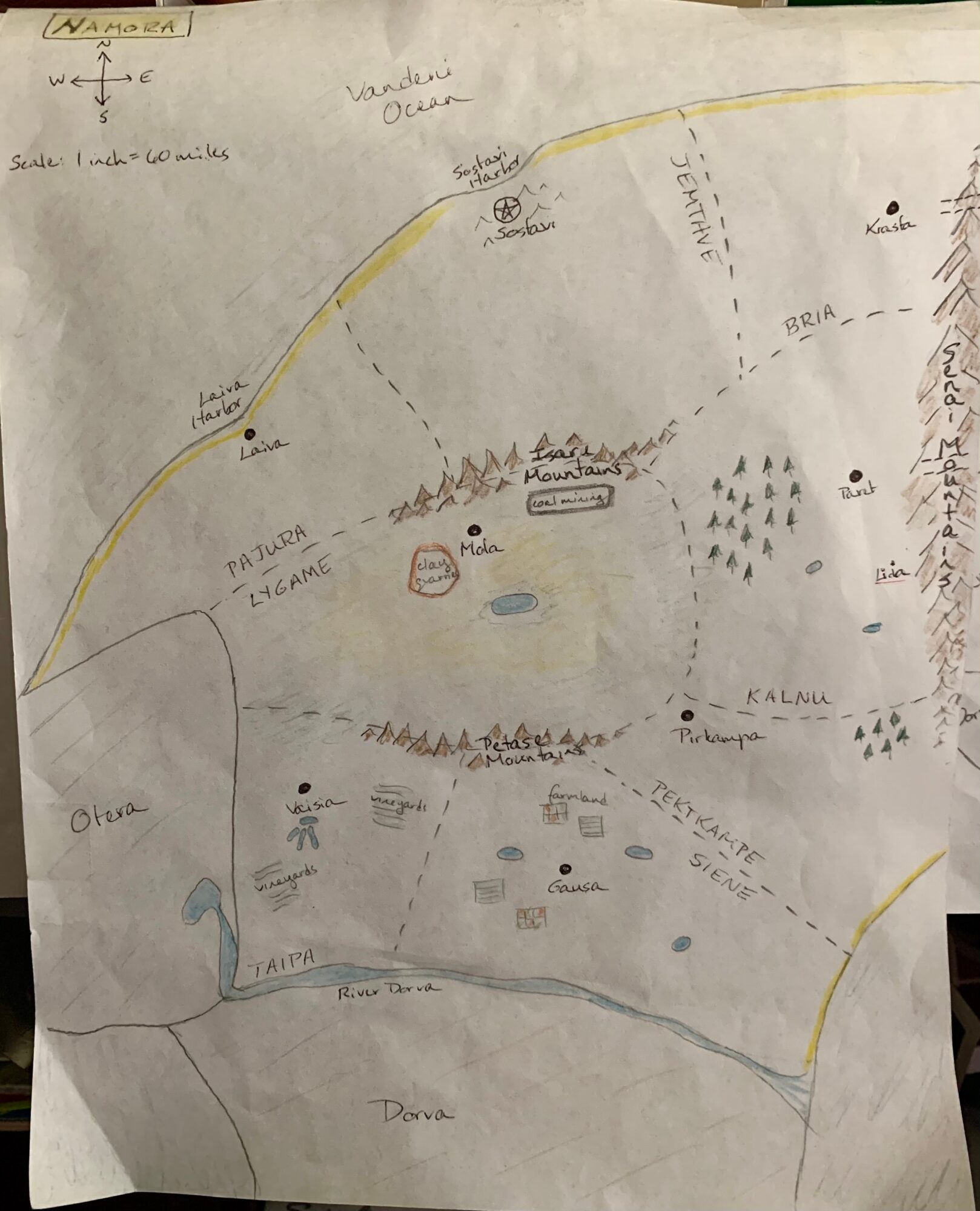
I love to write stories that take the reader somewhere else, but still stay in touch with our real world and what’s happening in it. Fourteen Stones is a fantasy book, set in a fictional world – which was a lot of fun to create – but it was inspired by current events. It’s about a group of refugees and their search for a safe homeland. I wrote most of it in 2018, responding to the border crisis in the US and particularly the separation of immigrant families, children and parents losing one another. It felt crucial to say something about what was happening. The story looks at how fear creates distance, and how we might find ways to remember our shared humanity. I loved writing it and loved how it turned out.
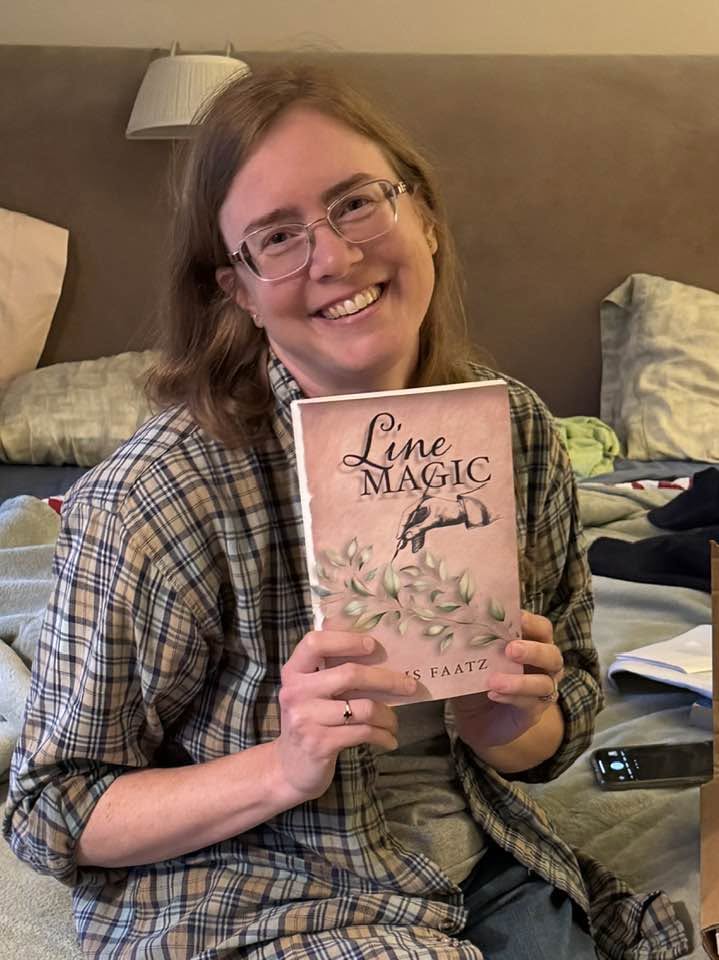
My third novel, Line Magic, is set in Philadelphia during the last months of World War II. Its main character is a visual artist who can transform his subjects by drawing them. I wanted to play with the idea of real magic having a role in the real world: what someone might do if they found they could reshape the small corner where they lived, and the ripple effects that might have. Line Magic is also very much about finding the shared humanity behind exterior difference. Writing it was full of joy for me.
My work blends real-world complexity with magic in a way that I think is pretty unusual. I try not to cut corners even when I’m writing fantasy: life and people are complicated, full of contradiction and nuance. I want my stories to reflect that. Magic can offer surprises and unexpected possibility, but it’s never a quick fix. I love weaving those intricate webs.
On a related topic, I’m also proud of the work I do teaching creative writing. I’ve been running workshops for several years now, and I love meeting folks who never thought of themselves as writers, but discover they can unlock skills they never knew they had. I’ve helped some students reach their publication goals; it’s always wonderful to see a writer’s first in-print story. It’s also a gift to watch writers try new things: folks who’ve spent their professional lives writing reports, for instance, diving into the world of imagination and writing excellent fiction. Creating a workshop space where everyone feels safe to explore and share is one of the most rewarding things I do.
Can you tell us more about what you were like growing up?
I was always a pretty quiet, shy kid. I was an only child, comfortable alone, and of course reading was always one of my favorite things to do. I had a very vivid life of the imagination. I used to get into the stories I read so fully that I could imagine my favorite characters stepping out of the pages and being part of my everyday world. When I started playing the piano, I often imagined stories and narratives to go with the music I played. (Sometimes I still do that!) When the outer world got challenging, I had a rich inner world to help me get along.
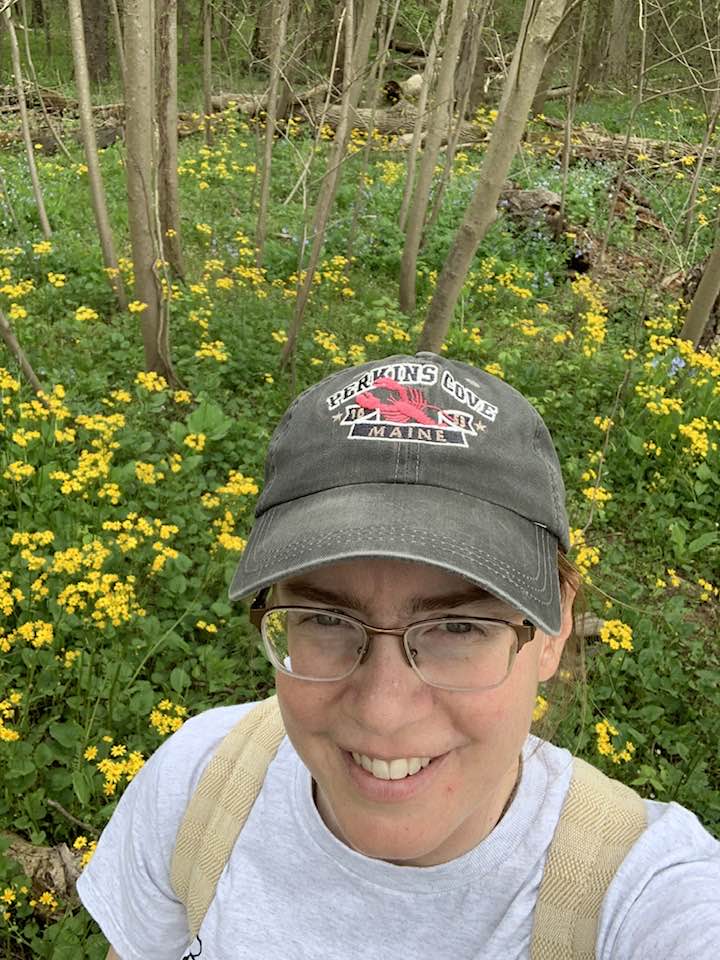
I also always loved nature and the outdoors. When I was little, that meant the back yard and immediate neighborhood. Visiting the local garden shop and walking along rows of flowers, admiring the myriad shapes and colors, was always a treat. Now, as an adult, I love hiking. My husband introduced me to hiking when we first met, and the two of us get out into the woods and explore every chance we get.
Contact Info:
- Website: https://krisfaatz.com
- Instagram: @krisfaatz
- Facebook: @kristinfaatz
- Youtube: @DuoAbacaxi