




Today we’d like to introduce you to Keyvan Rafei.
Hi Keyvan, so excited to have you with us today. What can you tell us about your story?
I originally trained and worked in traditional pediatric and emergency medicine settings, including pediatric emergency departments, urgent care, and academic environments. Early in my career, I noticed something that stayed with me over time. Certain children seemed to experience illness very differently from others. They were the children who came in more often, whose symptoms were more intense, and whose issues extended across multiple systems—respiratory problems, eczema, GI complaints, sleep disturbances, behavioral sensitivity, and more.
At first, these seemed like separate conditions, because that’s how medicine traditionally approaches them. But over years of clinical experience and later large-scale data analysis across pediatric urgent care populations, I began to see recurring patterns that suggested something broader was happening. I became increasingly interested in the idea that many of these children weren’t necessarily exposed to more illness, but were responding differently to the same exposures. That insight really changed how I viewed pediatric care.
At the same time, I also experienced this personally as a parent. I remember one particularly impactful moment when my young son was taken to the hospital for respiratory symptoms while I was away at work. Hearing about the experience as both a physician and a father forced me to think more deeply about how medicine often focuses on labeling and reacting to symptoms without fully understanding the child’s overall pattern of sensitivity and response.
Over time, I became frustrated with how fragmented pediatric care could feel. Families were often moving from one diagnosis to another—eczema, recurrent infections, picky eating, behavioral concerns, chronic cough—without anyone stepping back to look at the bigger picture. I felt there had to be a more personalized and proactive way to approach children’s health.
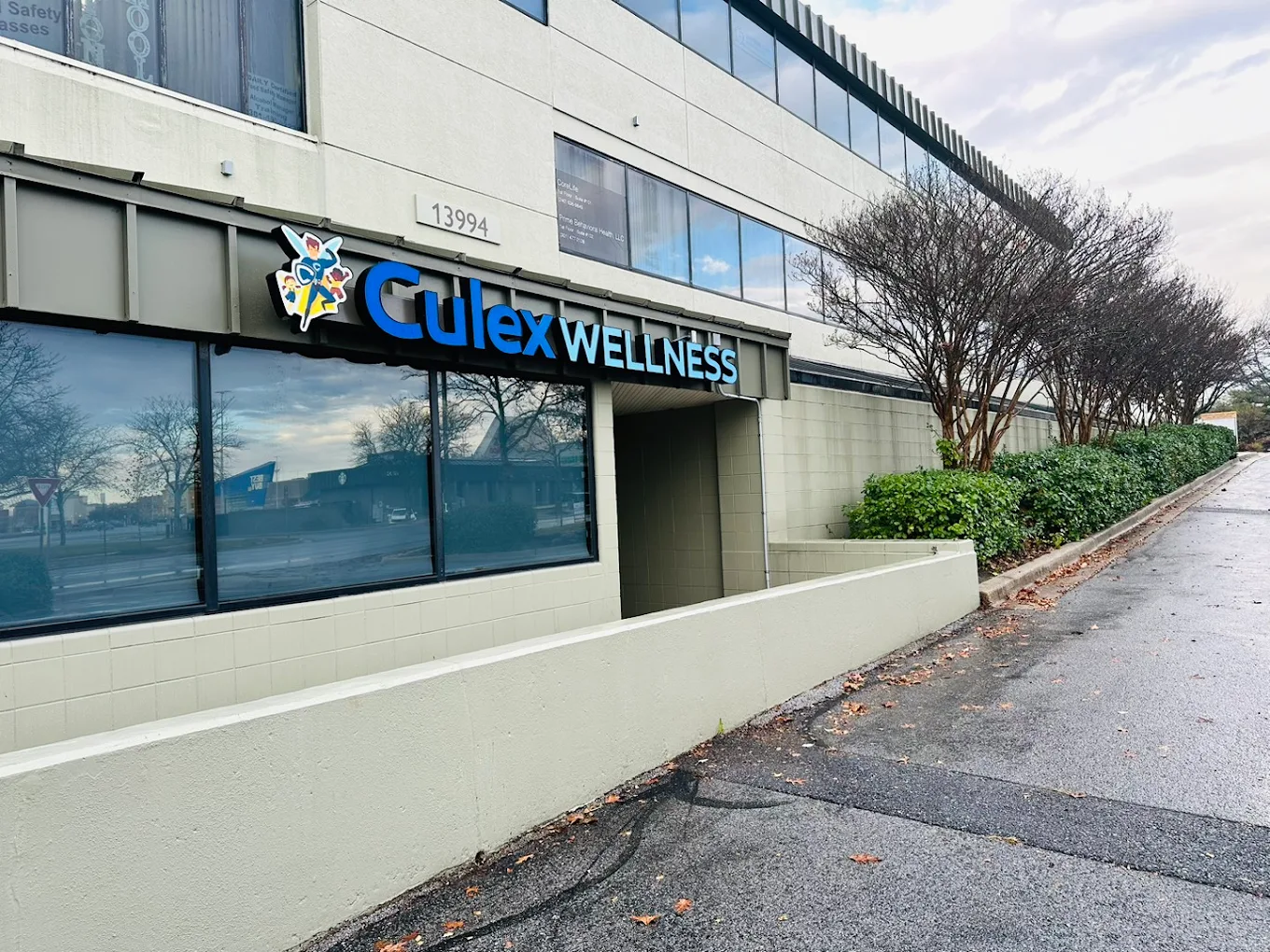
That eventually led me to develop Culex Wellness Pediatrics.
The name “Culex” actually comes from the mosquito analogy that became central to my thinking. Two people can get the same mosquito bite, but one develops a dramatic welt while the other barely reacts. The difference isn’t exposure—it’s response. I realized that many children experience illness in a similar way. Their systems are simply more reactive or sensitive.
Culex Wellness Pediatrics was built around that philosophy. Instead of only reacting to illness after it appears, we focus on understanding each child’s unique patterns, sensitivities, environment, inflammation, behavior, sleep, nutrition, and overall regulation. The goal is to create a more personalized, proactive model of pediatric care that helps families understand not just what condition their child has, but how their child uniquely experiences the world.
At the same time, I’ve been developing these ideas more broadly through writing and research, including a book project exploring why some children seem to “get sicker” and how medicine may be missing larger patterns of sensitivity and inflammation across systems.
In many ways, the entrepreneurial journey grew naturally out of years of clinical observation, curiosity, and wanting to build the kind of pediatric model I felt families were increasingly needing but struggling to find in traditional healthcare settings.
Would you say it’s been a smooth road, and if not what are some of the biggest challenges you’ve faced along the way?
One of the biggest challenges in my journey has actually been something I did not initially expect: gaining buy-in and collaboration from my physician and provider peers.
Interestingly, families and patients were often the easier group to reach. Parents intuitively understood what I was describing because they had been living it for years. Many would say things like, “My child just seems different,” or “No one has ever connected all these things before.” They were already seeing the patterns—recurrent cough, eczema, GI complaints, sleep issues, sensory sensitivities, behavioral intensity—but traditional healthcare often addressed each issue separately.
Earlier in my career, through KinderMender, we had already built what I felt was a very successful model operationally and from a service standpoint. The patient experience, accessibility, and overall care environment were strong. Families responded very positively to that approach. But over time, I became increasingly disheartened by what I felt was a major shortfall in the actual medical model being practiced around it.
I saw too much one-size-fits-all medicine.
Children with very different patterns of sensitivity and response were often managed in exactly the same way. Care became reactive rather than proactive. Symptoms were treated in isolation rather than viewed as part of a larger pattern. And many of the nuanced observations that families brought up were unintentionally dismissed because they didn’t fit neatly into traditional diagnostic frameworks.
That became frustrating for me because the longer I practiced, the more obvious these patterns became. I wasn’t just seeing isolated conditions anymore—I was seeing systems, behaviors, inflammation, sensitivities, family patterns, even cognitive and emotional traits that often clustered together in the same children.
But medicine is understandably cautious, and many providers are trained to stay within very established frameworks. Introducing a broader, more integrative way of thinking about pediatric illness can sometimes be met with skepticism, especially when it crosses traditional specialty boundaries.
That tension was probably the biggest catalyst for entrepreneurship for me.
I realized that if I wanted to practice medicine in a way that was more personalized, proactive, pattern-oriented, and focused on the child as a whole system, I would likely have to build that model myself rather than wait for traditional systems to evolve around it.
That’s ultimately what led to Culex Wellness Pediatrics. It became a way to create the kind of pediatric care model I believed families were already looking for—one that takes seriously the individuality of the child and tries to understand not just the diagnosis, but the underlying pattern of response driving it.
Great, so let’s talk business. Can you tell our readers more about what you do and what you think sets you apart from others?
Culex Wellness Pediatrics was built around a very different way of thinking about children’s health. At its core, the practice is based on the idea that many children do not simply “get sick more,” but rather respond differently—and often more intensely—to the same environmental exposures, illnesses, and stressors as other children. That distinction may sound subtle, but it changes how we approach pediatric care entirely.
What makes our model different is that we focus heavily on identifying patterns across the whole child rather than treating isolated symptoms one at a time. In traditional medicine, a child may separately receive labels like eczema, recurrent infections, asthma, abdominal pain, sensory sensitivities, picky eating, sleep issues, or behavioral concerns. What we specialize in is recognizing when those issues may actually represent a larger pattern of sensitivity and dysregulation across multiple systems.
Our approach is highly personalized and proactive. We spend a great deal of time understanding the child’s broader story—family patterns, environmental influences, nutrition, sleep, microbiome health, emotional regulation, inflammation, sensory processing, and how the child uniquely experiences the world. Instead of simply reacting to illness after it appears, we try to understand the underlying tendencies driving those recurring patterns.
One thing that sets us apart is that we bridge traditional pediatric medicine with a much broader systems-based perspective while still remaining grounded in evidence, observation, and practical care. We are not simply offering “alternative medicine.” We are trying to rethink how pediatric care is organized and interpreted. Families often tell us that for the first time, they feel like someone is looking at the entire picture rather than just one symptom at a time.
The name “Culex” itself reflects that philosophy. It comes from the mosquito analogy that became central to my thinking over the years. Two people can get the same mosquito bite, yet one develops a dramatic welt while the other barely reacts. The difference is not the exposure—it is the response. We believe many pediatric conditions work similarly.
What I am probably most proud of brand-wise is that families feel deeply understood when they come to us. Many parents have spent years feeling dismissed or told that their concerns were unrelated, “normal,” or simply something their child would outgrow. Often, by the time they arrive, they are exhausted from navigating fragmented care across multiple specialists and visits. One of the most meaningful things we hear is, “This is the first time someone has connected all the dots.”
We are also proud that the practice attracts families who are not just looking for treatment, but for understanding. That creates a very different kind of relationship between provider and family. It becomes collaborative, educational, and long-term rather than transactional and episodic.
More broadly, I hope readers understand that Culex Wellness Pediatrics is not just a clinic—it is an evolving philosophy of pediatric care. It represents an attempt to move medicine toward a more individualized, systems-oriented understanding of children’s health, where sensitivity, inflammation, environment, behavior, cognition, and emotional development are not viewed as separate silos, but as interconnected parts of the same child.
What’s next?
Looking ahead, one of our biggest goals is to help solidify and refine a truly evidence-based, personalized, and proactive model of pediatric care that can eventually be scaled and delivered more broadly by other providers and organizations.
What’s important to me is that the core principles remain consistent, even if the bedside style or operational delivery looks different from one practice to another. I often use a restaurant analogy to describe this vision. The goal is not for every physician or clinic to look identical or practice with the exact same personality. The goal is that we are all preparing the same high-quality meal—meaning thoughtful, individualized, systems-oriented pediatric care—but tailoring it to the unique needs, sensitivities, and preferences of each child and family.
Where innovation can and should happen is in the service experience itself: how families feel when they interact with healthcare, how accessible and collaborative care becomes, how supported parents feel, and how proactively we help families navigate challenges before they escalate into larger problems.
Traditionally, healthcare has focused heavily on the technical side of medicine while often underestimating the emotional and relational experience of care. I think the future of pediatric medicine has to include both. Families increasingly want care that is scientifically grounded, but also highly personalized, communicative, and human-centered.
Another major focus moving forward is continuing to build the research and data side behind these observations. Many of the ideas that shaped Culex Wellness Pediatrics came from years of clinical pattern recognition combined with large-scale pediatric data analysis. I’m excited about continuing to refine those findings, validate them further, and potentially contribute to a broader shift in how pediatric inflammatory and sensitivity-related conditions are understood.
I’m also looking forward to expanding the educational side of this work through writing, speaking, and developing frameworks that help both families and providers think differently about children’s health. A big part of the mission is helping move pediatric care away from fragmented symptom management and toward a more integrated understanding of the child as a whole system.
Ultimately, what I hope to build is not just a successful practice, but a model that helps redefine what modern pediatric care can feel like—more individualized, more proactive, more emotionally intelligent, and more aligned with how children actually experience the world.
Contact Info:
- Website: https://CulexWellness.com
- Instagram: @culexwellness
- Facebook: https://www.facebook.com/CulexWellness
- LinkedIn: https://www.linkedin.com/in/keyvanrafei/
- Youtube: https://www.youtube.com/@culexwellness