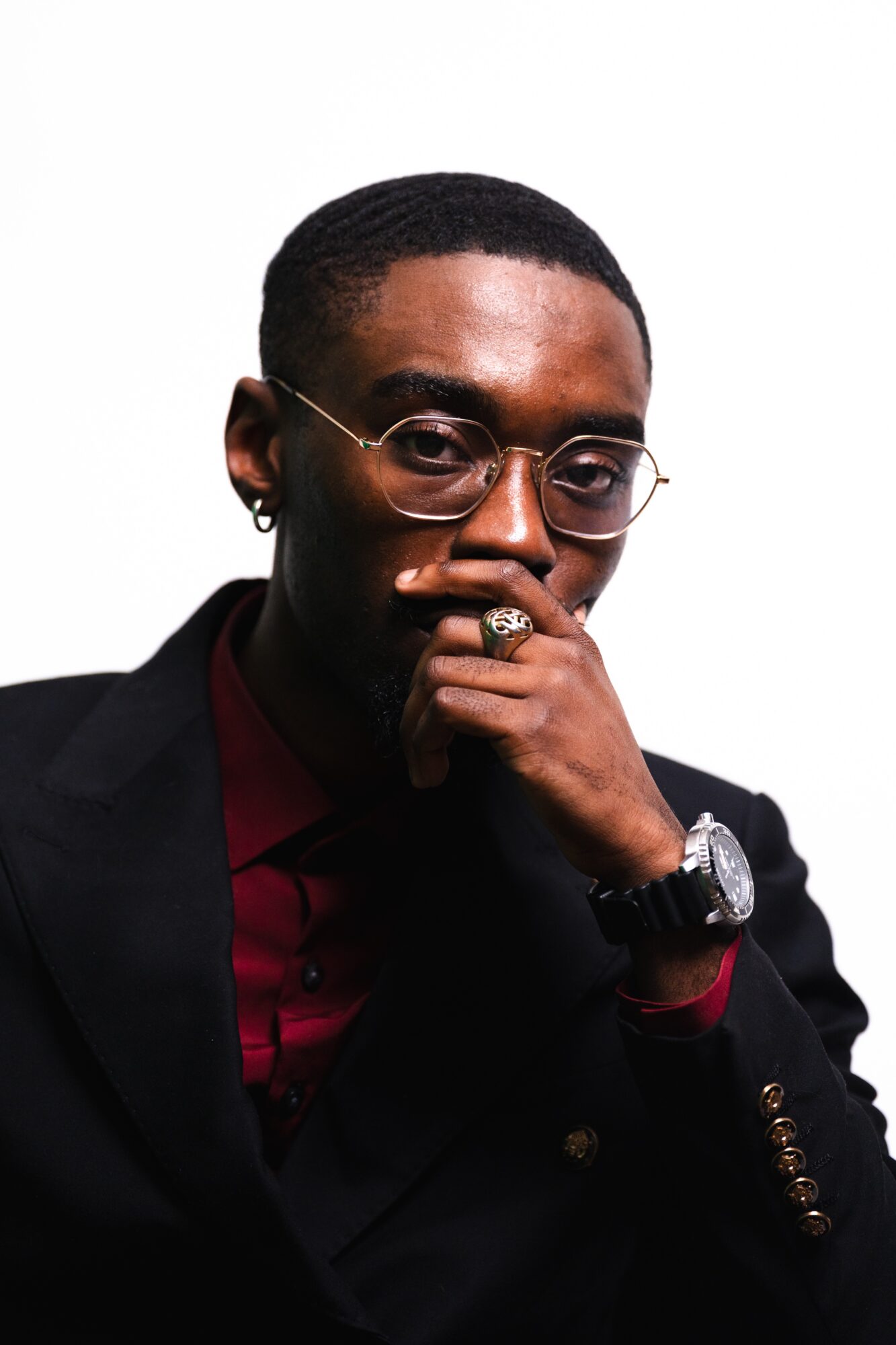



Today we’d like to introduce you to Allen Stallings.
Hi Allen, thanks for joining us today. We’d love for you to start by introducing yourself.
Honestly, I started Hive because the internet stopped making sense to me.
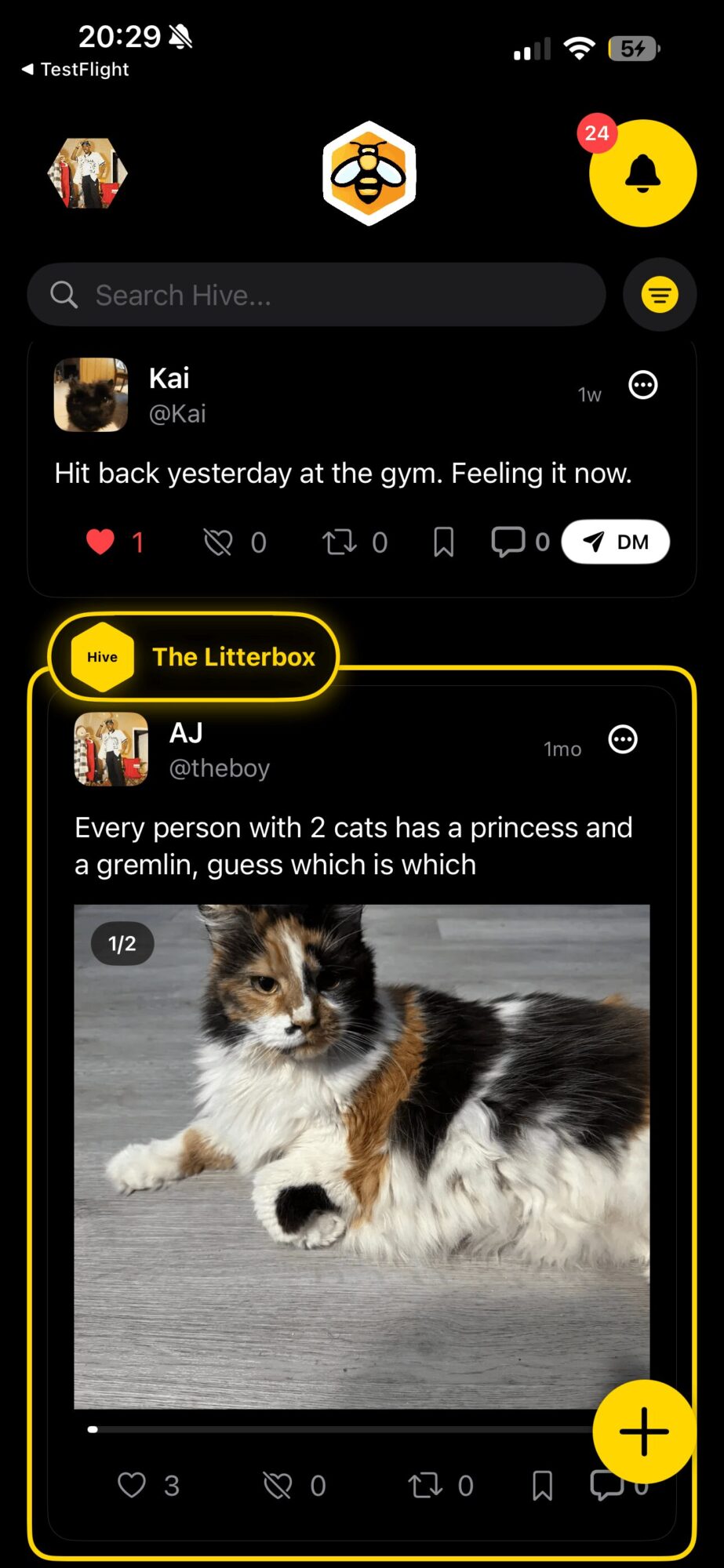
Everything was scattered across a dozen different apps. A group chat lived in iMessage. The same group also lived in a Discord server. The events from that Discord got posted to Twitter. The tickets for those events were sold on Eventbrite. The photos afterward landed on instagram, and somehow none of it was actually connected. I’d find out about things after they happened. I’d miss what mattered and see what didn’t. The communities I cared about, the people who actually made the internet feel like a place and not just a feed, were spread across so many surfaces that nothing felt whole. So I started teaching myself Swift, on nights and weekends, with no engineering background, because I wanted to build the thing I couldn’t find. Something that didn’t make you choose between where you talked, where you planned, and where you showed up.
The reason it became what it is, though, came from somewhere else. I work as a Behavior Associate at Kennedy Krieger Institute, and a colleague of mine had a student going through a tech-related crisis, something she didn’t know how to help him through. She knew I was building an app and asked if I’d come talk to him. He didn’t want to talk. The only thing he agreed to was that he’d come if I showed him what I was making.
So I gave him the walkthrough. He got excited, animated, fully present, and then he stopped me, looked at the phone, and asked one question: “Can people actually meet up from this?”
That question rearranged everything. In the moment of asking it, he was acting out the entire thesis of the app. Somebody isolated, scrolling, looking for proof that connection could be real and not just performed. I had been building a community app. He was telling me that what people actually needed was a coordination app, a way to translate online connection into showing up for each other in person. After that conversation, Hive stopped being about content and started being about events, presence, and follow-through.
Hive launched in September 2025. Since then I’ve built a team and we’ve shipped several versions and updates with more to come, we have real events on the platform planned , and we’ve watched the question that student asked me get answered, over and over, by communities I’ll probably never meet. I’m twenty-four. I taught myself to code to build this. And the version of it a year from now will look meaningfully different than today, because I’m not done.
We all face challenges, but looking back would you describe it as a relatively smooth road?
No, it hasn’t been smooth, and I think the version of “not smooth” most people expect to hear is about funding rounds or technical setbacks. Mine is different. The hardest part has been emotionally.
You’d think having a day job and a side project would balance each other out. They don’t. My job is taxing on its own. I work with and in real human friction every day, and that work doesn’t leave you when you clock out. Then I come home and build, which means I’m working basically all the time, sometimes literally at work, on weekends, late at night, into the early morning. There’s no real off switch. The thing that’s supposed to be the relief is also the thing that’s demanding the most of me.
Building this as a young Black man in Baltimore, with no institutional backing, no warm intros, no inherited network, that has its own weight. It fills my cup back up in some ways because the work itself matters to me, but it’s also hard on its own merits, and it’s hard in ways that don’t always have language attached.
But the real struggle, the one that surprised me, is how lonely the vision is. Almost nobody I talk to has the behavioral science background, the technical experience, and the economic theory all at once. People understand pieces of what Hive is. Almost nobody understands all of it at the same time. I’ve had to come to accept that I might be the only person in the world who actually sees the full shape of what I’m trying to build, and there’s no one I can hand it to and say “tell me if I’m crazy” who’d be answering from the same vantage point. That’s a quiet thing, but it’s the heaviest thing.
I’m still here, though. I’m twenty-four, I’ve shipped a bunch of versions, and the loneliness hasn’t broken me. I think part of why is that I’ve started to understand the loneliness as the cost of seeing something early rather than as evidence that I’m wrong. That reframe is what keeps me building.
Can you tell our readers more about what you do and what you think sets you apart from others?
I’m the founder and CEO of Blankwall Software, the company behind Hive. Hive is an iOS-first social platform built around a single idea: that real community is something you can measure by who shows up, not by who likes the post. It launched in September 2025, and since then it’s grown into the most complete version I’ve seen of what I think social technology should actually do, which is help people find each other and follow through on showing up.
What I specialize in is the intersection of behavioral science and product design. My background is in applied behavior analysis, which is the study of why people do what they do and how environments shape behavior over time. Most consumer apps are designed using a thin version of that science, optimized for whatever keeps you scrolling. I’ve spent the last few years applying the deeper version to build the opposite kind of product: one that’s designed to send you out the door instead of keep you in the app, and to reward the people doing the work of building communities instead of extracting from them.
What I think sets me apart is that I’m one of very few founders who came up through the clinical side of behavior science before learning to build software. Most people building social platforms are technologists who’ve read a few books on persuasion. I started in the field, watching how reinforcement actually works in real human lives, and then taught myself Swift over two years on nights and weekends because I wanted to build the thing I couldn’t find. That order of operations matters. It’s the difference between using behavior science to manipulate people and using it to design something they can actually trust.
What I’m most proud of is harder to put on a resume. Part of what kept me building Hive, even on the days when it didn’t feel like it was scaling the way I wanted, was the thought that even if nothing else came of it, my friends and I would have a place to use. Something built for us, by someone who knew us. I think a lot about the people who supported me into this, who sat through long conversations about an idea they couldn’t fully see yet, and I try to build with them in mind. They mean the absolute world to me. I’m not trying to find a niche or optimize for sales or grow a brand. I want to build a product people actually know, love, and feel safe relying on. That’s the bar. Everything else is downstream of that.
We’d love to hear about how you think about risk taking?
I see myself as a bit of a risk-taker, but more so I see myself as someone who pays attention to the math.
The biggest risk I’ve taken is dropping out of UMD in 2023. I had just started at KKI I’d just started teaching myself to code, and formalizing the concept for what I wanted to make and I knew I didn’t have enough bandwidth for all three. Something had to give, and the version of my life where I kept the day job, kept the degree, and let Hive die in a folder of unfinished side projects was the version I couldn’t live with. So I left dropped out.
It wasn’t a dramatic moment. Nobody really tried to talk me out of it. Some of my family told me I was too smart for my own good, which I don’t think was as much disapproval as it was concern they didn’t have the language for. A lot of the people who love me had never watched anyone they knew pursue something like this at this level, at this speed, and I think they reached for the closest frame they had, which was a mild warning. In the same way, this is new for me; it was new for them. They supported me in the ways they knew how, and I’m grateful for that.
The way I actually think about risk is pretty simple. I look at the size of the upside compared to the size of the downside, and I take the bet when the upside is asymmetric. With Hive, the upside is that I build something that changes how people interact with each other on the internet for at least the next decade. The downside is that it joins the long list of apps that never hit scale, and I walk away with skills, perspective, and learning that I genuinely think were worth more than what I was getting in a virtual classroom around that time. That asymmetry is what made the choice obvious to me. School will still be there if I want it. The version of me who could still build Hive at 21, with that energy and that runway, would not.
The risk people usually talk about is the risk of trying and failing. The risk I think about more is the risk of not trying and never finding out. That one’s permanent. The other one isn’t.
Contact Info:
- Website: https://Blankwallsoftware.org
- Instagram: https://www.instagram.com/hivejtb, https://www.instagram.com/aj.supremus/